
Mother Earth: Ecology as a cosmic liturgy
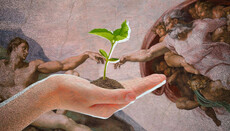
The ecological crisis is not merely environmental – it is the outward symptom of a deeper spiritual illness. Why the Earth is a vast temple, and man a priest called to guard creation.
International Mother Earth Day, observed annually on April 22, is often reduced today to pragmatic environmentalism – recycling, reducing carbon footprints, and protecting biodiversity. Yet beneath this surface, administrative layer lies a profound ontological abyss.

Cosmic liturgy and the meaning of matter
At the heart of the teaching of Maximus the Confessor is the idea that the Creator has inscribed into every created thing its inner meaning – its logos. Everything we see – from quark to tectonic plate – has its blueprint in the Divine Mind. Matter, therefore, is not inert; it is meaning-bearing, saturated with purpose. The one Divine Logos unfolds into a multitude of logoi, the inner principles of all that exists.
Thus, the Earth’s biodiversity is not a random mutation but an unfolding score of a divine symphony.
In this theological vision, there is no opposition between “bad matter” and “good spirit.” Matter is spirit in its most condensed form, capable of receiving divine energies. The idea of a “cosmic liturgy” transforms the entire planet into a vast temple. If in an ordinary church the liturgy is celebrated by human hands, then on the scale of the cosmos it is celebrated by being itself. Every tree, in blooming, glorifies the Creator simply by fully realizing its logos. Animals and plants participate in this cycle unceasingly; they cannot “sin” or fall away from their purpose.
If God is everywhere present, then every point in space is sacred. We do not walk on “mere soil,” but on an antimension – a consecrated ground upon which the mystery of life unfolds. All creation stands in a state of tension, expectation, and silent prayer. As Paul the Apostle wrote, “the whole creation groans and labors with birth pangs until now” (Rom. 8:22), awaiting liberation together with man.
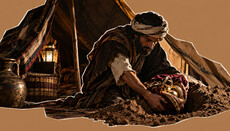
The image of Moses before the burning bush (Ex. 3:2) is a perfect metaphor for God’s presence in the world. The bush burns, yet is not consumed. God is present within the Earth, permeating it with His energies. The Earth glows from within with divine light. To defile soil, water, or air in this perspective is akin to trying to extinguish that sacred fire – or to cast filthy rags over a radiant lamp.
Man as priest of creation
The most radical dimension of this theology concerns the role of man. The common reading of the command to “subdue” the earth (Gen. 1:28) as a license for domination is a distortion born of a fallen consciousness. Man alone among earthly creatures possesses self-awareness and free will. He is appointed to be the “voice” of nature – to gather the silent praise of forests and oceans and offer it back to God in thanksgiving, in Eucharist.
A priest is one who blesses and sanctifies.
Man is called not to exploit nature, but to cultivate it so that it becomes ever more beautiful and transparent to the divine.
When man forgets this priestly calling and becomes merely a consumer, he turns into a malignant growth on the body of the Earth. His dominion becomes tyranny – one that ultimately destroys the tyrant himself.
The ecological crisis as spiritual disease
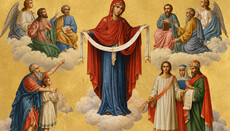
In this framework, the ecological crisis is only a symptom. If the world is an icon, then the destruction of forests or the poisoning of rivers for profit is akin to spitting in the face of a saint depicted on that icon – or scraping away the image of Christ. It is not simply harm to health; it is an act of hostility toward the Creator through His creation. Every species we extinguish is a silenced voice in the cosmic choir, a letter torn from the book of divine revelation.
The true resolution of ecological problems is impossible without metaphysical repentance – a return to the awareness that man is the guardian and priest of this world.
The theological vision of Mother Earth calls us to remove our shoes, for “the place where you stand is holy ground.” It is a summons to reverence that surpasses legal obligation and economic calculation.
To understand the Earth as Mother is to recognize that it is not our possession – rather, we belong to it. The laws of physics, gravity, and biology are not cold abstractions, but the means by which the Divine Logos sustains us, preventing our fall into non-being. The soil beneath our feet is the materialized love of the Creator – giving us both physical support and metaphysical meaning. Man’s mission is to cultivate the earth so that the material becomes increasingly transparent to the spiritual. In this light, ecology is not “maintenance,” but asceticism – the restraint of consumption for the sake of life’s flourishing.
Celebrating Mother Earth Day through the lens of Maximus’ teaching on the logoi calls for a radical rejection of anthropocentric egoism. Nature is not a soulless resource or a passive backdrop to human history. The world is not a collection of objects, but a communion of subjects, each bearing intrinsic value and purpose. Our crisis is, above all, a crisis of perception – we have ceased to see the intelligent beauty of things, replacing it with market value.
Asceticism of consumption and the Eighth Day
In theological perspective, the Earth appears as the “Eighth Day” of creation – still unfolding, and in many ways entrusted to human hands. If the world is a Temple and humanity its priesthood, then our approach to ecology becomes a measure of our faithfulness to God. Consumption must become thanksgiving. When we take from the Earth, we must return it to God through prayer and careful cultivation. Only then does consumption cease to be plunder and become communion.
The true salvation of the planet lies not in new technologies, but in self-restraint.
Asceticism is not hatred of the material world, but love expressed through the refusal of excess – so that the life of another, whether human, animal, or forest, may endure. Man’s highest calling toward the Earth is to help it become transparent to divine light. We are called not merely to preserve nature, but to lead it toward its ultimate destiny – that “God may be all in all.”
Thus, International Mother Earth Day is not merely a date on a UN calendar. It is a call to ontological awakening. We stand before a sacred reality that demands not only clean rivers, but purity of thought. The path of salvation lies not in fleeing matter, but in transfiguring it. For in saving the Earth, we safeguard within ourselves the image of the One who created it. We are called not to be consumers of this great Icon, but its faithful stewards – inscribing our lives into the eternal symphony of the Logos.