
"We must thank God for trials and persecutions"
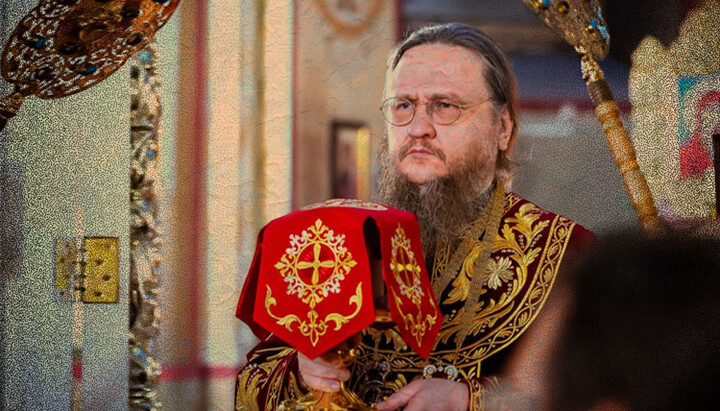
Interview with Metropolitan Theodosiy of Cherkasy and Kaniv on how to remain faithful to Christ in today’s circumstances.
– Christ is risen! Your Eminence, this is already the fifth Pascha that the faithful of the Ukrainian Orthodox Church have celebrated under conditions of war. The Cherkasy Eparchy is no exception. Could you please tell us whether these years of war have affected your clergy and parishioners?
– Truly He is risen! Of course they have. The first thing that can be said is that the earthly Church in Ukraine has changed qualitatively. It has ceased to be amorphous, as often happens in peacetime, and has acquired a more or less clear and firm crystalline structure. In other words, there are practically no casual churchgoers left, especially in regions where the Church is persecuted. But regular parishioners have grown stronger in their church life and in their fidelity to God. In this sense, our Church is now living through a blessed time, having shed excess, harmful ‘fat’ and acquired an ascetic form. Although in this regard there are differences from one region of Ukraine to another, due to various circumstances.
– Has the number of believers decreased?
– In Cherkasy, no – the number of truly faithful people has not declined. Again, much depends on the region and accompanying factors. These include the intensity and scale of persecution in a particular area, people leaving the country, internal migration of displaced persons, and so on. I can speak only about the Cherkasy region. In our churches, there are no fewer people; on the contrary, in some places there are even more. And this is despite the various efforts of the local authorities aimed at eradicating the UOC in Cherkasy and the region. It is also despite the fact that tens – perhaps hundreds – of thousands of residents of the region have left their homes in search of a better life. Their place in our churches has been taken by displaced persons from the eastern and southern regions of the country, who are moving farther into the rear, away from the front line. There are many new faces in the churches. These are Orthodox residents of eastern and southern Ukraine – churched people, firmly holding on to their Mother Church.
– Your Eminence, you said that church life has ceased to be amorphous, and that parishioners have grown stronger spiritually. In your view, what exactly led to this? And how is it manifested?“
– It was brought about by the personal choice of every person – the choice before which the Lord has placed all of us today. And sooner or later, no one will be able to avoid this choice. It sounds approximately like this: ‘Are you walking today with the Church to Golgotha? Or are you going with Judas to the Jewish elders for the pieces of silver? Or perhaps you will hide in the bushes with Adam? That, too, is a choice.’ Today every member of Ukrainian society, and first of all every believer of the Ukrainian Orthodox Church, has the opportunity to take one position or another according to his inner disposition. And the majority of truly faithful people who identify with our Church have made their choice – they are going to Golgotha with their Church.
You ask how and in what this is manifested. Above all – in faithfulness to one’s Church, in courage in the face of danger, in firmness of conviction, in the fearlessness to go against the general current. All this tempers and strengthens the believer, just as storms temper a sailor.
– But at the same time, we see individual cases among the clergy of people leaving the UOC. Have the pastors really turned out to be spiritually weaker than the flock?
– In the Cherkasy region, for example, only a tiny fraction of the clergy has left. Not even every twelfth, as people sometimes say in such situations, but far fewer. I think the same tendency can be seen throughout the UOC. It is simply that priests are always visible, and so every departure becomes known.
At the same time, it must be said that it is sometimes much easier for an ordinary layperson to stand firm in the Truth. A layperson, just like a monk in a monastery, is not burdened by church assets and resources. For him, the main thing is Heaven – and the earthly will be added. That is why, unlike parish priests or even some bishops, monastics and ordinary faithful laypeople do not leave. Where would they go from God and His grace? What would they seek elsewhere? As for the earthly and material – God gave, and God has taken away.
But over the clergy, especially those who are prosperous and successful in earthly terms, there hangs the danger of losing the well-being they have achieved in life – whether material benefits, a restored church or monastery, or friendship with the powerful of this world. And these ‘benefits’ sometimes become a stumbling block for such a clergyman. They force him to look for a ‘way out of the situation’ that serves his own purposes. And here everything depends on how much of a believer that clergyman truly was. What follows is either an open falling away from the Church, or, by using one’s position, an attempt to reformat the Church to suit oneself, to fit the general mainstream, so as not to lose anything earthly.
Both are signs of distrust in God – or of little faith and weakness. Metropolitan Anthony of Boryspil and Brovary spoke very precisely about this recently in his sermon on Antipascha.
– I agree with you. But still, what is a priest to do if, because of his firm church position, he truly loses his church – and therefore the means to feed his family and children?
– I am certain that the Lord will not leave such a priest, or his family, without sustenance; life itself bears witness to this. After all, they are going to their Cross for Christ’s sake. Yes, perhaps they will no longer have abundance, but the Lord will preserve every one of His children. Of course, in such a situation we, his brother concelebrants, must not leave a priest alone with his problems. Mutual support must be offered constantly.
I will speak from the example of the Cherkasy Eparchy: the clergy try to help one another and not leave anyone in distress. For several years now, since the beginning of the full-scale persecutions against the Church, all eparchial contributions from parishes and monasteries in our eparchy have been completely abolished, without exception. Constant financial assistance is provided to clergy who have suffered and to the families of departed clergymen. We also help with construction, rent, and the purchase of adapted premises for communities temporarily deprived of their churches. Our Martha and Mary Sisterhood of Mercy works tirelessly every day so that no one is left hungry or freezing. The monasteries pray firmly and unceasingly, asking God for protection and defense for the entire eparchy.
But even this is not the main thing – not our earthly support for one another. For it benefits the giver more than the receiver: ‘It is more blessed to give than to receive’ (Acts 20:35).
The main thing is that the Lord will repay a hundredfold everyone who, during temporary trials, did not betray Him – everyone who sacrificed their comfort and the order of his life for His sake and for the Gospel. The Lord will not abandon such a person, such a clergyman and his family, either in this age or in the age to come, as Holy Scripture says. And we must be grateful to God that He has deemed us worthy to live some part of our lives bearing the burdens of yet another persecution against His Church.