
What to do when God doesn't fit into our schedule?
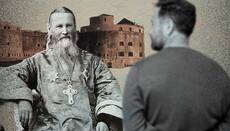
When a call on a day off provokes anger, our pride is wounded. We learn from St. John of Kronstadt to transform irritation into love and find resources where there seem to be none.
It happens like this: you finally close your laptop, brew that very tea you've been putting off all day, and settle into your armchair. Ahead lies a rightful hour of silence. And then your phone starts vibrating on the table. On the screen is the name of someone who is "always at the wrong time," or a long message with a request demanding immediate engagement.
In that second, something strange happens inside. Sharp irritation appears at someone breaking into your territory. We look at the gadget as an enemy and think: "Why me again? Why now? Can't I have the right to rest?"
We're used to calling this protecting personal boundaries or psychological hygiene. But if we cast aside fashionable words, it becomes uncomfortable.
Our faith, which we so carefully packaged into morning and evening prayers, suddenly collides with reality. And it turns out that God in our understanding is One Who should respect our schedule.
And when He comes in the image of an annoying neighbor or a crying friend, we find ourselves unprepared. This is a moment of truth when it becomes clear: do we believe in the living God or in a comfortable reflection of ourselves.

For such a conversation, it's hard to find a more uncomfortable interlocutor than St. John of Kronstadt. This man had no personal time at all. And he knew about our irritation much more than we can imagine. His life was a constant going beyond the limits of that very "I want" which so strongly prevents us from hearing others.
The city of the fallen and the pastor's first lesson
Kronstadt in the mid-19th century was not those beautiful postcards with majestic cathedrals that we see today. Then it was a huge debt pit of Petersburg, the social dead end of the empire. Here flowed all those whom the capital had thrown out as unnecessary: criminals, ruined craftsmen, prostitutes, dead drunk sailors. People lived in damp dugouts and basements that smelled of mold, poverty, and absolute hopelessness.
Young priest John Sergiev came precisely here. He didn't just drop in to perform a service and quickly leave, covering his nose with a handkerchief from the heavy smell. He sat on these dirty floors, gave away his last shoes and boots, returning home barefoot through the snow. But the most striking thing was that he was not an “iron” man. He was not that kindly elder from a picture who is always gently smiling.
His diary "My Life in Christ" is perhaps one of the most merciless documents in the history of Christianity. He wrote it in real time, recording his breakdowns, his anger, and that icy indifference that sometimes overwhelmed him during services. He caught himself in the same feelings that overwhelm us when the phone rings on a day off. The difference is only that he didn't allow these feelings to become the norm of life.
"I am a priest – I must have compassion for people, I must be their father... My business is to pray for them, and I, instead, get irritated at them... God, forgive me!" the pastor lamented.
He understood that every flash of anger was a crack in the foundation of his ministry, and he didn't allow himself to get used to this inner noise.
Pride as the root of secret malice
Let's try to imagine this conversation. We sit with our problems and enormous fatigue, and opposite us is a man who received thousands of people per day. He looks exhausted, but his gaze is fixed on you.
"Father John," we ask, "how can one not be angry? Here I sat down to rest, and they're bothering me. This is unfair. I also have limits to my strength, I'm not a machine. Why should I give my time at the first demand?"
He answers us directly, depriving us of the opportunity to hide behind convenient self-justifications:
"Do not be embittered against those who, out of inexperience or negligence, disturb you, tearing you away from your favorite occupation... but be lenient and gentle with them... Any displeasure and embitterment in your heart is a sign of your pride."
Hearing this is unpleasant. We commonly think that pride is when a person walks with their head held high and openly despises everyone. But righteous John shows us another pride: the one that hides in our desire to completely control our time. This is when "mine" – my plan, my comfort, my peace – becomes more important than the image of God in the person who is now standing at the door or messaging right now. Irritation is a cry of our ego, which isn't allowed to fully enjoy solitude and silence. We build an altar to our comfort, and anyone who disturbs its peace seems to us a sacrilege.
The illusion of polite holiness
St. John of Kronstadt served in the heart of the empire, surrounded by brilliant elite. Around him were thousands of people who impeccably observed fasts, knew the service by heart, and donated huge sums to churches. Externally, this was an ideal Christian society. But the pastor saw: behind this facade often hides complete spiritual immobility.
He understood that one could live correctly but at the same time be absolutely dead inside. One could not kill or rob anyone, but at the same time learn to so politely and psychologically correctly fence oneself off from others' pain that the heart imperceptibly turns into a piece of marble. We call this communication culture, and the saint called this spiritual sleep.
"What's more important, Father John: preserving your inner zen or allowing another person to destroy it? Where is the line between patience and losing yourself?"
He instructs us from the depth of his colossal experience:
"Love every person, despite their sins. Sins are sins, but the foundation in man is one – the image of God."
For him, there was no convenient time for love. He knew: as soon as we begin to choose whom to have compassion for and whom to ignore, living faith in us comes to an end. It turns into a hobby, an intellectual exercise, and part of an image but ceases to be a connection with the Living God. God doesn't come to us in perfect conditions; He appears through the needs of those who are unpleasant or inconvenient to us.
Source of strength in daily hell
Many modern managers and coaches would benefit from studying Father John's time management. He slept three to four hours a day. His morning began with the Liturgy, which thousands of people attended. Then there were endless trips to hospitals, orphanages, and shelters. At the Kronstadt post office, they had to open a special department to handle his correspondence, which flew to him from all corners of the world.
How did he not fall apart? How did he not go mad from this endless flow of others' grief, dirt, and intrusiveness? The answer of the Kronstadt pastor sounds almost challenging for our age of psychology and endless searches for resources:
"I die when I don't serve the Liturgy."
He drew strength not from rest, but from the Chalice. He was like a conductor through which current of enormous power flows to people. And if this current stopped flowing, the pastor began to fade. His money – millions of rubles that were sent to him – went out the same day. He didn't count them, didn't save them, and didn't set aside for old age. He simply passed them through himself, remaining by evening as poor as he was in the morning. His resource was outside himself, and this is precisely what made him invulnerable to burnout.
Recognizing the cold Inside
We, of course, don't need to sleep three hours and give away our entire salary to passersby at the metro. This is the path of the great. But we vitally need to at least learn to notice the moment when cold begins to draft inside us. That very prick of fury at the sound of the phone: this is not just fatigue, this is a sign that our heart has locked itself up.
Because of this, we don't need to fall into despondency or start hating ourselves. Self-devouring is also a form of pride. This is simply a reason to stop and honestly say: "Lord, I chose myself again. I again put my rest above Your image in this person." Recognizing the diagnosis is already half the cure.
St. John of Kronstadt teaches us extreme vigilance toward ourselves. He shows that love is not a feeling that comes by itself to beautiful music but a daily, sometimes minute-by-minute choice of will. This is the labor of keeping one's heart in an open state, even when stones, claims, or endless complaints fly into it.
Finally, the great saint repeats: your irritation is your pride. And pride kills love quietly, under the cover of reasonable explanations and just claims. Until we acknowledge that peace is dearer to us than our neighbor, we will remain only tourists in the church world. We will observe God from the side, afraid to get wet in the rain of others' problems.
Perhaps next time, when the phone vibrates at an inconvenient time, we'll simply pause? And instead of slamming the door of our small and cozy world, we'll try to hear the voice of One Who will never fit into our schedules. God always comes at the wrong time, because His time is eternity, and ours is only an attempt to fence ourselves off from it with walls of comfort.