
Revolt in the caves: How Kyiv’s saints defeated princes without weapons
A prince threatened to bury them alive for tonsuring his boyars. A chronicle of the Lavra’s first conflict with the state – and why the monks were not afraid of exile.
Kyiv in the mid–11th century. A time when Christianity had already become the state religion, yet had not fully seeped into the capillaries of society. On Old Kyiv Hill, the domes of the Church of the Tithes and Saint Sophia gleam with gold. Well-fed Greek metropolitans serve there. Solemn choirs sing there. It smells of costly incense and power. This is the “official Church,” integrated into the vertical of princely rule.
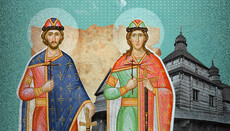
And a few versts away, in the wild ravine of Berestove, in a clay bluff above the Dnipro, a man sits. His name is Anthony. He dug himself a cave not to draw nearer to power, but to flee from it.
The Kyiv Caves Lavra did not begin as a state project. It began as a harsh, uncompromising opposition to the world.
Anthony and the first monks went underground because up above they could not breathe for hypocrisy.
From its first day, the Lavra declared itself a zone of freedom – a territory where the rules of backroom pressure and princely decrees did not apply. And, of course, the state could not tolerate that.
Conflict No. 1: the personnel issue
The Lavra’s first clash with the authorities did not break out over theology. The cause was cynically down-to-earth: a struggle over people – who had the right to decide their future.
Prince Iziaslav Yaroslavich, son of Yaroslav the Wise, was a weak ruler, but an ambitious one. Like many rulers after him, he regarded people as his property.
In the 1060s, two young men come to Anthony’s cave. The first is Varlaam, the son of the prominent boyar Ioann. The “golden youth” of the age – brilliant prospects, a marriage into the family of Kyiv’s military commander, a career. The second is Ephraim, a eunuch – the prince’s favorite, steward of the court’s household (in effect, the treasurer). They ask for the tonsure.
For Anthony and the abbot Nikon, these are not “useful clients.” These are souls seeking God. Anthony orders them to be tonsured.
When Iziaslav learned that his best managers had put on tattered cassocks and gone off to dig clay, he flew into a rage. The prince summoned Nikon and, as the chronicler says, “was exceedingly wrathful with him.”
The prince’s logic is easy to grasp: “I trained them, I promoted them, they belong to me (to the state), and you have stolen them.” The monks’ logic was different: “A soul belongs only to God.”
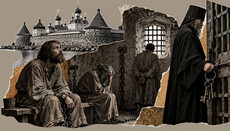
Iziaslav moved to open threats. He promised to send warriors to dig out the cave and forcibly drag the newly tonsured men out – and to throw the elders themselves into prison.
The tension rose to a breaking point. Picture the scene: damp earth, the dim light of resinous splinters, the expectation of an assault. The prince’s warband is already saddling horses.
What does Anthony do? Write a petition? Seek a compromise? Ask the boyars to intercede?
No. He makes a move that disarms power. Anthony simply takes his staff, throws on his threadbare mantle, and leaves Kyiv toward Chernihiv. The monks follow him.
This was not the flight of a coward. It was the gesture of a prophet.
Anthony’s message was simple: “You want the walls and the land? Take them. We do not need your walls. We will carry grace away with us – and we will see what remains of your Kyiv without prayer.”
It was holiness as leverage. And the prince broke first. Iziaslav was seized by a kind of mystical dread. His wife (the Polish princess Gertrude) begged him to bring the elders back, fearing the wrath of God. The Grand Prince of Kyiv, ruler of vast lands, humbly pleaded with the monks to return to their cave.
Anthony returned. But he proved the main thing: the Church cannot be forced. It has nothing to lose, because its treasures are not kept in chests.
Conflict No. 2: a banquet with a usurper
Time passes. Iziaslav, having shown his weakness, loses the throne. In 1073, his own brothers – Sviatoslav and Vsevolod – overthrow him. A usurper, Sviatoslav Yaroslavich, takes power in Kyiv. For most “system people,” a change of ruler is a reason to swear allegiance again. The king is dead – long live the king.
But now the Lavra has a new abbot – Theodosius of the Caves. Anthony’s disciple. A man of steel. Sviatoslav tries to legitimize his seizure of power. He needs the Lavra – a spiritual authority – to recognize him as the lawful ruler. He invites Venerable Theodosius to a banquet. He sends lavish gifts. He comes to the monastery himself.
Theodosius does not merely refuse. He steps into open confrontation.
“I will not go to a banquet with a fratricide,” he tells the envoys. “And I will not commemorate him at the Liturgy as prince.”
More than that, Theodosius writes letters of rebuke to Sviatoslav. In one of them, he compares the prince to Cain. For a medieval mind, this is not merely an insult – it is a sentence.
The boyars whisper to Theodosius: “They will kill you. Or exile you.” Sviatoslav truly boils with fury. He is used to believing that force is right. But he can do nothing to a gaunt monk who looks at him without fear.
The saint says, “What can you do to me? Lock me in a dungeon? I will rejoice to suffer for the truth. Take away my property? I have only a cassock and dry bread.”
Power backed down again. Sviatoslav did not dare touch Theodosius, seeing how the people revered the saint. The Lavra remained a territory of conscience, refusing to play by the rules of political convenience.
The psychology of the persecutor
If we look at Prince Iziaslav (and then at Sviatoslav), we see not cartoon villains, but tragic figures.
All his life, Iziaslav wanted to build a “vertical.” He wanted to control everything, including the Spirit. He needed a “pocket Lavra” – convenient, obedient, ready to bless any decision he made.
Instead, he got prophets. He raged at his own powerlessness. He hounded the monks, threatened them, drove them out. But the outcome of his life was bleak. Iziaslav lost Kyiv, wandered across Europe, humbled himself before the German emperor and the pope, begging for military help. He died far from home, amid endless internecine wars.
And Anthony – the one Iziaslav threatened to bury – went to Chernihiv. What did he do there? He simply dug a new cave (the Boldyn Hills). And monks gathered around him again. And a monastery rose again.
Because holiness cannot be “banned.” Holiness is not tied to a location, to walls, or to seals.
A lesson for us
The story of the first persecution of the Lavra is strikingly cyclical. Nearly a thousand years have passed. The scenery has changed – police instead of princely warriors, floodlights instead of splinters of pine. But the essence of the conflict remains the same.
The world always tries to “nationalize” the Church – to turn it into a department of ideology. To make it tonsure whom it is told, and bless what is profitable.
When the Church says “no,” the world begins to threaten: “We will take your walls. We will close your caves. We will drive you out.”
The answer of Venerable Anthony and Theodosius echoes through the centuries: “Take the walls. They are only stone. Fill in the caves – we will dig new ones, in Chernihiv, in the forest, or in our own hearts. You can take the Church’s property, but you cannot take Christ from her.”
As the history of the 11th century shows, persecutors usually end badly and are quickly forgotten. And those they persecuted lay an unshakable foundation of Eternity.