
The saint against the system: Terrence Malick’s “A Hidden Life”
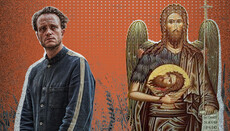
The story of an Austrian farmer who refused Hitler and went to the block, repeating the feat of John the Baptist. Why the voice of conscience matters more than the instinct for self-preservation.
You risk drowning in beauty. Terrence Malick, the great visual poet of cinema, does something almost forbidden: he films the Nazi era as though it were a lost Eden.
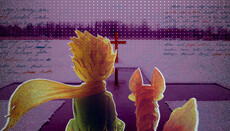
The Austrian Alps. The village of Sankt Radegund. Emerald grass so bright it hurts the eyes. White clouds snagging on jagged peaks. The sound of a scythe, whistling as it slices through lush, juicy hay. The smell of fresh-cut grass, warm milk, and wood heated by the sun.
It seems there is no room for evil in this paradise. Nature here is majestic and… utterly indifferent. These mountains do not care who walks at their feet – peaceful shepherds or Wehrmacht soldiers. The sun shines the same on the righteous and on murderers.
And yet behind this idyllic picture hides horror. It does not burst into the frame in tank wedges. It seeps in slowly, like poison into a well.
The main hero, Franz Jägerstätter, is not a conspirator, not a communist, not an intellectual. He is a farmer. He has strong, rough hands, trained by the earth; a beloved wife, Franziska; and three daughters. He loves his motorcycle, his field, and his church.
But when recruiters come to his village and demand that he swear loyalty to the Führer, Franz answers with a quiet, unshakable “no”.
In a world where millions raise their hands in a single motion, where priests bless banners with swastikas, and neighbors shout “Heil!” just to avoid standing out, this farmer suddenly digs in his heels.
He does not deliver fiery speeches. He simply refuses to call evil good. And for that, the system begins to grind him down.
A prophet without camel hair
Immediately after the Lord’s Baptism, the Church celebrates the Synaxis of John the Forerunner. We remember the greatest of the prophets – a man whose life ended not in glory, but in a prison pit, beheaded at the whim of a dancer.
Why did John die? Not for faith in the One God – Herod believed in Him too, in his own way. John died for truth. For the right to call things by their proper names. “It is not lawful for you to have your brother’s wife,” he said to the king (Mark 6:18). Those words cost him his head.
Franz Jägerstätter is John the Baptist of 1943. Only instead of the Jordan wilderness he has an Alpine meadow, and instead of a hairshirt – a work jacket.
His conflict with Nazism is not political. It is religious. Franz simply cannot imagine how, with the same lips that receive the Body of Christ, he could pronounce an oath of loyalty to the antichrist.
“If God has given us free will, are we responsible for what we do – or for what we are forced to do?” he asks.
The film contains heavy scenes in which Franz tries to find support in the Church. He goes to a priest. He goes to a bishop.
And what does he hear? “You have a family, Franz.” “Your sacrifice is unnecessary.” “God looks at the heart – the words of the oath are only a formality.”
Clergy, frightened and rooted into the system, urge a saint to commit sin for the sake of survival. They offer him the “lesser evil”. Sign the paper. Serve as a medic. Just don’t stick your neck out.
This, perhaps, is the hardest trial for a believer: when those who should be the voice of conscience become the voice of compromise. Franz leaves the bishop crushed. He understands: at that moment he is left alone with God, face to face.
The chill of prison stone
Malick mercilessly changes the film’s rhythm. Sunlit meadows give way to the gray walls of Tegel prison, and then Berlin.
There is no Mozart here. There is the clang of bolts, the shouts of guards, and the silence of solitary confinement.
Franz is beaten. Starved. Humiliated. Again and again they slide a sheet of paper and a pen toward him: “Just sign. You’ll go home. You’ll see your little girls.”
Temptation through love is the strongest. Franz loves Franziska desperately. Their letters (which Malick quotes word for word) are soaked in such tenderness that it hurts to read them. But Franziska performs her own act of courage: she does not beg him to betray himself for her sake. She accepts his choice, though it means she will remain a widow branded as “the traitor’s wife”.
In one scene the lawyer shouts at Franz: “Do you think you’ll change the course of the war? No one will even know about your death!”
It is true. Hitler never learned that an Austrian farmer named Jägerstätter existed. The war went on for two more years. The world did not turn upside down.
But Franz answers (in a letter):
“My hands are bound, but my will is free. Better to have bound hands and a free will than free hands and an enslaved will.”
This is the victory of holiness – not victory over an outward enemy, but victory over fear within. Franz understands: if he signs, he will survive physically, but what makes him Franz will die. His soul will crumble into dust.
Death and Eternity
August 9, 1943. Brandenburg-Görden prison. Malick films the execution scene with frightening ordinariness. No pathos. Just a cold room. A guillotine. A curtain.
A priest reads a prayer. Franz is calm. He is no longer here.
The blade falls. Darkness.
It would seem this is the end. The system has won. The man is destroyed, the body burned, the family shamed (in their home village they were harassed for a long time after the war).
So why, when the credits roll, do we feel not despair, but a strange, lofty light?
The answer lies in the title. “A Hidden Life” is a direct quotation from the ending of George Eliot’s novel “Middlemarch”, which appears on screen in the final second:
“For the growing good of the world is partly dependent on unhistoric acts; and that things are not so ill with you and me as they might have been, is half owing to the number who lived faithfully a hidden life, and rest in unvisited tombs.”
We live in a world that is held up not by loud politicians and not by generals. It is held up by such “hidden righteous ones” – by people who, at the decisive moment, simply refused to let evil pass through them any further. They became a dam. Yes, the current swept them away. But by their resistance the world still stands.
The Catholic Church beatified Franz Jägerstätter in 2007. His prison letters have been published. Films are made about him. And those who executed him – those who shouted “Heil” and advised him to “be like everyone else” – history has ground into dust. Their names are forgotten.
The voice of conscience sounds quieter than artillery. It is easy to drown it out. But as the story of Franz and the story of John the Baptist show, it is precisely that quiet whisper that proves loudest of all, once the dust of the centuries settles.
If today it seems to you that your small, personal protest against lies means nothing, if you feel lonely and powerless before an enormous machine – remember the farmer from Sankt Radegund. He did not save the world. He saved his soul. And that means he saved, too, the honor of all humanity.