
Orans: why the "Indestructible Wall" has stood for 1000 years
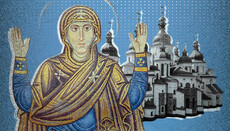
She has no Infant in Her arms, because Her children are us. Her hands are free and raised upward to hold the sky above the city with them. We analyze the secret of Ukraine's most important mosaic.
Sunday. The city awakens, and in the air, as always lately, hangs a thin, barely perceptible vibration of anxiety. We have learned to live with it, to drink coffee, to work and laugh. But somewhere at the bottom of consciousness always lives the question: "What if?..."
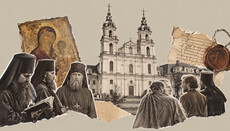
In such moments, one should not go to a psychologist or to the news feed. One should go where time stopped a thousand years ago. To Saint Sophia of Kyiv.
You enter the cathedral from bright sunlight, and your eyes need time to adjust to the twilight. Here it smells of ancient dust, incense, and the coldness of stone. You walk across the cast iron floor tiles, and your steps echo hollowly under the vaults.
You raise your head. And you see Her.
In the main apse, in golden radiance, stands a Woman with raised hands. She has stood here since the 11th century. She saw the Pechenegs and Polovtsians. She saw Kyiv burning in 1240. She saw the Nazi occupation and Soviet commissars who came with dynamite.
They all left. Turned to dust, to lines in textbooks. But She stands. The Mother of God Orans (Oranta). The Indestructible Wall.
Not paint, but stone
To understand why this image gives such a powerful feeling of protection, you need to come closer and forget about mysticism for a minute. Let's talk about the material.
This is not a fresco. A fresco is paint on plaster, it can fade, crumble, and wear away. The Orans is a mosaic. This is smalt. An alloy of glass, metal oxides, and fire. This is matter that does not age.
The ancient masters, Greeks who came to Kyiv at the invitation of Yaroslav the Wise in the 1040s, knew the secret of eternity. They used 177 shades of colors here. Just think: one hundred seventy-seven! Not simply "blue" and "gold," but dozens of nuances – from deep indigo to pale blue, from fiery red to pale sandy.
But the main secret is not in the color.
Art historian Viktor Lazarev, who studied Byzantine art, drew attention to the ingenious laying technique. If you look at the mosaic up close, you will see that the smalt cubes (tesserae) do not lie flat like tiles in a bathroom. They are pressed into wet plaster at different angles. Why?
This is an ancient 3D effect. If the wall were smooth, it would simply reflect light like a mirror, blinding the viewer. But thanks to the irregularities, light breaks up, "walking" across the surface. The golden background seems alive and vibrating. It seems that the air around the Orans moves, that it is dense and hot.
The masters created not an image. They created the effect of Presence.
When you stand before Her, you physically feel: She is here. She is not painted. She emerges through eternity.
A giant with a handkerchief
From below, from the nave, She seems proportionate to a human being. But this is an optical illusion calculated by the architects.
In reality, the Orans is a giant. Her height is 5 meters 45 centimeters. Almost six meters. The length of her palm is 55 centimeters. Imagine this hand. It is larger than a human face.
She is dressed in a blue chiton (symbol of Her virginity and human nature) and a purple maphorion with golden trim (symbol of Her royal dignity and motherhood). She stands on a golden platform decorated with precious stones.
Her pose is strict and canonical. Her hands are raised upward in the ancient gesture of prayer – Orans. Elbows pressed to the body, palms open to heaven. This is how the first Christians prayed in the catacombs. This is how the Church prays for the whole world.
But there is one heart-breaking detail that shatters this majestic grandeur.
Look at Her belt. There, behind the red sash, hangs a white cloth. An ordinary embroidered handkerchief.
Why does the Queen of Heaven, standing in the radiance of Divine glory, need a handkerchief?
Theologians and art historians say different things. Some see in this a liturgical element (the deacon's lention). But people have always seen something else.
This is a cloth for tears. She prays for this city. And She weeps for it. She has behind Her belt a means of comfort. With this cloth, She wipes away tears – Her own, when She looks at our troubles, and ours, when we come to Her in despair.
This small detail makes the six-meter monumental figure infinitely close. She does not simply "hold up the sky". She suffers with us.
Why does She not have the Child? We are accustomed to seeing the Mother of God with the Christ Child in Her arms. But the Orans is alone. Her hands are free. Why?
This contains the deepest metaphysical meaning. In the dome of Saint Sophia there is an image of Christ Pantocrator (Ruler of All). He is in Heaven. And She is here, on earth, in the Church.
Her hands are free because now, at this moment, She holds in them not one Child. She holds all of us in them. She is the wall. And while these hands are raised, the city stands.
Chronicle of survival
Why is She called the "Indestructible Wall"? This is not just a beautiful metaphor from the akathist to the Mother of God ("Rejoice, Indestructible Wall of the Kingdom"). This is a historical fact.
Remember 1240. The most terrible year in Kyiv's history. Batu's hordes broke through the defense. The last defenders of the city locked themselves in the Church of the Tithes. There were so many people, they crowded so tightly on the galleries and roof, escaping from fire and swords, that the walls of the temple could not withstand it. The Church of the Tithes collapsed, burying the people of Kyiv beneath it.
Saint Sophia also suffered. It was looted, gold was stripped away, icons were chopped. But the wall on which the Orans is depicted – stood firm. The entire city lay in ruins. But She stood over the ashes with raised hands.
The 17th-18th centuries. Times of Ruin, when Uniates and Orthodox divided the cathedral, and it stood without a roof under rains and snow. The smalt endured.
The 20th century. The 1930s. The Soviet power blew up Saint Michael's Golden-Domed Monastery. Saint Sophia was next in line. There was a ready plan to create a park in its place. But something (or Someone) stopped the executioner's hand. The cathedral was made into a museum-reserve.
World War II. Kyiv is again in flames. But not a single shell hit the main apse.
Kyivans pass down the tradition from generation to generation: "As long as the Orans stands, Kyiv stands."
This is our spiritual air defense. A protection system that has been working 24/7 for a thousand years. It requires no electricity. It does not depend on partner supplies. It depends only on prayer.
"God shall help her right early"
Around the Orans runs a black arc with a Greek inscription. We often look at it but do not read it. And there, in white smalt, a promise is laid out.
These are lines from the 46th Psalm (Ps. 46:5): "God is in the midst of her; she shall not be moved: God shall help her, [and that] right early."
In the Greek original there is a very important time specification: "πρὸς πρωΐ" (pros proi). This means not simply "in the morning," but "at dawn," "before the day comes," "in time."
The meaning of these words is striking. A city (or a human soul) in which God dwells will not fall. Help will come. And it will come not "someday," but before darkness finally swallows everything. Right early. When it seems that the night is endless, help is already here.
A pillar of fire
If you look at the Orans for a long time, your head begins to spin. The golden background pulsates. It seems that the figure of the Most Holy Mother of God separates from the wall and takes a step forward.
A blue chiton, a purple cloak, raised hands. She resembles a candle. Or a pillar of fire that led the people of Israel through the desert (Ex. 13:21).
Today we all feel vulnerable. The walls of our homes seem cardboard in the face of modern war. But we have a Wall that is harder than granite. It is built of glass and prayer. It is held together by tears and hope. It is a thousand years old, but It is not tired.
Go out on the streets of Kyiv today. Look toward Saint Sophia Square. Even if you cannot see the domes, just know: She is there. She stands. She has a handkerchief behind Her belt for your tears. And Her hands hold up the sky so that it does not fall on our heads.