Who and when began keeping parish registers in Orthodox churches?
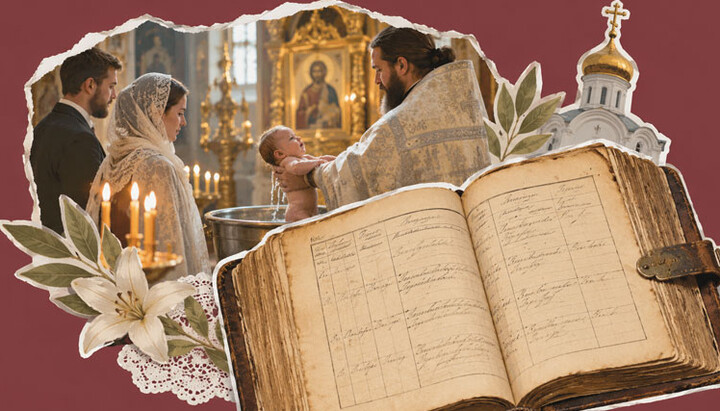
Old records of weddings, births and deaths hold amusing curiosities, rare illustrations and genealogical clues that help restore family history.
"In the Year ___, in the Month of ___, on the ___ day, in the City of ___."
That is what the blank template from the 1646 Euchologion looked like. On paper everything is simple: insert the date, write in the infant's name and the surnames of the godparents, and the report for the Church hierarchy is ready. But anyone who has ever opened a real parish register of the 18th or 19th century in an archive quickly realizes that perfect order survived only in the printed model.
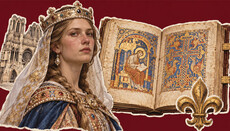
Here is an entry about a death from the Odessa archive fund for 1824. Captain Isidor Bely died. The cause of death is stated laconically: he reposed "naturally." And in the age column stands a staggering number: "at the age of 153 years!" A slip of the pen? Hardly. The parish priest Nikanor Kotelevsky confirmed this figure twice: first in the record itself, and then again in the extract.
To understand how the parish registers in which we search for our ancestors today were really organized, we will have to untangle one old myth.
The Phantom Decree of 1632
If you type into a search engine the question of when Orthodox parish registers appeared, you will almost immediately get an answer verified by a neural network: "In the Dnieper region, parish registers were introduced by order of Peter Mohyla in 1632." It sounds solid, and the name of the founder is weighty and speaks for itself. There is just one problem: no one has ever seen the hierarch's actual order.
Historians do not cite this document, because it simply does not exist in the archives. A check against the calendar immediately reveals a discrepancy. In November 1632, Saint Peter (Mohyla) was only nominated as a candidate for the Kyiv see, and his consecration took place only in May 1633. Perhaps rumor simply merged the year of the future metropolitan's election with his later reform, but this is only a conjecture.
The real thread leads from a completely different place. The obligatory recording of baptisms and marriages for Catholic parishes was introduced by the Council of Trent as early as 1563, and the Roman Ritual of 1614 described in detail exactly how these books should look. The Kyiv Metropolia needed its own response to the challenge of the times. And it appeared, fourteen years later than the mythical decree.
The Book That Few Bought
In 1646, the Euchologion compiled by the aforementioned Kyiv metropolitan was published. It was in this book that the Orthodox model of parish record-keeping appeared: how to record baptisms, marriages, burials, and the list of parishioners.
It would seem that here is the starting point. But then begins a story familiar to everyone who has dealt with reforms.
Saint Peter's Euchologion turned out to be monumental, weighty, and expensive. A village priest often simply could not afford to buy it.
According to researchers' estimates, the 1646 form remained more of a proposal that was little followed in the parishes. A telling detail: the Small Euchologion of Bishop Zheliborsky, published later and far more accessible to ordinary clergy, no longer contained any model for parish registers.
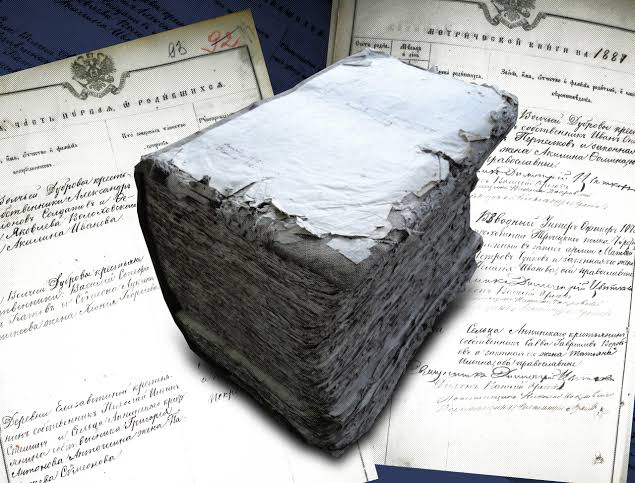
Yet living practice had overtaken even the capital's printing houses. In Zamostia, a book of the Holy Nicholas Brotherhood has been preserved under the title "Prototypon onoma." It contains 918 entries made in Cyrillic from 1630 to 1699. This is the oldest book of the Orthodox Church on Ukrainian lands – it was kept even before Metropolitan Peter's Trebnik saw the light of day. Disputes over the dates do not subside: according to other sources, entries began even earlier, from 1600, in the village of Sykhiv and in the Cathedral Church of Lviv. And in the Dnieper region, the surviving registers date only from the early eighteenth century – local historians attribute this gap to the constant devastation of the land.
The Tavern-Keeper in the Margins
The more closely one looks at the surviving eighteenth-century books from the Dnieper region, the less they resemble official registers. They are family chronicles, executed with remarkable taste: ornate initials, title pages, flowers in the margins, delicate miniatures. Some pages depict scenes from Scripture, others – churches, weddings, births, or funerals.
Sometimes the illustrator's pen strayed in an entirely different direction. In the metrical book of the Holy Trinity church in the town of Kuzemyn, Hadiach district, a signed caricature-miniature has been preserved – "The Golden Tavern-Keeper." It shows the owner of the local tavern in all his glory. It is quite clear that this man had no connection to the Church or to the metrical records. Who decided to immortalize the innkeeper in the very parish register, and when, remains a mystery.
The social map of the parish can be read from these registers without any additional explanation.
The surnames of well-to-do families were written out by the priest in calligraphic script. As godparents for infants, people tried to invite church wardens, wealthy neighbors, or heads of large families. And if at the end of the eighteenth century a long-liver of ninety-eight years died, five or even seven priests might gather for his funeral service.
Slips of the Pen on Scraps of Paper
A newcomer who comes to the archive in search of his family history often expects from old records the precision of a modern civil registry office. And he quickly runs into bureaucratic confusion. A priest might write a surname in one place and a nickname in another. The cause of death was treated with the same liberty: one priest honestly indicated the illness, while another simply wrote in this column whose relative the deceased was.
The age of the deceased is a detective story of its own. In the registers one encounters centenarians who, when checked against the baptismal record, turn out to be much younger. A person died at the age of 100, but when you start searching the register, you find that he was actually 75–85 years old. The numbers were entered by guesswork, from the words of relatives, and human memory is a changeable thing.
One should not blame the clergy of that time for negligence. It is enough to appreciate the workload of a village pastor, who had charge of a huge parish, pastoral services, a household, and no staff office whatsoever.
Entries were often made in the book not immediately but later – from hasty notes on scraps of paper. A weary complaint from a priest has survived in the "Church Herald," in which he frankly confessed: "When recording fifteen hundred souls, one involuntarily writes 17 instead of 18 at times."
When a researcher today unfolds a darkened eighteenth-century page in search of a great-grandfather, he expects the document to give a clear record, but finds something quite different – the hasty scrawl of a weary priest, an extra half-century of life attributed to Captain Bely, and a tavern-keeper's impudent doodle in the margins. It is precisely in these small slips that the real life of the parish can be seen, a life that no printed form was able to standardize.