Bergman's Winter Light tells of pastor who lost faith
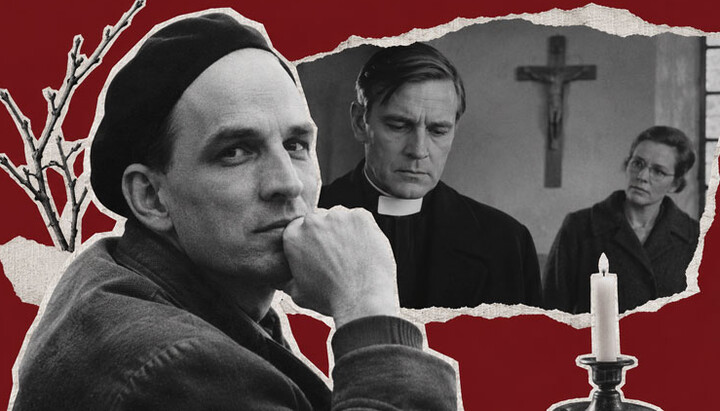
Swedish drama about a clergyman in spiritual crisis poses a moral challenge. Where does the strength to serve God come from when the soul is silent?
From the very first frames of Ingmar Bergman's black-and-white film Winter Light, the viewer finds himself among a handful of parishioners in a church. The camera of cinematographer Sven Nykvist stands motionless. It seems to peer into the faces in close-up, not allowing the viewer to look away.
At the altar serves a pastor with a cold, Tomas Ericsson. The actor Gunnar Björnstrand, according to rumors, really was sick with the flu during the filming itself, and this sickly weariness is noticeable.
The film was released in Stockholm on February 11, 1963; in the original Swedish it is called Nattvardsgästerna ("The Communicants"). All eighty-one minutes of the film contain about three hours of a single Sunday, when the priest's faith literally crumbles before the viewer's eyes.
The Camera Up Close
To achieve authenticity of composition, Bergman and Nykvist took an unexpected step. They traveled around the churches of Sweden and rejected their interiors – they seemed too beautiful and too cozy for this gloomy story.
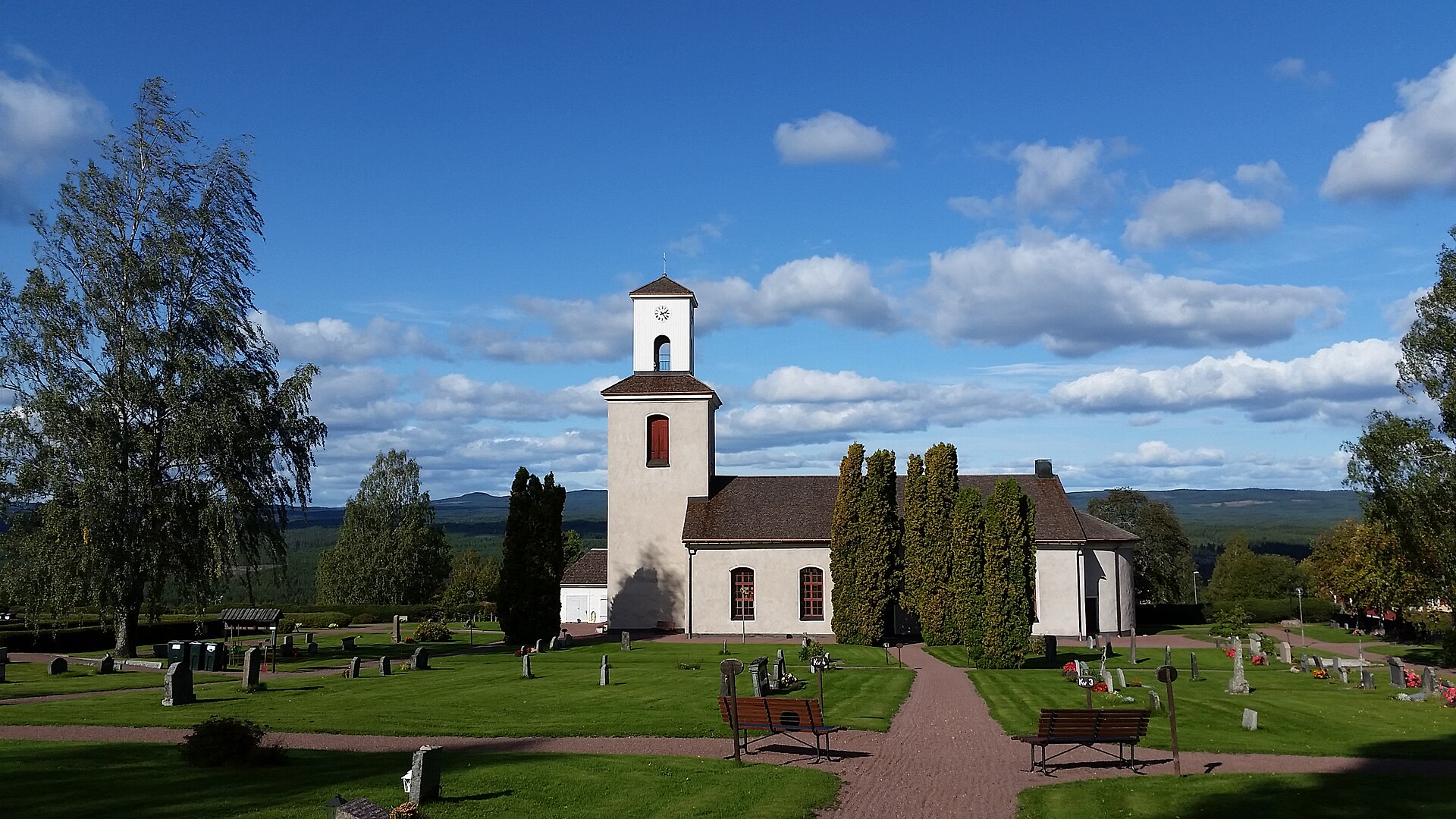
The Skattunge church in Dalarna was chosen as the prototype, while the interior space was built anew in a studio in Rosunda. The cinematographer recalled that the director made him "be literally one hundred percent realistic in the lighting."
Almost the entire film was shot in overcast weather. The sun breaks through the clouds only once – in the scene at the altar rail. This austere monochrome works more powerfully than any monologues: we feel with our skin the chill of a Sunday morning, where the bells ring in the background and the words of prayer sound without emotion.
After the morning service, the fisherman Jonas comes to the pastor. He was horrified by newspaper reports about the atomic bomb, he is literally suffocating with fear and seeks at least some spiritual support from the priest. But instead of consolation, Pastor Tomas lays bare his wound before the bewildered man – he confesses his unbelief. The fisherman leaves in silence, and a little later takes his own life on the bank of a river.
Six Minutes Without Editing
The schoolteacher Märta remains beside the pastor. She loves Tomas, but he coldly pushes her away. In the middle of the film, the camera freezes on Märta's face for a full six minutes of close-up. She reads a letter left for the pastor, in which she tells of a rash that has disfigured her body and of her unrequited attachment.
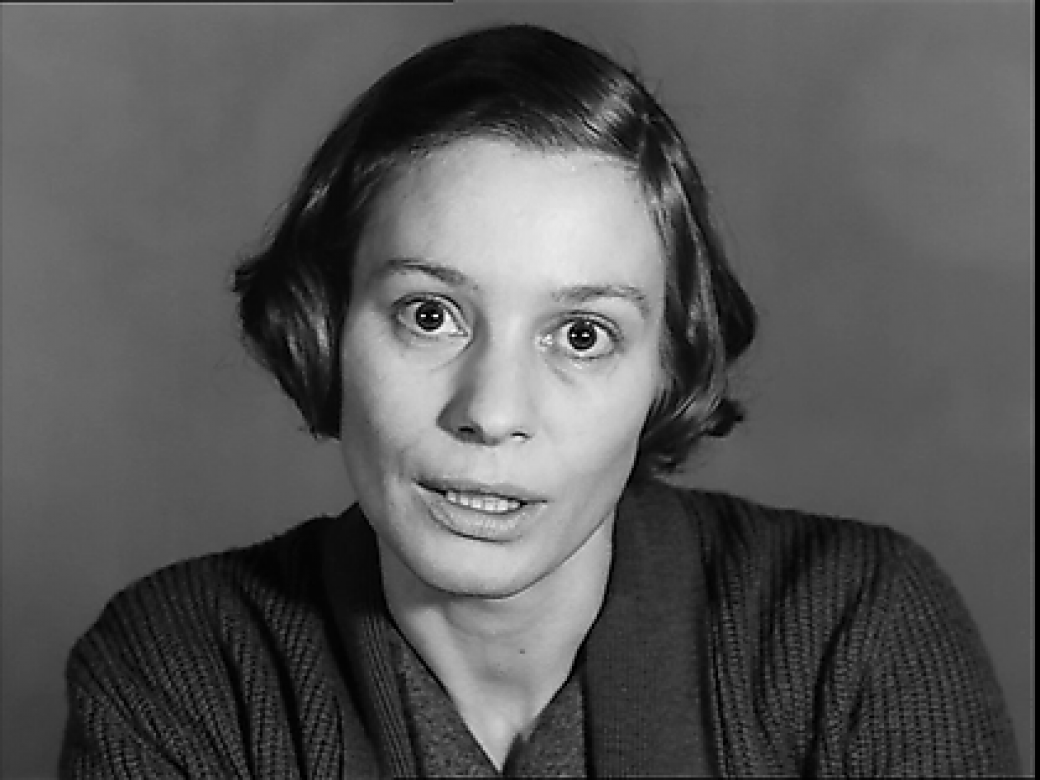
Nykvist holds the actress in the frame so close that the viewer sees the slightest trembling of her eyelids. This is one of the most honest portraits of human vulnerability in world cinema. Tomas rejects Märta, but she gets into the car with him and drives the pastor to the widow of the dead fisherman.
A Conversation in the Sacristy
Closer to three o'clock in the afternoon, the pastor reaches the second, more distant church. His mood is shattered, and inside him is scorched earth. And then an inconspicuous man appears in the frame, on whom, as it turns out, the entire semantic axis of the film rests.

This is the crippled sexton Algot. He limps, carries heavy candlesticks, lights candles, rings the bells. While the pastor is drowning in tormenting doubts, the simple sexton keeps the flame of his faith burning. In the sacristy before the service begins, Algot suddenly starts speaking with Thomas about Christ's sufferings on the Cross. He recalls the Saviour's cry in the Gospel: «Eli, Eli, lama sabachthani? that is to say, My God, My God, why hast Thou forsaken Me?» (Matt. 27:46).
Algot looks at the pastor and utters a phrase that takes one's breath away: «Surely that was the chief suffering – the silence of God». Pastor Thomas, who has felt an inner emptiness all day long, answers with a single word: «Yes».
At this moment the viewer suddenly realizes that what lies before him is not at all a story about the death of faith.
The pastor's faith has not disappeared – it has simply passed from the man in holy orders to those to whom he preached. To the crippled sexton who lights the candles. To the rejected woman who did not abandon the pastor in his trouble.
Prayer in spite of desolation
The idea for Winter Light («Communion») was born to Bergman on 26 March 1961. He wrote it down in his working notebook after hearing Stravinsky's Symphony of Psalms on the radio. The ending of the film's story, however, was suggested by life itself. Once the director travelled with his aged father, a pastor, to a small church north of Uppsala. The local priest was unwell and proposed shortening the service by omitting Communion. Bergman's father intervened – and Communion was celebrated after all.
Later the director explained the film's ending precisely by this memory: «In part, I think, the end of the play came about under the influence of my father's intervention: at any cost one must do what duty demands, especially in spiritual matters. Even if it seems meaningless».
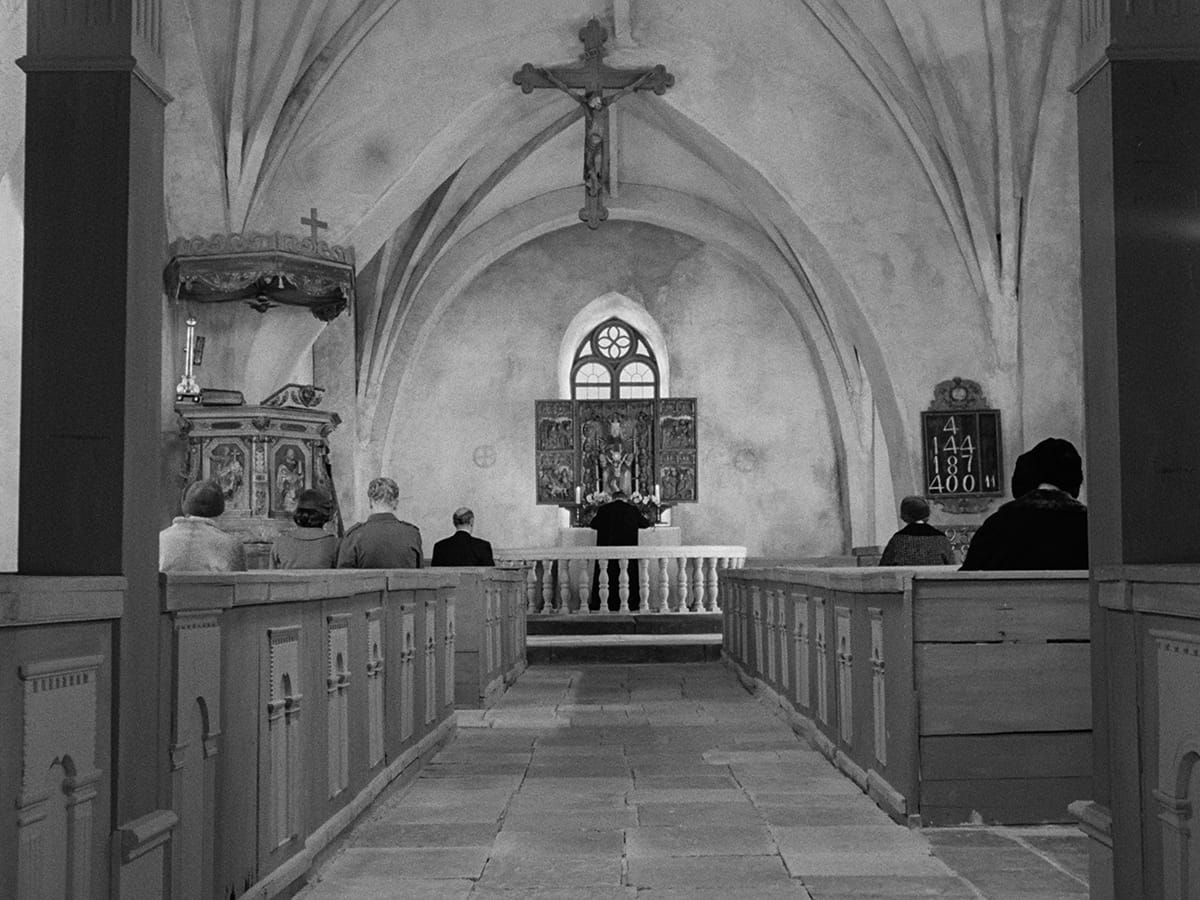
In the last shots of the film, at about three o'clock in the afternoon, Pastor Thomas comes out to the altar of an almost empty church. There are only a few people in the nave. Among them are the sexton Algot, the organist Fredrik Blom, and Märta. No one forces the pastor to begin the service. He himself steps forward and pronounces the words of the liturgical hymn Sanctus: «Holy, holy, holy, Lord God of Sabaoth; heaven and earth are full of Thy glory».
Here the film remarkably intersects with the experience of the Church.
St. John Chrysostom reminded his flock: «It is not man who makes the offered gifts become the Body and Blood of Christ, but Christ Himself, who was crucified for us». Many centuries later, a similar thought was affirmed in the Augsburg Confession: the Sacraments are effective by Christ's institution, not by the state of the minister's soul.
Sven Nykvist's camera catches the face of Thomas Ericsson for the last time. It seems to remain the same. The pastor is still suffering from a cold and is still bewildered. But the candles in the church are burning, the music of the organ fills the empty space, words of praise resound in the cold air – as a kind of sign that God continues to work in the sacred mysteries even when human feelings are at zero.