
Hospital locks UOC church, plans demolition in Zaporizhzhia
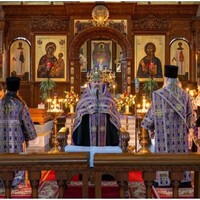
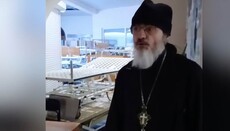
The administration of Zaporizhzhia’s Fifth City Hospital has sealed off a UOC chapel inside its premises, barricading the entrance with beds and signaling plans to dismantle the interior – including the iconostasis and altar.
The UOJ has learned new details about the actions taken by the administration of Zaporizhzhia’s Fifth City Hospital to shut down the Church of the Icon of the Mother of God “Healer” – as well as its plans to destroy it.
As Fr. Oleh told a UOJ correspondent, on March 19 the hospital’s director, Oleksandr Fedorov, came to him and stated openly: either the parish packs up its belongings and leaves the premises, or “staying in this building will become problematic.” The director then brought in the hospital’s lawyer, who read a series of official orders to the priest.
A second meeting took place later that same day, this time with the parish’s attorney present. According to the rector, the conversation was conducted in a businesslike tone; the director recorded it, and hospital lawyers and deputy medical directors were also there. The administration presented three lines of complaint.
First, the hospital management says it needs space for an infectious diseases unit – and, in its view, the church premises, located right at the hospital entrance, are ideal for that purpose. Second, the director claimed the lease had expired, even though a current Cabinet of Ministers order provides that lease matters are not to be resolved until the war is over. But most tellingly, the hospital director declared that the UOC is “not the Church” that should be inside the hospital walls.
On March 20, access to the church was cut off.
“When I came in the morning for the service, I saw that the walls had been covered with construction banners, and the director was standing there, admiring the work with obvious satisfaction. I rushed to the entrance to the church – ours is through the hospital foyer – and saw the doors blocked by beds,” Archpriest Oleh Pleten said.
According to the rector, the director told police that he is the head of the institution, that the premises belong to the hospital, and that the organization occupying them is there illegally because the lease has expired. Therefore, he claimed, he has every right to pile unwanted hospital beds wherever he pleases.
The priest stressed that the director warned them that if anyone tried to drag the beds away and clear the entrance, it would be treated as damage to hospital property. Patrol police and the local precinct officer were called to the scene, a report was drawn up, and witnesses were questioned.
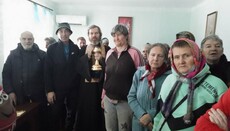
Parishioners gathered outside the church tried to reason with the director, reminding him that the church has existed for 25 years, that it is deeply needed – that patients, patients’ relatives, servicemen, and medical staff all come there. “Nothing moved him,” Fr. Oleh said bleakly.
The community was given only five to ten minutes to remove personal belongings.
“My wife and I rushed inside. I managed to grab one set of vestments, the antimension, the holy chrism – whatever I could carry in my arms, whatever I could snatch in time,” the priest said.
Most of the church property remained inside and cannot be removed without destruction.
As Fr. Oleh explained, the iconostasis is made of stone, complete with Royal Doors and north and south doors. The icons were painted directly onto the plastered walls by the well-known artist Mykhailo Chaikin – the entire upper tier and the side icons around the Royal Doors. At the High Place there is an icon built into the wall itself. The Holy Table, consecrated by episcopal rite in 2008 by the then-ruling hierarch, Archbishop Vasiliy of Zaporizhzhia and Melitopol (Zlatolinsky), is embedded in the floor, and inside it are relics of God’s saints. The church also contains relics on the table of oblation and valuable 18th-century icons.
“They are planning to build an infectious diseases unit here. Everything that gets in the way will be smashed. They are not going to preserve these sacred objects,” the rector said with alarm.
Over the past week, the parish has been unable to celebrate five services: the Parastas on Friday, March 20; the Memorial Saturday service with panikhida on March 21; Vespers on March 21; the Divine Liturgy on March 22, the feast of the Forty Martyrs of Sebaste; and the subsequent services of Great Lent.
With only a minimal set of liturgical items at hand, the parish moved its services to the private home of one of the faithful. There, on March 22, the Divine Liturgy was served; on March 25, the Great Canon of St. Andrew of Crete was read during the service of St. Mary of Egypt; and the Akathist of the Praise of the Most Holy Theotokos is now planned.
The hospital’s legal department informed the rector that renovation work in the church premises is already scheduled to begin on Monday.
“My soul aches. I am afraid they will break in and destroy everything,” the priest admitted.
The Church of the Icon of the Mother of God “Healer” had served at Zaporizhzhia’s Fifth City Hospital since 2001. It was founded at the initiative of the hospital’s then-chief physician, Anatoliy Dubovsky, who, seeing the empty wing of the hospital’s winter garden, spoke what proved to be prophetic words: that a church would one day stand there.
For a quarter of a century, the priest celebrated services there, walked the wards, gave Communion and heard the confessions of the sick, and performed baptisms, weddings, and funeral services for patients and hospital staff. The church’s glass walls filled it with light, while at sunset the ochre tones of its interior cast a golden glow that brought comfort to all who entered.
As Archpriest Oleh Pleten noted, the case of the “Healer” church is not an isolated one. There are 12 hospital churches in the Zaporizhzhia Eparchy, yet with the involvement of the same director, Fedorov, churches at the Fourth and Sixth Hospitals have already been shut down, while the church at the Tenth Hospital is under pressure. According to the rector, churches are being pushed out of hospitals in a systematic way.
“There are places of particular sorrow – cemeteries, military units, hospitals, prisons. In such places, churches must exist. A believing person must not be obstructed in his striving toward God,” the rector emphasized.
Earlier, UOJ reported that in Zaporizhzhia, the administration expelled a UOC community from a hospital church.