
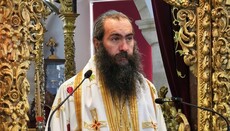
Metropolitan Tychikos officially appeals to Cypriot and European courts
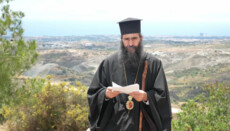
The hierarch of the Church of Cyprus, a year after his removal, accused the Archbishop of bias and called for a fair investigation.
Metropolitan Tychikos of Paphos published an appeal to the faithful of the Paphos Metropolis on May 25, 2026, a year after his removal from the office, in which he detailed his position for the first time. The text of the appeal was posted on the hierarch's official website.
The Metropolitan called his removal anticanonical and stated that the decision to remove him was made before he had the opportunity to fully defend himself. According to him, the complete list of charges was never presented to him. For approximately eight months before the official ban, the Archbishop informally prevented him from conducting divine services. Met. Tychikos also reported that his appeal to the Constantinople Patriarchate (Ecumenical Patriarchate) was not considered on its merits – instead, he was asked questions about the Council of Crete, the Ukrainian issue, and ecumenism.
The hierarch announced his intention to appeal to the civil courts of Cyprus, and if necessary, to the European Court of Human Rights. The goal, he said, is not to fight against the Church but to achieve a fair procedure in accordance with canonical law, the Constitution of the Republic of Cyprus, and international human rights standards. The Metropolitan also mentioned testimonies and evidence that, in his conviction, point to collusion between Archbishop George and the dismissed mayor of Paphos involving major financial interests.
The UOJ publishes the full text of Metropolitan Tychikos' appeal.
Statement
To the Christened staff of the Holy Metropolis of Paphos,
Venerable fathers and blessed people of the Holy Metropolis of Paphos,
With pain of soul but also with unwavering faith in God, I feel the need to address all of you today, the people with whom we have walked together for so many years, who have prayed together, who have shared joys, struggles, tears and hopes.
You know me. You know me not from rumors, nor from accusations, but from our daily common journey within the Church. You know my love for Paphos, for its people, for our priests, for the monasteries, for our saints, for the young, for the poor and suffering people who daily sought a word of comfort and hope.
I was born and raised in Paphos. Here are my roots. Here I dedicated my life to Christ and His Church. For about twenty-five years I served this Metropolis with all my strength. I never sought office, money or glory. All I desired was to serve, to preach the Gospel, to confess, to support the weary man and to help every soul to draw closer to Christ.
When you elected me as your Metropolitan, I considered it a cross of responsibility and not a throne of power. And I tried with the fear of God to be worthy of your trust.
Unfortunately, however, in a climate of slander, pressure and false accusations, I was led to the uncanonical removal from the Metropolitan Throne of Paphos.
I say this with pain but also with honesty: I felt that the decision had been made in advance (there are people who testify to this) before my own voice was even heard. The decision to remove me preceded the accusations.
The charges brought against me were never given to me clearly and completely, so that I could truly defend myself.
To this day, a year later, I do not fully know who accused me, what exact evidence was presented, and on what basis I was judged unworthy of my ministry. In fact, some of the accusations that were unjustly attributed to me appear from evidence to have been committed by His Beatitude himself, without any question of his judgment being raised.
The process I experienced did not resemble, for me, a fair trial. I found myself in an environment of great pressure, with interruptions when I attempted to speak and with words that deeply hurt my soul. I heard descriptions such as “you are a liar”, “you are incompetent”, “you are illiterate”, “you are disobedient”, “you are ungrateful”. In such a climate, without substantial preparation, without legal or other support, a person finds it difficult even to express clearly what is inside him. The saddest thing was when I saw His Beatitude, who as my father for so many years, whom I loved and still love and respect, who should have embraced me, covered me, protected me, was expressing and acting in every way with the aim of my extermination.
And at that moment I felt that, no matter what I said, the decision had already been made.
I then went to the Ecumenical Patriarchate with the hope and prayer that my appeal would be truly examined. However, there, as I experienced it, the accusations that concerned me and which were refuted were not substantially examined. Instead, I received questions of a more general ecclesiastical content about the Synod of Crete, the Ukrainian, ecumenism and the dialogues.
And within me arose an even stronger feeling that the essence of my case was never truly heard and judged.
My brothers,
I confess before you that there were moments when I broke down as a human being. Under the weight of the pressure, the phone calls, the events and the mental burden, I was led to ask for forgiveness and a chance for resolution.
But this apology was not an admission of guilt.
It was a cry of humiliation and pain.
Within the Church I learned to apologize not only when I am at fault, but also when I want to preserve peace, unity and love. I apologized even if, in my conscience, I did not feel guilty for what was attributed to me.
For eight months, while I was not on a holiday, the Archbishop informally forbade me to perform services until he reached the holiday. The reason is, I believe, purely his personal purpose and not that of our Church. I lived a year without speaking with prayer, amidst a constant barrage of new, non-existent slanders. I hoped that His Beatitude and my brother synod members would try to observe the sacred canons and respect them first and then towards the hierarchal office that I hold. At least to wait for the decision of the courts. I declare before God and people that my conscience remains clear. How will the Church feel before God and history for the condemnation of an innocent person and even without a real trial? A trial where I do not yet have in my hands the decision on my removal but a statement.
I feel innocent of the accusations leveled against me. I consider them unfounded, slanderous and unfair. And there are people, testimonies and evidence that will reveal the truth. Unfortunately, there are testimonies and testimonies of a conspiracy between His Beatitude and the deposed and retired mayor of Paphos. Great financial and other interests are at stake, something that I believe the conscience of His Beatitude the Archbishop of Cyprus and the other Metropolitans is aware of.
That is why I have decided to resort to the State and if necessary to the European courts, in order to annul any decision issued against me without my full rights to be heard, and to provide evidence of my innocence. And the greatest criminal is tried, not executed in summary proceedings, in modern democracies.
Not because I want to fight the Church, but so that it does not bear the stigma of an unjust condemnation of a member of Her Body.
The Church is my mother. I was born spiritually in the Church and I want to live and die in the Church.
I am not asking anyone to judge the faith or doctrines of the Church. I am only asking that it be examined whether a fair process was observed, whether there was a real possibility of defense, and whether what is provided for in the Sacred Canons, the Constitution of the Republic of Cyprus, and the basic principles of human rights were applied.
In these days of great trial, God did not abandon me.
Shortly before the session of the Synod, which instantly and uncanonically turned into a court, I had an intense spiritual experience. As if in a vision, I saw the Apostle Paul, how he was wronged, how he was led to Rome seeking justice, and how he stood firm in faith through his trials. This event remained deeply engraved in my mind.
But the most shocking thing was when, during the proceedings, I was removed from the room for the decision to be made, I stood alone and prayed.
I held a new New Testament in my hands. I opened it three times, each time praying fervently to Christ to give me strength. And all three times I came upon the gospel passages of the trial and condemnation of our Lord Jesus Christ.
I didn't think it was a coincidence.
I felt it as a sign of comfort and strength from God, to bear this cross with faith, patience, and humility.
My dear children,
What hurts the most is not what is said about me. It is the pain I see in the eyes of the people of our Metropolis. It is the tears of priests, monks, elders, children, young people and families who feel deeply hurt by what happened.
And then I understand that this trial doesn't just concern me. It concerns an entire spiritual family.
But I beg you from the bottom of my heart: do not lose your peace. Do not lose your faith in the Church and in Christ.
Pray for everyone. And for those who have wronged me. Let us not let the devil sow hatred, division and revenge among us.
I didn't learn to hate.
I learned to forgive, to pray, and to hope.
And I say it with all my soul: this is my place. This is my life. Here I want to live, here I want to die and here I will be buried, close to the people I loved and who loved me. The fact that they asked me to abandon my Metropolis without even having proven accusations after an unjust process that was not even a trial, this is not permissible by the sacred canons. On the contrary, in the tradition of our Church, the bishop is married to his Church - Metropolis and no one can in any way separate him. The separation that is underway is fictitious.
I am ready to endure everything for the truth, for my flock and for Christ. They ask me for a confession of faith which I wrote twice, in accordance with the holy canons of our Church and it seems they did not accept it. We cannot violate the canons and our Orthodox tradition or confess contrary to the holy canons.
I firmly believe that truth does not fear examination. And I believe that, in the end, not men but God will speak last.
I hope and pray that justice, whether in Cyprus or in the European courts, will judge impartially, with clarity and objectivity, and that with God's help, vindication and redress of this great injustice will come.
I ask His Beatitude and my holy brothers in the Synod not to rush into decisions and faits accomplis that will irreparably hurt the Church. All I ask is to be able to be heard impartially and for truth and justice to prevail. Because without truth and justice, peace and unity cannot prevail in the Church and in our country.
I ask for your prayers in this fight until vindication and restoration.
With fatherly love and wishes,
† The (former) Tychikos of Paphos
As the UOJ reported, the Supreme Court of Cyprus rejected the appeal of Metropolitan Tychikos of Paphos. The conflict around the Paphos Throne has continued for more than a year: earlier the Synod of the Cyprus Orthodox Church also set the date for the election of a new Metropolitan of Paphos.