
When consumers rebel against the Lord
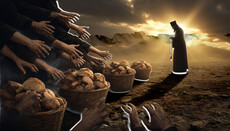
The Gospel account of the feeding of the five thousand lays bare an enduring tragedy. The events in the wilderness divided society into consumers, dependants, and the rare few who truly seek God.
The Gospel story of the feeding of five thousand people with five loaves and two fish is traditionally seen as a triumph of divine mercy and omnipotence. Yet on closer examination, what happened in the wilderness appears as a moment of profound spiritual crisis – one that exposed the eternal tragedy of human expectations.
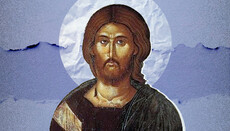
At the very moment when the Savior broke bread for the hungry multitude, an invisible boundary opened between the Creator and His creation. The miracle became a perfect mirror, reflecting the inertia of fallen human nature – its tendency to seek earthly satisfaction from God while completely ignoring His Living Word.
The events in the wilderness divided those who witnessed the miracle – and, after them, every subsequent generation of Christians – into three distinct groups, each responding in its own way to the bread broken by Christ.
Three groups who witnessed the miracle
The largest group interpreted material satisfaction as a direct call to action. Having seen their immediate need instantly met, the Jews resolved to proclaim Jesus their earthly ruler at once – even against His own will. The psychology of that crowd has proved remarkably resilient, and nothing in it has changed over the centuries.
A vast multitude of baptized people, living under the illusion of sincere faith, sees God primarily as a means of resolving domestic, financial, and physical difficulties.
For them, the miracle of the loaves is the perfect model of religion: all a person has to do is show up, sit down on the grass, and passively wait for material blessings.
The trap of consumerist dependence
Slightly above this group stand those who have outgrown exclusively earthly needs and turned their gaze toward spiritual values. They ask God not for material abundance, but for purification of the heart, deliverance from the passions, and the planting of virtues. Yet their attitude toward the miracle in the wilderness remains fundamentally consumerist. They expect the Lord to transform their inner world in exactly the same way – from the outside, without any personal crucifixion, through a single act of blessing.
This is a refined form of spiritual dependence, disguised as profound humility. Appealing to their own weakness and worthlessness, such believers refuse to make any effort, hoping that the Almighty will perform the miracle of their transformation entirely on His own and spare them the necessity of a painful inner struggle.
Only an exceedingly small number of Christians can see beyond the baskets of multiplied food to the Giver Himself.
For such people, the miracle in the wilderness becomes a pane of transparent glass through which they behold the Divine Logos. They came for the Word, not for the fish, and for them Christ Himself is the true Bread of Life. These are the future mystics, hesychasts, and lovers of silence – those who seek to move beyond a utilitarian understanding of religion.
Armchair inspectors of other people’s grace
The paradox is that among this well-fed crowd there is always a special class of people – the modern counterparts of the ancient scribes and Pharisees. They are self-appointed experts, judges, and prosecutors who possess ready answers to every question of canonical and spiritual life. Though they have no personal experience of deep communion with God, they pronounce verdicts with ease upon those who do.
For these zealots of the letter, the miracle of the loaves is understandable and canonically acceptable because it is tangible and fits neatly into the familiar order of things. But when genuine ascetics who have outgrown procedural and rule-bound piety begin to speak of contemplation of the Uncreated Light and unceasing prayer, these inspectors of grace immediately accuse them of spiritual delusion and heresy.
Today, in the age of the internet, the voices of such armchair theologians ring out especially loudly, unleashing waves of ignorant criticism against living bearers of the spirit of Christ.
The persecution of the great hesychasts
The history of the Church is woven through with the persecution of Christians who refused to make earthly or even spiritual comfort their final goal. The fate of the great lovers of silence has always been tragic, because their deep hunger for prayer terrifies the well-fed majority.
A striking example is St. Symeon the New Theologian, whose experience of real communion with God provoked fury among Constantinople’s intellectual elite. Even his epithet, “the New Theologian,” was originally hurled at him as a mocking label – an accusation of spiritual pride.
Official hagiographies often smooth away the sharp edges, but echoes have survived through the centuries of how heavily the monastic brethren were burdened by the presence of St. Seraphim of Sarov. In the twentieth century, the great Athonite elder Joseph the Hesychast and his closest disciples endured an avalanche of accusations of Messalian heresy from self-proclaimed experts in Orthodoxy – simply because they restored the living practice of inner prayer to monastic life.
The same fate befell Archimandrite Sophrony Sakharov. His writings have since become classics, while the names of his highly learned accusers have faded into oblivion.
The stages of the soul’s maturity
Yet hidden within this historical drama is an important law of spiritual growth, also reflected metaphorically in the miracle of the loaves. The human soul matures by stages, and each stage has its own proper labor.
At the beginning of the path, in the neophyte stage, a person resembles the crowd receiving bread from the hands of Christ’s disciples. Active external work, social service, and the building up of the Church’s earthly life are natural at this point.
At the next stage, as the soul matures, the center of attention must gradually shift inward, demanding a deeper life of personal prayer and a withdrawal from distraction.
At the summit of this path comes complete stillness and contemplation, when earthly bread and outward activity lose their primary importance.
Tragedy begins when a person – or an entire church community – becomes stuck at the first stage. What is a blessed labor for a young Christian may become, for someone spiritually mature, a screen behind which he hides from the frightening silence of a genuine encounter with God.
The Lord fed thousands of people in the wilderness with physical food not so that they would turn Him into a political leader or an eternal provider of bread. He satisfied their most basic earthly hunger only in order to lift their consciousness higher and awaken in them a thirst for Truth.
The miracle of the loaves confronts every person with a radical question about the motives of his faith. Christianity does not promise comfort or automatic deliverance from life’s hardships. It is a path of ascent – from selfish consumption to that one good and better part which shall never be taken away from the soul that has resolved to remain with Christ in the wilderness, even when the earthly bread is gone and the crowd has dispersed.