
Rome's basilica bust re-attributed to Michelangelo
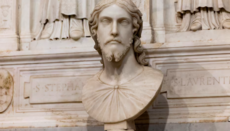
A marble bust that has stood for centuries in one of Rome’s basilicas has been re-attributed to Michelangelo after nearly 200 years in obscurity.
On March 4, 2026, Rome reported a re-attribution of a marble bust of Christ that had stood in the Basilica of Sant'Agnese fuori le Mura for centuries and was considered the work of an unknown author. As Reuters reports, research has shown that the sculpture may belong to Michelangelo Buonarroti.
The bust of Christ is kept in the basilica on the ancient Roman street Via Nomentana. Originally attributed to Michelangelo until the early 19th century, the work later lost its association with the Renaissance master and remained unnamed until the present day. The sculpture was long listed among anonymous works of the Roman Renaissance school.
Italian independent researcher Valentina Salerno - a member of the Vatican committee for the celebrations marking the 500th anniversary of Michelangelo’s birth - has re-attributed the sculpture to the Tuscan artist. Salerno’s research is based on long-term archival work rather than stylistic analysis alone, drawing on notarial records, posthumous inventories, and indirect correspondence linked to Michelangelo’s final years in Rome.
The researcher notes that the discovered documents call into question the widespread belief that Michelangelo destroyed his works at the end of his life. According to archival data, some of his works could have been passed on to students and trusted associates, and then ended up in religious institutions, where they were stored for a long time without indication of authorship.
Today the sculpture is displayed in a side chapel of the Basilica of Sant'Agnese and is protected by an alarm system. It is assumed that the research results will serve as the basis for further verification and discussion in the international scientific community.
Earlier, the UOJ wrote that archaeologists uncovered one of the largest Christian churches of the 4th century near Rome.