
On the eve of the trial, or the UOC without Kyiv Metropolia
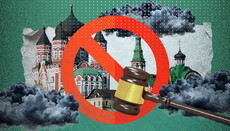
On the eve of a court session that may outlaw the Kyiv Metropolia of the UOC, it is worth reflecting on how the Church might respond.
On December 11, 2025, yet another court hearing is scheduled that could bring an end to the legal existence of the Kyiv Metropolia of the Ukrainian Orthodox Church. Yes, Ukraine is experiencing powerful centrifugal forces today, yet there is still no indication that President Zelensky’s pressure on the UOC will disappear or even ease.
Naturally, the Kyiv Metropolia will use every legal avenue available to avoid being banned. But if the prohibition is nevertheless issued, how might the Church respond to such a challenge? What would the UOC become if the Kyiv Metropolia vanished? Would it dissolve into a mere collection of dioceses? Or remain a single Church?
Today, the Kyiv Metropolia is the visible sign of unity for the Ukrainian dioceses. At every liturgy in every parish, the name of His Beatitude, the Metropolitan of Kyiv and All Ukraine, is commemorated. The Primate of the UOC possesses certain authority over all dioceses, monasteries, and parishes. The Holy Synod governs the Church and issues decisions that, within its competence, are binding on all UOC communities. There are also various synodal departments, commissions, and institutions whose work encompasses the entire Church.
What happens if this visible sign of unity disappears? Ontologically, nothing changes. The UOC without the Kyiv Metropolia (it sounds surreal, yet it is possible) would still remain the same Church of Christ. All its bishops and priests would remain grace-bearing, all its sacraments valid. The Church would continue to unite people with God in the Holy Eucharist. And eucharistically, it would remain one with all the Local Orthodox Churches throughout the world, just as it is today.
But administratively and canonically – let us use that term – the UOC would need to find new structures through which the unity of Ukrainian dioceses could manifest itself. Imagine that the Metropolitan of Kyiv loses the suffix “and All Ukraine” and becomes simply the diocesan bishop of Kyiv. If, in this capacity, he is entrusted with convening the Council of Bishops and the Council of the UOC, and with presiding at those gatherings, then unity would remain intact. This would not affect the capacity of these bodies to resolve matters within their present competence.
Let us look at what may happen to the functions and powers that the UOC Statute currently assigns to the Primate, the Holy Synod, and the synodal commissions and departments.
The Primate of the UOC
Curiously, the current UOC Statute, in the section dedicated to the Primate, describes the procedure of his election, the titles and ceremonial privileges he enjoys, but says almost nothing about the essence of primacy itself. That essence is hinted at only indirectly in clause 9(a), section 5: “He maintains the unity of the episcopate of the UOC.”
In other words, the Metropolitan of Kyiv is not the head of the UOC, not an administrative ruler, but a symbol of unity.
Can he maintain unity if the words “and All Ukraine” disappear from his title? In our view – yes.
Until the fourth century, this was precisely the norm. Those bishops who later became known as patriarchs and primates of Local Churches were, at that time, simply bishops of their cities: Rome, Antioch, and so on. Their authority did not extend beyond their own cities. Yet, by virtue of their spiritual authority, rooted in the antiquity and apostolic origin of their sees (though not only that), they convened councils, presided at them, and implemented their decisions. They also mediated disputes between bishops, although an unsatisfied party could always request conciliar resolution.
What prevents this from being implemented today? With the status of first among equals – in the original sense – the Metropolitan of Kyiv could remain the unifying figure he is now. Certainly, some of his current functions would shift either to the Council of Bishops or to the bishops themselves. For example, the authority to reconcile bishops informally could remain with him, but formal judicial authority should rest with the Council. And matters such as granting a bishop leave for more than 14 days could easily be handled by the bishops directly.
The Holy Synod
Today, the Synod is effectively the key administrative body of the UOC. It appoints and removes bishops, creates and dissolves dioceses, monasteries, and educational institutions, and resolves pastoral, theological, liturgical, financial, disciplinary, administrative, and many other issues.
Yet the UOC Statute (at least the official text registered and published on the DESS website) does not explain how this body is formed or who appoints or elects its members. It only says that the Synod governs the Church between Councils of Bishops and is composed of twelve hierarchs.

If the Kyiv Metropolia is banned, this organ will suffer first. Nevertheless, its powers can reasonably be redistributed among diocesan bishops and the Council of Bishops. And this redistribution would actually be more natural and consistent. For example, it is unclear why a diocesan bishop cannot independently establish a monastery in his diocese or appoint its abbot. It is likewise unclear why the Council of Bishops – the highest body – operates on the basis of the decisions of the Synod – a lower body. Yet that is exactly what the UOC Statute states.
Synodal institutions
The list of synodal institutions is extensive. Most are either inactive or have very low effectiveness. The only truly essential institution is the ecclesiastical court. But this court can easily be formed by the Council of Bishops and function under its authority. The Council itself can act as an appellate instance.
Diocesan bishops
If the Kyiv Metropolia is abolished, the authority and responsibilities of diocesan bishops will need to grow substantially.
In fact, the current UOC Statute contains a striking duality regarding diocesan hierarchs.
On the one hand, it declares that “a diocesan bishop, by virtue of inheriting the authority of the holy apostles, is the primate of the local Church,” and that “hierarchs possess the fullness of hierarchical authority.” On the other hand, this fullness is constrained by numerous limitations that reduce bishops to mid-level administrators subordinate to the Synod.
But when powers expand, responsibility expands as well. To whom should bishops be accountable? The answer is twofold: first, to the Council of Bishops and the Council of the UOC; second, to the clergy and the laity of their dioceses – to what is traditionally called the Church people.
Conclusions
If the Kyiv Metropolia is eliminated as the unified administrative structure of the UOC, the Church’s unity will face a serious challenge. When diocesan bishops receive additional powers and come to feel – not in theory but in practice – that they possess the fullness of apostolic authority, will they resist the temptation to isolate themselves, to act contrary to conciliar consensus? Will the Church begin to fragment into separate dioceses? Will conflicts and disagreements arise?
And here is another major question: if the Council of Bishops or the Council of the UOC replaces the Kyiv Metropolia, will that prevent the state from banning the Church? Only history can answer.
For many centuries the Church has lived with administrative structures serving as the cement of unity. Persecution is hardly the right moment to overhaul the Church’s governance. Therefore, every effort must be made to preserve the current order – the Kyiv Metropolia and the established tradition of administration – until better times. But it may happen that such efforts fail, and the Church will have to respond to the reality of the Metropolia being outlawed.
In our view, the response should begin with recognizing that the statement “A diocese headed by its bishop is a local Church” is not merely a beautiful line from the Statute – but the original Orthodox ecclesiology.
And second, the strengthening of conciliarity in Church governance. Such an approach is neither new nor foreign. It is our own historical experience.
Perhaps this upcoming trial on banning the Kyiv Metropolia is an occasion to return to that experience, to reflect upon it, and to apply it with sensibility and creativity to the challenges of today.