
Bethany: Christ’s quiet haven before Golgotha

In the final days before the Crucifixion, Christ would leave the crowded streets of Jerusalem each evening. Why did He go beyond the Mount of Olives, and what did He seek in a poor village on the edge of the desert?
On the evenings of Holy Week, the Savior would withdraw from Jerusalem. Not only because His human nature required sleep and rest away from the endless verbal battles. In those spring days, the ancient city seemed to breathe with anxiety, as though it were turning into a vast trap, tightening inexorably with every passing hour.
The gates of the Temple shut with a dull crash that echoed through the narrow streets. For Passover, the capital was overflowing. Pilgrims from every corner of the land, from Galilee to Idumea, poured toward the great shrine. Jerusalem roared with voices, waiting for political deliverance from Rome, yet utterly failing to grasp what kind of salvation this feast would truly bring. Gradually, the crowds melted into the alleyways, and many of the poor lay down to sleep right on the cooling stones of the pavement. The air hung thick with the smoke of sacrifices, while reinforced patrols of legionaries stood watch at the key crossroads.
But before full darkness fell, one could still leave through the eastern gate of the city. From there began the road away from the noise of the capital. First came a steep descent into the shadowed ravine, to the spring waters of the Kidron, then a slow climb along the stony path to the summit of the Mount of Olives. Dry dust whispered beneath one’s feet, little stones skittered underfoot, the overheated face was touched by the cool night wind, and all around loomed the dark, twisted silhouettes of ancient olive trees. Beyond the ridge, the path descended the eastern slope to the place where little Bethany waited.
The Gospel of Matthew describes this rhythm with simple brevity: “And he left them, and went out of the city into Bethany; and he lodged there” (Matt. 21:17). Luke adds: “And in the day time he was teaching in the temple; and at night he went out, and abode in the mount that is called the mount of Olives” (Luke 21:37).
The path over the mountain
This route demanded real physical strength after a long day of preaching, yet it brought astonishing relief. Behind Him lay feverish Jerusalem, where every word He spoke was caught by cunning spies, where hatred and suspicion hung heavy in the air. Ahead, beyond the mountain ridge, stretched a deep and healing silence.
Bethany lay hidden on the slope just fifteen stadia from the capital – about three kilometers on foot. The mountain range blocked the direct view completely. From there, neither the golden roofs of the Temple nor the towering walls of the Fortress of Antonia could be seen. The vast city could not reach that place with its angry breath.
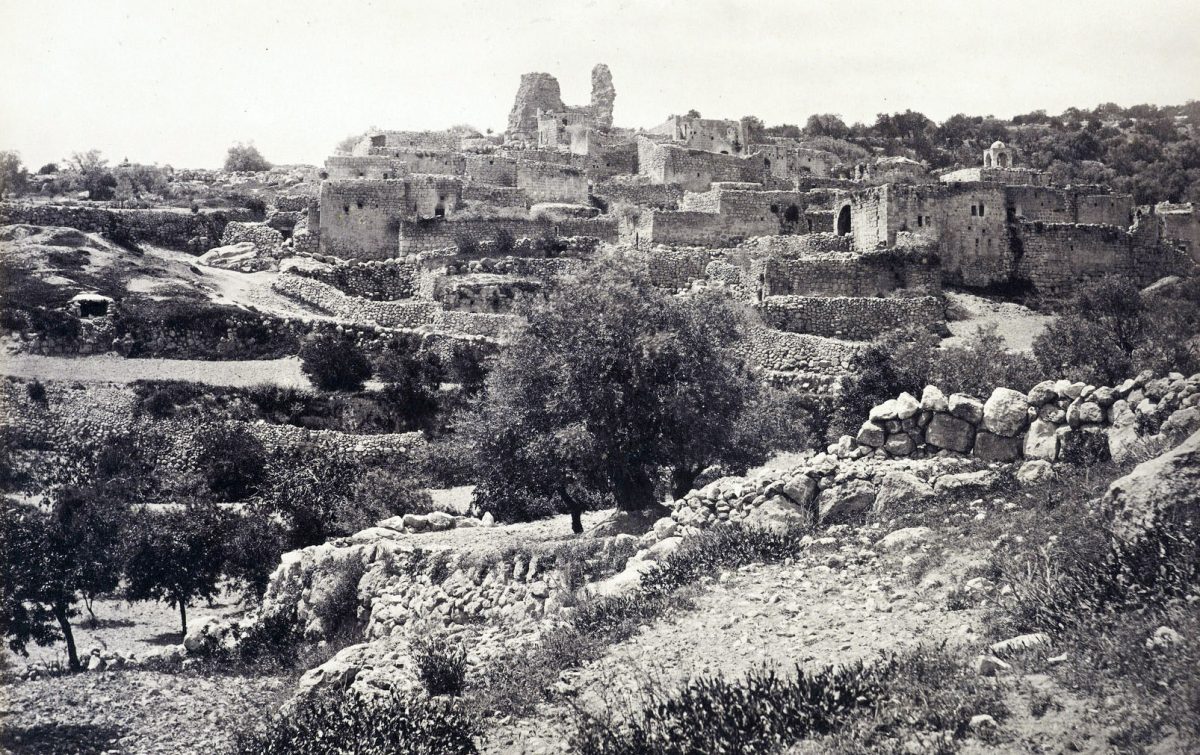
The ancient name of this place, Beit-Anyah, has been interpreted in different ways by scholars: “house of the poor,” “house of affliction,” “house of misery.” In its cramped huts lived those whom respectable townspeople preferred to avoid with disdain – the sick, the beggars, the outcasts of society. But Christ came there for far more than a night’s lodging.
It was there that Lazarus lived – the man whom the Lord had only recently raised from the dead – together with his devoted sisters, Martha and Mary. The Evangelist John describes this extraordinary bond in detail (John 11:1–18).
In Bethany, the Savior was not awaited as a popular preacher who had to be tested constantly with tricky questions about taxes and the Law. Here, He was awaited as the dearest of friends.
Here, He could take off His dust-covered sandals, wash His weary feet with cool water, sit at a simple wooden table, and simply be among those who loved Him sincerely. In this village, the theology of friendship is revealed with piercing fullness: the Incarnate God, in His human nature, had need of simple care and warmth on the eve of a universal catastrophe.
Guardians of ritual law
During these journeys, Christ also stayed in the house of Simon the leper. The Evangelists Matthew (26:6–13) and Mark (14:3–9) tell us this directly. The episode carries not only narrative weight but profound historical significance, explaining much about the strategy of the Sanhedrin.
The chief priests gathered in their spacious courtyards, feverishly discussing plans for an arrest. They understood perfectly well that any attempt to seize Jesus by day in the Temple would provoke a spontaneous and bloody uprising among the people. What they needed was a dark night and a deserted place. But to act in Bethany itself was exceedingly difficult for them.
On the eve of the greatest feast of the year, the Pharisees guarded ritual purity with obsessive strictness. Any physical contact with a leper, or even entering under the roof of his dwelling, rendered a Jew unclean for seven full days. That meant a strict and unavoidable prohibition against taking part in the sacred Passover meal.
Such a religious rule made any sudden night raid on Simon’s house almost impossible for the zealots of the Law. No Temple guard would dare violate the Sabbath or defile himself before the Passover lamb. Those rejected by society unwittingly sheltered the Savior more securely than fortress walls could have done. The chief priests knew Whom they were seeking, yet they were bound hand and foot by their own prescriptions.
At the edge of the boundless desert
The geography of Bethany is deeply symbolic. According to the biblical narrative, just beyond the outskirts of the village began the steep descent toward Jericho. It was a harsh and wild land of sun-scorched rock and deep, dangerous ravines.
It was on that very road that, in the parable of the Good Samaritan, robbers beat a solitary traveler and left him half dead. The waterless desert breathed its heat just beyond the last houses. Bethany stood at the very edge of the inhabited world, on the border of human shelter, and beyond it stretched only ringing emptiness.
The weight of that daily choice – to leave the safety of a house on the edge of the desert and return willingly to the city already preparing a cross for You – the Savior felt it constantly in the final stretch of His earthly path.
On Thursday, the disciples went into the city to prepare the upper room for the Mystical Supper. That spring evening, Christ left Bethany for the last time. The road followed the familiar slope, yet everything around Him had already changed in some almost imperceptible way.
After supper, He did not go back over the mountain to His friends. He descended to the Kidron stream and stopped on the western slope of Olivet, in the Garden of Gethsemane. Exactly halfway between the sheltering refuge and the hostile city. There He remained in the coolness of the night, peering into the darkness, waiting until torchlight began to flicker in the ravine and the clash of swords rang out through the night.
The Gospel texts do not dwell on everyday details: whether the Apostles slept under a roof or lay directly on the ground beneath the vast canopy of stars. The heart of the matter lies elsewhere. These simple, frightened men followed Him into the darkness day after day. And He Himself, knowing everything in advance, returned again and again to meet His tormentors.
Bethany remains forever in the Gospel story not merely as a temporary refuge from the Temple guards. It became the place of farewell – a quiet, radiant pause of love before the world shuddered beneath the heavy blows of the hammer on Golgotha.