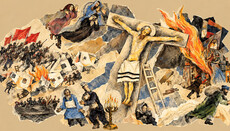

The bronze voice: how the Paschal peal returned to the Lavras
When the Church was meant to be silenced, bells were hurled from their towers. But the sound returned – now it travels over fields and rivers, reminding us that we are no longer alone.
In the 1930s, when the authorities decided the Church had to disappear, they began with its voice. A silent church is easier to declare empty.
A great bell cannot simply be carried out through a doorway. It was cast on site, at the foot of the tower, in a deep brick-lined pit. It was wider than any passage. So it was not carefully lowered – it was thrown down. People felt the impact through the soles of their feet, even standing far beyond the gates. Fragments burst outward in sharp sprays, and in official reports this was called “collecting scrap metal for industrial needs.” But memory preserved something else – the sense of a city being stripped of its voice.
The peal of bells is the only part of the service that escapes beyond the church walls.
To hear the choir, you must step inside, remove your hat, take your place. But the bells find you on their own. In a field. On the outskirts of a factory district. In a locked room. They reach you where you are. Perhaps that is why they were feared. First, the Church was deprived of its language, reduced to a private affair enclosed within four walls – and only then were its gates locked.
Height and reach
The architects of the great Ukrainian lavras were masters of space. They did not simply build tall towers – they harnessed wind and water so that sound might live as long as possible.
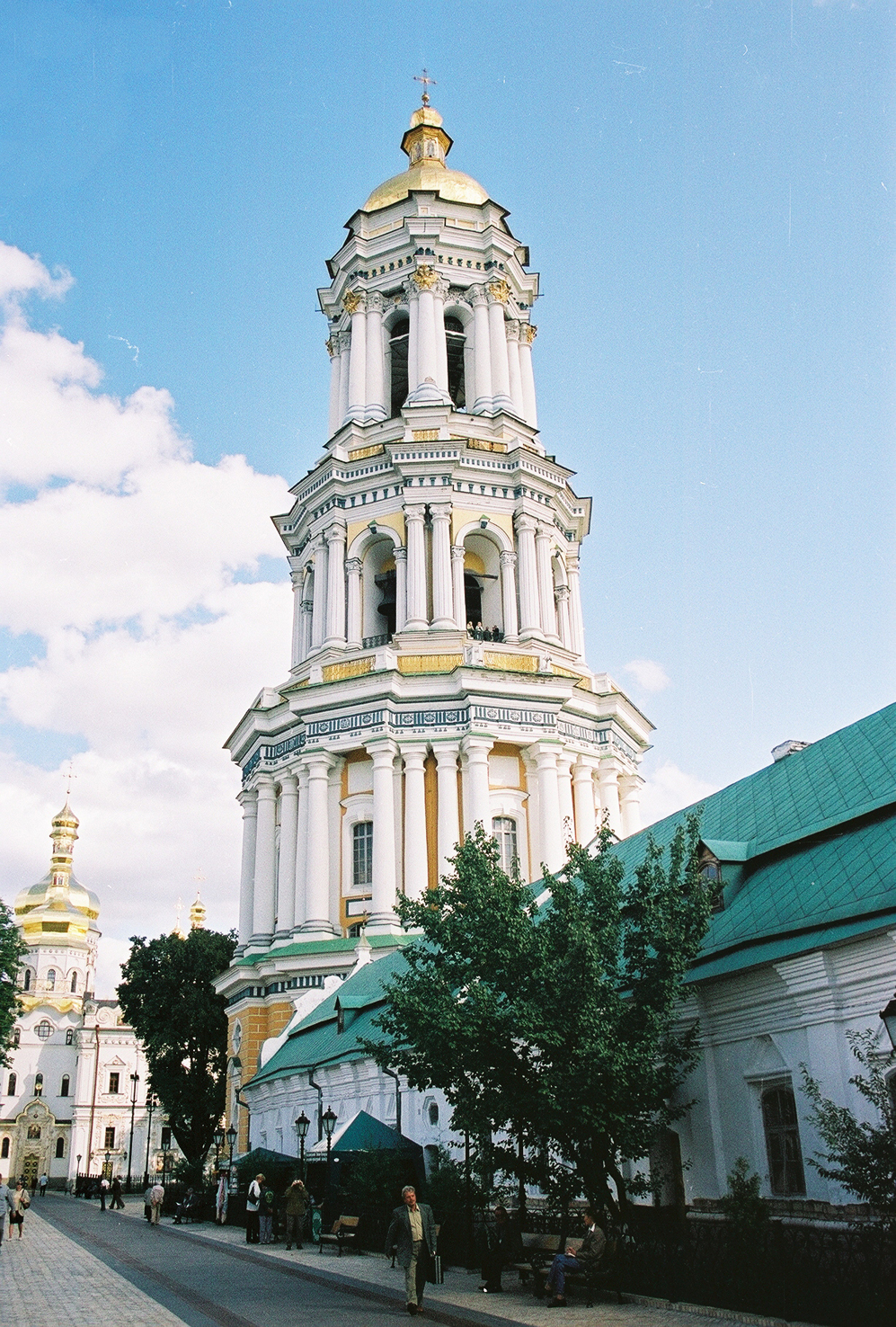
The Great Lavra Bell Tower in Kyiv rises nearly one hundred meters – the highest point on the right bank. In the eighteenth century, before the Dnipro was veiled in smog and engine noise, its voice, on a clear day, could reach the farthest villages across the river. The sound did not merely dissipate – it rolled across the water, which acted as a vast resonator.
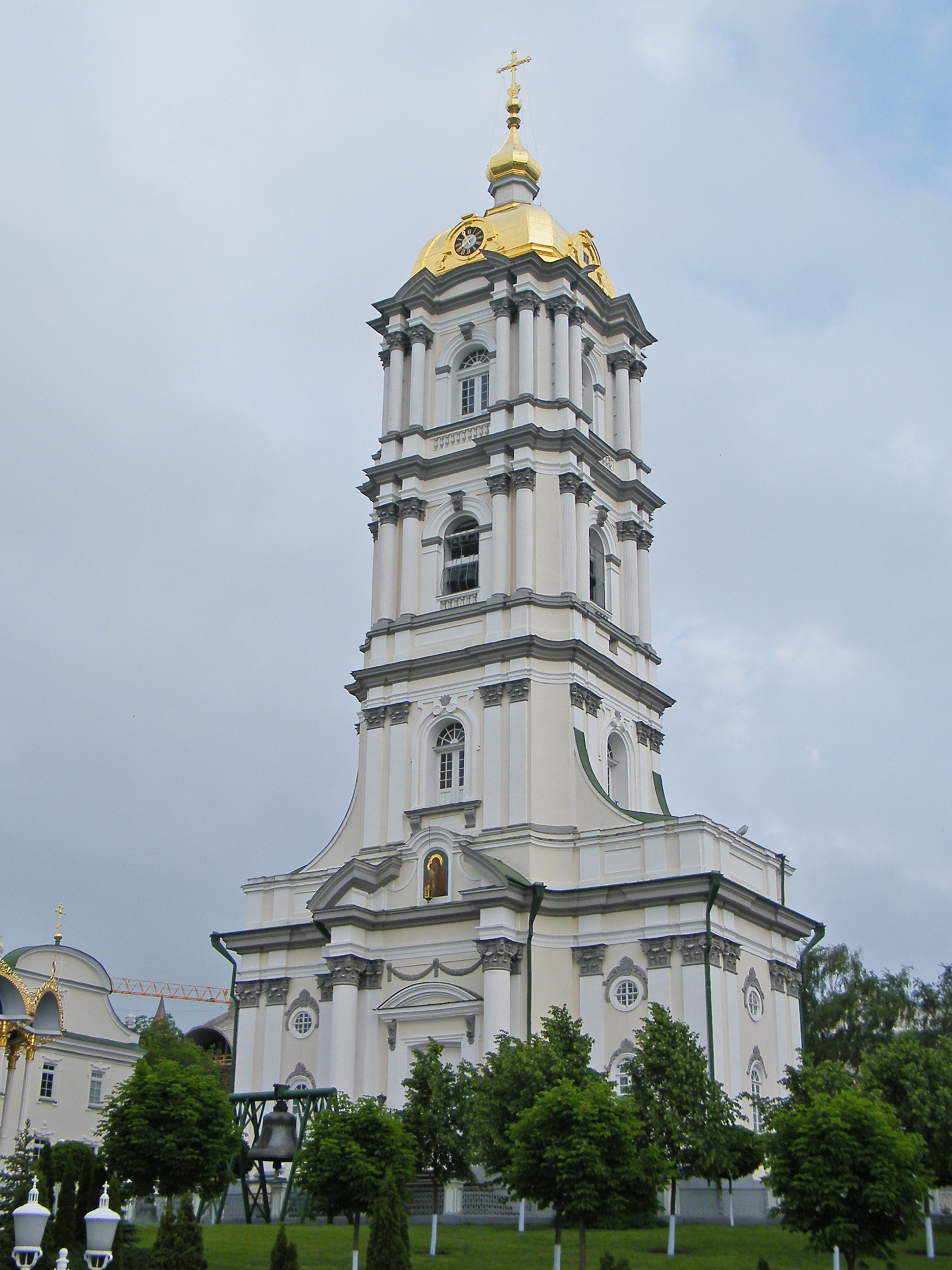
In Pochaiv, the bell tower stands above the endless Volhynian plain. There are no mountains or dense forests to obstruct the sound; it travels freely, unhindered. And in Sviatohirsk, above the Siverskyi Donets, the towers seem to grow out of chalk cliffs. The white stone reflects the sound, while the river below catches it and carries it onward, into the quietest hamlets.
1.jpeg)
This was not a race for architectural records. Towers were raised on heights so that the sound might embrace as much land as possible. “Their voice has gone out into all the earth, and their words to the ends of the world” (Rom. 10:18). For the builders of the past, these words became a design brief. The voice of the Church had to reach even those who felt abandoned.
Wood and metal
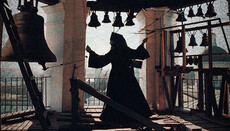
In the rhythm of Pascha, there is also silence. From the evening of Great Thursday, when the Gospel readings recall Christ’s arrest in the garden, bronze falls mute. There comes a time when metal has no right to sound.
The monastic rule prescribes the use of a wooden semantron. A long plank struck with a mallet. Its sound is dry, abrupt, almost rough. There is no song in it, no flight. It recalls the blow of an axe, the hammer against nails. It is the sound of calamity, of a world that has lost its heavenly resonance. And that silence gathers, thickens, becomes almost tangible until the Paschal night.
And then – rupture. No warning, no gradual swell – all the bells at once. A bursting peal, a polyphony, a joyful chaos of bronze voices. It feels like a sudden breath after a long-held pause. “Let everything that has breath praise the Lord!” (Ps. 150:6) – the final psalm sounds like long-awaited permission: now we may breathe and sing at full voice.
During Bright Week – the first week after Pascha – the bell towers of lavras and monasteries stand open. Anyone may climb the steep steps, take hold of the cold rope, and strike the bronze. These are the only seven days in the year when the Church places its voice into everyone’s hands. And when we ring the bells ourselves, we feel the heavy bronze answer in our palms. The Church’s voice becomes our voice too.
The anatomy of return
A bell has a human anatomy, the specialists say. It has “ears” for mounting, a “body,” a “skirt.” And it has a tongue. In earlier times, when authorities wished to punish a bell for sounding an alarm at the wrong hour, they would “tear out its tongue” – remove the clapper. The bell remained hanging, a mute figure of bronze, crippled.
Those who gave it these names understood something essential: the bell is a mediator. It can be silenced, melted down into tractor parts or cannon, buried in the earth. But its voice always returns.
Above the hills of the Kyiv Caves, above the plains of Volhynia and the chalk cliffs of the Donbas, metal hums again. Bells once shattered against stone have returned to their places, cast anew.
A person who hears that sound from miles away, even without seeing a single dome, receives a simple message: you are not alone. Somewhere beyond the horizon, believers stand and celebrate life. It is a vibration that passes through air and time.
The bell has always been inconvenient for those who wished to scatter people into isolation. It gathers us – the weary, the doubtful, the lost. It reminds us that we belong to something greater than our fear or our daily routine. You cannot shut it out. You cannot ignore it. It simply is – like light, like wind, like the quiet joy of being alive.