
Why has the Culture Ministry not been banned yet?
There are numerous traitors and collaborators within the Ministry of Culture, the Verkhovna Rada, and the SBU. Yet for some reason, only the UOC is labeled “pro-Moscow.”
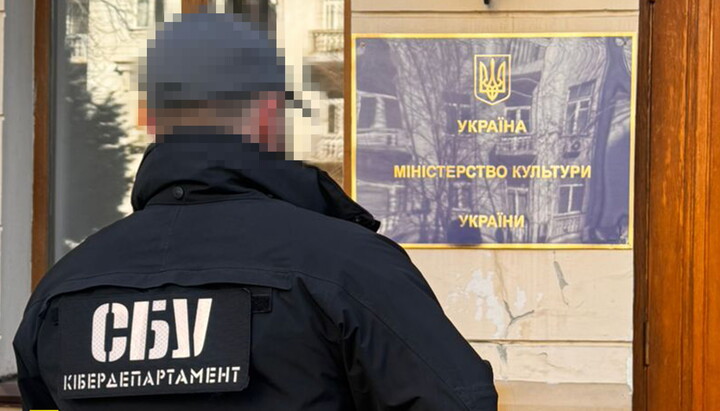
At the end of March, the SBU detained the head of a department within the Ministry of Culture on charges of justifying Russian aggression and praising Putin. The ministry promptly issued a statement saying that “the information disclosed by the SBU concerns an individual official and does not reflect the position of the ministry.” The message is clear – the entire institution cannot be branded hostile because of the actions of one official. Collective responsibility does not apply here.
Now consider other examples. Since 2022, several members of parliament have turned traitor and sided with Russia. There has been no formal statement by the Verkhovna Rada on this, yet no one in government, society, or the media claims that the parliament as a whole is a collaborator structure that should be dissolved.
Another case. After the annexation of Crimea, the overwhelming majority of SBU personnel on the peninsula turned traitor. A total of 1,391 individuals defected, including one major general and 47 colonels. In his book “The Showman,” Simon Shuster cites former NSDC Secretary Oleksiy Danilov as saying that at the start of the full-scale invasion, the highest number of deserters among law enforcement agencies was in the SBU.
Again, we do not hear accusations that the SBU as a whole is an enemy structure.
And rightly so. Neither the Ministry of Culture, nor the parliament, nor the SBU can be held responsible for the actions of individual people.
But when it comes to the UOC, this logic seems not to apply. Its clergy and even ordinary believers are now labeled as “Muscovites” and “spiritual occupiers.” Communities are driven out of their churches, monks from their monasteries, and the entire Church is being systematically pushed toward destruction.
When will logic begin to apply?