
Why persecutors of the Church sooner or later end up in the dock
Those who attack the Church most aggressively are usually using it to cover up their own crimes – and sooner or later they pay for them.
“Touch not Mine anointed, and do My prophets no harm” (1 Chron. 16:22). These words of Holy Scripture are not an abstract warning. They are a law that operates with the same inevitability as the laws of physics. And recent events confirm this with frightening clarity.
If one traces the fates of those who in recent years have acted most aggressively against the Orthodox Church, a striking pattern emerges. Very many of them have ended up as subjects of criminal cases, defendants in corruption proceedings, or participants in dubious schemes. Persecution of the Church and Her clergy is almost always a curtain behind which entirely different business is being done.
A lesson from Paphos
The former mayor of Paphos, Cyprus, Phedonas Phedonos, is the freshest illustration of this spiritual law.
Phedonos was one of the chief organizers of the campaign to depose Metropolitan Tychikos of Paphos. For months he made the rounds of Cypriot television channels – even during Holy Week – and, through slander, waged a campaign against the hierarch. Phedonos went so far as to dictate openly to the Holy Synod what it “must” do. He repeatedly insisted that Metropolitan Tychikos was incompetent as an administrator (though the facts indicate otherwise), claimed he was “inaccessible” to ordinary people (though the hierarch served Liturgies in various localities of the eparchy almost daily), and declared that a man striving for spiritual life belonged in a monastery: “If someone desires absolute peace, absolute silence, and closed doors, there are many monasteries for that.”
In the end, the Synod adopted a decision to remove Metropolitan Tychikos – a decision taken with violations of the Charter of the Church of Cyprus. On October 17, this decision was affirmed by the Patriarchal Synod, and on January 8, 2026, Metropolitan Tychikos was suspended with a total ban on priestly ministry.
And what happened to Phedonos himself? Already in early February 2026, a scandal erupted in Cyprus involving him. He was accused of several crimes, including rape, domestic violence, and financial fraud. As a result, he was removed from his post as mayor by the Cypriot Minister of the Interior. As we can see, the “law of recompense” is relentless: you orchestrated a deposition – you received a dismissal. Thus, Phedonos sought to make Tychikos a former Metropolitan of Paphos, but… he himself became a former mayor of Paphos.
“Mindich-gate”
On October 31, 2025, Zelensky signed a decree imposing 10-year sanctions on UOJ journalists and the outlet “First Cossack”: bank accounts were frozen, media activity was banned, and phone and internet service was cut off. Of course, journalists are not the Church – yet they are people who have devoted their lives to defending her. And their only “guilt” in Zelensky’s eyes is that they reported on events surrounding the UOC; they have no other “crimes.”
Literally a few days after the sanctions were imposed, the world was shaken by “Mindich-gate” – the largest corruption scandal in the modern history of Ukraine.
According to NABU, Zelensky’s closest friend, Tymur Mindich, ran a kickback scheme of up to 15% on contracts of Energoatom. At least 100 million dollars were stolen – during wartime. During searches, NABU found stacks of dollars sealed in American bank wrappers – money from Western aid. In addition, the case materials include the phrase attributed to one of the defendants: “Two million went to Moscow.” Interesting – to whom?
Let us simply compare: church journalists – 10 years of sanctions; corrupt officials who stole hundreds of millions – 3 years of sanctions (instead of ten). In documents, Mindyich and Tsukerman are listed as citizens of Israel, which allows them, as Ukrainian citizens, to freely dispose of their Ukrainian assets. Two employees of their “back office” were released on bail within a day – 37 million hryvnias were posted by a company whose authorized capital is 1,000 hryvnias.
At the same time, Metropolitan Arseniy of Sviatohirsk – a pastor whose Lavra became a refuge for thousands of Donbas refugees – has been sitting in pretrial detention for nearly two years without the right to bail. It is the shepherd who helps the suffering, not the swindlers who rob the people, whom the state tries most harshly of all.
Notably, it was precisely the NSDC – three members of which (including Umerov) are mentioned on the “Mindich tapes” – that not long ago imposed sanctions against UOC priests and bishops. A coincidence? Hardly.
Spiritual laws work both ways
Here one cannot help but notice a paradox. It is known that a number of Ukrainian officials turn to fortune-tellers, “psychics,” and occult practices – this has been reported repeatedly by Ukrainian and Western media alike. Occultism in government offices has long ceased to be a secret: Yermak and other high-ranking figures, according to the press and members of Zelensky’s former close circle (for example, Yuliia Mendel), resort to all manner of “seers” and shamans.
One would think that people who seriously believe in the action of certain “otherworldly forces” should at least suspect this much: if metaphysical laws exist, they operate in both directions. You cannot believe in “energies” and at the same time not fear the consequences of attacking the Church of God. You cannot go to shamans for “protection” and simultaneously bring upon yourself what no shaman can shield you from – the wrath of God.
Spiritual laws do not differ from physical ones – they act regardless of whether we know about them. You attack the Church – you suffer. Not because someone is taking revenge, but because that is the law. And money earned on the blood and suffering of people carries not only a material, but also a metaphysical content. It is called an eternal curse. Those who initiate aggression against the Church would do well to remember this.
An “FSB mole” fabricated cases against the UOC
Another proof that spiritual laws work may be the story of an exposed “FSB mole” among SBU personnel. Thus, on February 13, 2025, the then head of the SBU, Maliuk, detained Colonel Mykola Makinovych – chief of staff of the SBU’s Anti-Terrorist Center. According to Maliuk, Makinovych had worked for the FSB for years. His “T” department, formally tasked with combating terrorism, since 2018 had been “identifying crimes” among UOC clergy. The methods were typical: “pro-Russian” literature was planted during searches (as in Metropolitan Jonathan’s case), testimony from “activists” was used without evidence, and “experts” were brought in who were later implicated in corruption.
So it turns out that the structure fabricating cases against the Church was controlled from Moscow? If one considers that persecution of the UOC deepened the split within society, one can conclude that this is precisely what the Kremlin needs.
Portraits of “patriot-corruptionists”
The examples from the top are far from all. At the regional level, the pattern is even more vivid. Here are concrete people and concrete facts.
Maksym Kozytskyi, head of the Lviv Regional Military Administration. He stood behind the elimination of the UOC in Lviv Region, including the demolition of St. Volodymyr’s church. With pathos he announced that no UOC communities remained in Lviv Region. He is suspected of stealing humanitarian aid worth millions, building a “family” road for 25 million hryvnias to his father’s resort, and maintaining ties with Gazprom. The man who shouted loudest about “Moscow priests” turned out to be far closer to Moscow than all of them put together.
Anatolii Bondarenko, mayor of Cherkasy. With his support came the bloody seizures of the Nativity of the Theotokos Monastery and the cathedral: priests and believers had arms, legs, and jaws broken; shots were fired from traumatic weapons прямо in the church. Bondarenko flaunted his involvement: after the seizure of St. Michael’s Cathedral, he was elected head of the OCU parish council.
Back in 2017, prosecutors served him with a notice of suspicion under Article 364 of the Criminal Code of Ukraine (“abuse of power”) for illicit enrichment of several million. Journalists from Lakmus and 1800 asked uncomfortable questions about his estate on the Dnipro’s bank, bought at a throwaway price. The entire city buzzes about Bondarenko’s schemes. Apparently, with bloody attacks on “Moscow priests,” the mayor decided to prove his patriotism and silence critics.
Oleksandr Tretiak, former mayor of Rivne. He actively facilitated violent “transfers” to the OCU. According to NABU, he was charged with a conflict of interest and removed from office by a court. Within a year of taking office, he mysteriously bought a house for $90,000. Why “mysteriously”? Because a month before Tretiak’s purchase, it had sold for $220,000.
Fedor Androshchuk, director of the National Museum of the History of Ukraine. He oversaw the demolition of the Desiatynnyi Monastery, calling it “trash.” Then he left the country. According to MP Bobrovska, he “got lost at the opening of an exhibition in Lithuania.” It turned out Androshchuk is a citizen of Sweden who never planned to live in Ukraine in the first place. The official demolishing our shrines was not even truly a Ukrainian official.
Oleksandr Supruniuk, mayor of Netishyn. He publicly called the Church a “biological weapon” and supported church seizures. It turned out he was profiting from the war: drones purchased on his initiative for 20+ million hryvnias had inflated component prices; the damage to the budget exceeded 6 million hryvnias. In the end, Supruniuk was served with a notice of suspicion.
Serhii Hamalii, former head of the Khmelnytskyi Regional Military Administration. In 1997 he was detained for drugs and racketeering. He actively organized “transfers” to the OCU through signature falsification – more than 30 complaints were filed in courts. He was dismissed for drunk driving. For 2023 he “earned” 17 million hryvnias; his wife bought a house in Poland.
Mykhailo Holovko, head of the Ternopil Regional Military Administration. On June 21, 2023, he promised to “drive the Russian church” out of the Pochaiv Lavra. On June 26 – five days later – he was detained for extorting 1.8 million hryvnias from a volunteer. Five days between the promise to “drive out the Church” and the arrest. If that is not the action of a spiritual law, then what is?
Oleksandr Symchyshyn, mayor of Khmelnytskyi. In spring 2023, Khmelnytskyi became a record-holder for church “transfers” to the OCU, carried out with direct involvement of Symchyshyn’s administration.
He too found himself at the center of a corruption scandal. Symchyshyn implemented a scheme: the city takes out a loan for a waste-processing plant, repays it from the budget, and the waste-hauling companies raise prices. As a result, residents pay twice, and possible embezzlement may exceed a billion hryvnias. The loan is 28.5 million euros, while the project is valued at 36.5 million euros – which attracted the attention of the EBRD.
Serhii Bobukh, a Krasyliv businessman and official. Bobukh led the seizure of the Nativity of Christ church in Krasyliv. But we already know the pattern: when an official actively participates in “seizing” churches, it is almost always tied to corruption or scandals. The Krasyliv story confirms it: Serhii Bobukh is entangled in several controversies.
Recently, in Khmelnytskyi, his administration allowed illegal advertising of the FavBet betting company on city маршрутки, violating Ukraine’s Law “On Media.” FavBet belongs to Andrii Matiukha, who obtained a Russian passport.
In addition, Bobukh and his family received six hectares of land intended for ATO participants, though they themselves never served at the front.
Why do they do it?
A natural question arises: why do all these people, implicated in corruption, attack the Church so aggressively? Everything we have described above clearly shows that officials use “patriotism” merely as a cover for their own interests.
The tactic, in our view, is extremely simple: shout about “Moscow priests” – and suddenly you are a “patriot,” whom it is “a sin” to suspect of acting against the Ukrainian people. Because while that people are fighting each other over churches, one can calmly carry out suitcases of money.
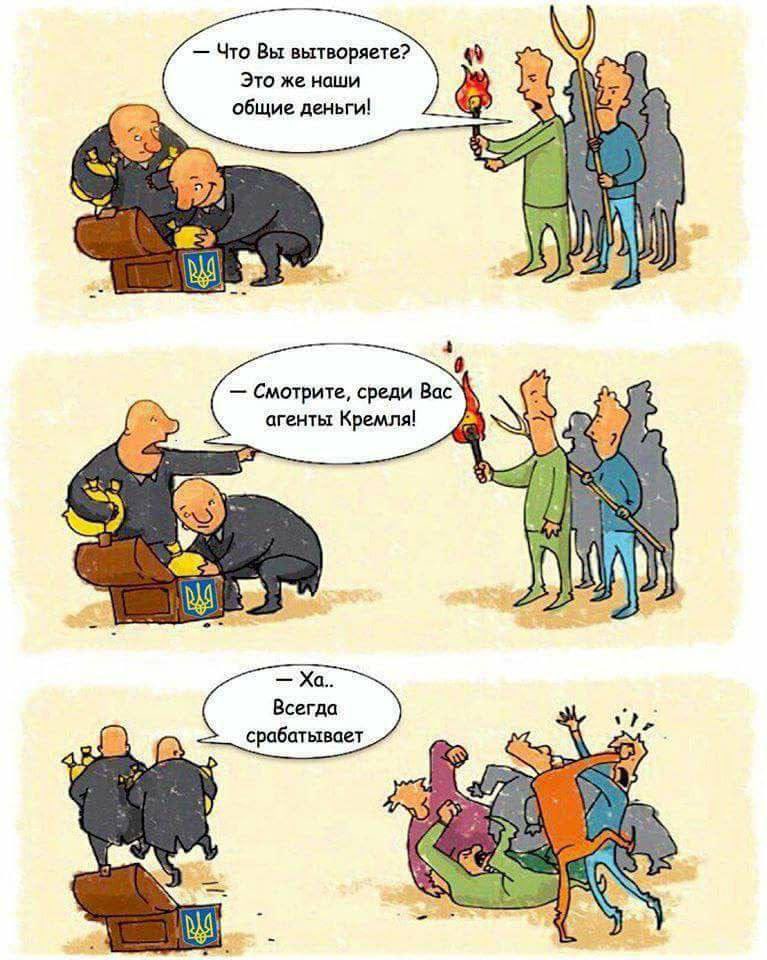
A person with a clean conscience will not go seize a church or fabricate a case against a priest. He will not “prove patriotism” by humiliating his fellow citizens. But when there is no conscience, fear of exposure appears. And the best way to divert attention is to point at someone else: “Look – there are Kremlin agents among you!”
For such people, breaking the law has long become a habit. Seizing a church is merely one more manifestation of it. And here one must understand: whoever violates God’s law will easily violate human law as well.
“God is not mocked”
All the examples given are not conjecture. They are documented, public facts that anyone can verify. What is it – chance, coincidence, a statistical anomaly?
No. It is a law. “God is not mocked” (Gal. 6:7). And when people trample the Church – they suffer. Always. Depriving a bishop of the right to serve the Divine Liturgy, banning sacred ministry for personal ambitions, seizing churches for political points, fabricating cases against priests – all of this goes beyond simple injustice and borders on blasphemy. And that means the punishment will not be delayed.
The trampling of human laws – and, as a consequence, God’s laws – cannot remain without consequences. “Everything secret becomes revealed.”
We do not rejoice at anyone’s fall. But we hope that all participants in persecution of the Church will come to their senses and understand what they are doing – while there is still time. And if you hear a politician say that the Church is “the Kremlin’s hand,” look at where his own hands are at that moment. Practice shows that in the overwhelming majority of cases, those hands are firmly stuck in our own pockets.