
Estonia: European testing ground for freedom of conscience
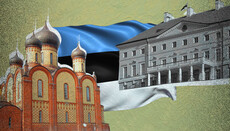
Estonian authorities are putting pressure on the Church. Can the state, under the pretext of security, regulate matters that belong to faith and canonical tradition?
Estonia is a legal democratic state, an EU and NATO member. But today the authorities of this country are demanding in ultimatum form that the Estonian Church distance itself from the Russian Orthodox Church, otherwise it will have to cease its activities.
The statement by the Estonian Orthodox Christian Church (this is exactly how the Estonian Church of the Moscow Patriarchate is now called after changing its name) that it operates within the framework of Estonian legislation, participates in public and charitable life, has repeatedly condemned Russia's war in Ukraine and prays for peace, is considered insufficient by the authorities. But does the state have the right to interfere in the canonical structure of the Church and dictate what it should do in this field?
If the authorities have concrete evidence of unlawful activity by the Church as a whole or its individual structures, they have every right to punish such activity and demand that it cease. However, canonical subordination, in itself, clearly does not fall into this category. Therefore, the actions of the Estonian authorities appear as an interference in the canonical sphere of the Church’s life.
Hostile influence?
The support by the leadership of the Russian Orthodox Church for Russia's war against Ukraine has indeed become a serious problem for church structures that are canonically connected to the ROC but are territorially located in other countries. In March 2024, the World Russian People's Council under the chairmanship of Patriarch Kirill declared that "the special military operation is a Sacred War in which Russia and its people, defending the unified spiritual space of Holy Rus', fulfill the mission of the 'Restrainer'."
Unfortunately, this and many other statements by the leadership of the Russian Church leave no doubt that ideologically the Russian Orthodox Church supports the aggression in Ukraine. But does this mean that all church structures canonically connected to the Russian Orthodox Church automatically take the same position? Absolutely not. Can the ROC leadership influence the position of the clergy and believers in such structures? This cannot be asserted without evidence in each specific case.
Actions of Estonian authorities
On May 6, 2024, the Estonian parliament, the Riigikogu, adopted a statement condemning the actions of the Moscow Patriarchate in justifying and supporting Russian aggression against Ukraine, declared it an institution "sponsoring Russia's military aggression" and indicated that the Russian Orthodox Church uses the ideology of the "Russian world" as an instrument for promoting war.
And then the Riigikogu took questionable actions regarding its own Orthodox citizens. In May 2024, the authorities stopped renting premises to the Church. Then the Ministry of Foreign Affairs began demanding public assessments of Patriarch Kirill's statements. And in September 2024, the Ministry of Internal Affairs declared the necessity of a complete break between the Estonian Church and the Russian Orthodox Church. In January 2025, Estonian authorities approved a bill requiring the Church to break ties with the ROC.
On April 9, 2025, parliament adopted amendments to the "Churches and Congregations Act" aimed at "preventing the use of religious organizations to incite hatred or violence".
However, the formulations of these amendments go far beyond the stated goals. The first version of the amendments stated that churches, parishes and monasteries in Estonia cannot be legally or economically connected with a foreign spiritual center or governing body that poses a threat to Estonia's security, constitutional or public order. In other words, the object of regulation became not only the illegal activity of specific individuals, but also the canonical relations of a religious organization with an external spiritual center.
The law also provided for a mechanism whereby a parish or monastery could adopt a new statute and make changes to the registry without the consent of church leadership if such consent was "unrealistic to obtain." This is nothing other than an encroachment on the doctrine of the Church. As early as the turn of the 1st and 2nd centuries, the holy martyr Ignatius the God-Bearer formulated the principle: "Let no one do anything pertaining to the Church without the bishop," which subsequently found reflection in numerous canonical rules.
On April 24, 2025, Estonian President Alar Karis returned the law to parliament, stating that the amendments restrict freedom of association and religion and contradict Articles 40, 48 and 11 of the Constitution. He also pointed to the vague formulations of the law, which could lead to legal disputes and to similar restrictions beginning to be applied to the freedoms of any associations, including political parties.
The problem, in the president's opinion, is not the absence of legal instruments to neutralize hostile influence but their application. He noted that current legislation already provides for control over religious associations, and Estonia's Criminal Code already contains articles providing for responsibility for hostile influence operations and spreading disinformation in the interests of a foreign organization.
Essentially, this is recognition that the state can punish specific individuals for hostile activity but should act in a targeted manner rather than forcing an entire religious community to change its canonical status.
After the president's criticism, parliament somewhat changed the formulations of the law, but its essence remained the same. On August 4, 2025, the constitutional commission of the Riigikogu decided to support the Churches and Congregations Act in its original form, despite the remarks of Estonia's president.
On September 8, Alar Karis once again criticized the "Churches and Congregations" law aimed at banning the Estonian Orthodox Christian Church. In his speech at the opening of the autumn session of the Riigikogu, the head of state declared that this law must comply with the requirements of the Constitution.
But on September 17, 2025, the Riigikogu again adopted the law in the version that the president had already rejected. At the same time, parliamentary representatives claim that the law does not prohibit religion, does not liquidate parishes or monasteries and does not restrict liturgical life. But that Estonia will not tolerate interference in the internal affairs of the state "under the cover of freedom of religion and canonical activity."
That is, Estonian deputies declared that "canonical activity" is supposedly only a cover for hostile activity. At the same time, no court ruling or publicly available evidence that would confirm unlawful activity on the part of the entire Church, all its parishes, monasteries, and believers was presented. After all, for the Church, "canonical activity" is not a cover, but a historical form of existence. And if the state begins to view the canons as a potential cover for a threat, it actually assesses church life not in terms of doctrine, the canons, or even secular law, but by the criteria of the security services.
As of today, the case concerning the unconstitutionality of this law is before the Supreme Court of Estonia, which on 19 February 2026 announced that, due to fundamental disagreements, the case has been referred to the full bench of the Court, and a decision will be published no later than June 2026.
Reaction of the Church, believers and human rights defenders
The Estonian Orthodox Christian Church rejected accusations that its activities are coordinated from Moscow. The Church's statement says that its internal life, administrative decisions and pastoral activity are carried out independently, without external guidance from Moscow Patriarchate structures.
To emphasize its self-governing status, the Estonian Orthodox Church in March 2025 obtained through the court the right to change its name to the Estonian Orthodox Christian Church (EOCC). But the renaming did not solve the main issue. From the state's point of view, canonical ties with the Moscow Patriarchate can already in itself testify to "hostile activity." And from the Church's point of view, abandoning this connection means violating the canonical order.
Orthodox believers in Estonia are also defending their Church. They collected more than 4,000 signatures under an appeal to the Riigikogu, representatives of believers participated in a session of parliament's legal commission, repeatedly appealed to the government, Ministry of Internal Affairs, parliament and president, trying to defend believers' right to preserve their religious freedom without political pressure.
The main argument of believers is the following: canonical connection with the Mother Church is not an administrative formality but part of religious identity. Therefore, forced severance of canonical ties and transition under another jurisdiction means destruction of the Church to which they belong. The controversial rhetoric of the head of the Russian Orthodox Church cannot be sufficient grounds for fundamental change in the legal status of the entire Estonian Orthodox Christian Church. For ordinary believers, discussions around the aforementioned law are not about Moscow or politics, but about the right of a large number of Estonia's residents to preserve their religious continuity without political pressure.
UN experts also expressed concern in this regard. On December 15, 2025, they stated that legislative and administrative measures against the Estonian Orthodox Christian Church may be an inadmissible restriction of freedom of religion and minority rights. According to them, "canonical identity, church hierarchy and spiritual belonging are constituent parts of freedom of religion and are fully protected by international law." What is especially important, the UN experts directly stated: "National security is not an admissible basis for restricting freedom of religion or belief."
They aalso challenged a whole range of discriminatory actions by Estonian authorities: cessation of state funding, exclusion of the Estonian Orthodox Christian Church from the consultation process, restrictive decisions on residence permits for clergy, termination of long-term lease of church premises in Tallinn, sharp increase in insurance payments for Pühtitsa Monastery, as well as deportation or de facto removal of clerics without sufficient grounds.
Canonical connection is not just a legal formulation
Estonian authorities insist that this is not about banning Orthodoxy. The Riigikogu statement of May 6, 2024, specifically emphasized: the decision concerns the Moscow Patriarchate as an institution and governing body, not people following the Orthodox tradition.
However, for the believers themselves, this provision does not remove the problem. In practice, they are required not merely to refrain from supporting the war, spreading propaganda, or breaking the law. They are being asked to change the ecclesiastical connection that has historically shaped the church identity of the Estonian Orthodox Church.
The statement by Orthodox believers in Estonia, which they submitted to the UOJ editorial office, says directly: “The canonical connection with the Mother Church is part of religious identity, not an administrative decision. A forced transfer under the jurisdiction of another patriarchate would mean for many that the Church is no longer what it has been for centuries, and may even no longer be able to be considered a church.”
According to the abbess of Pühtitsa Monastery, Mother Philareta, the new law actually forces the Estonian Orthodox Christian Church to move to the jurisdiction of the Constantinople Patriarchate. But, firstly, the Greek ecclesiastical tradition differs significantly from that of the Estonian Orthodox Church, meaning that believers would have to reshape many aspects of their church life – roughly speaking, to force themselves into a completely different form. Secondly, the Ecumenical Patriarchate of Constantinople, through its intervention in church affairs in Ukraine and its promotion of a new ecclesiology asserting the supremacy of the Patriarch of Constantinople, has significantly distorted the doctrine of the Church. Therefore, many consider it unacceptable to be under its jurisdiction, precisely because of these doctrinal disagreements.
Conclusion
YYes, the state has the right to ensure its security. However, it cannot simply invoke the word “security” and thereby acquire the right to interfere in the religious sphere. And this is precisely what the Estonian authorities are now attempting to do. If they succeed, it will set a dangerous precedent and establish the principle that the state may interfere in matters of doctrine under a contrived pretext.
Let us imagine that the state will itself decide which spiritual tradition is dangerous, which language is suspicious, which historical memory is undesirable and which religious identity requires correction. Any religious communities with external spiritual centers could be under threat: Orthodox believers of different jurisdictions, Catholics, Muslim communities, Protestant international structures.
Yes, today aggression comes from Russia, but political circumstances change, wars begin and end, allies become opponents, regimes come and go. But legal instruments, once created by the state, remain.
Therefore, the question here is not only about the Moscow Patriarchate. The question is about the very freedom of the Church to be the Church, a living community of the faithful, with its own tradition, historical memory, canons and responsibility before God.