
Eternal torment – forever? A theological battle spanning fifteen centuries

On the Sunday of the Last Judgment we ask Christianity’s most uncomfortable question: how can God – who is Love – condemn His own creation to endless suffering?
On the Sunday of the Last Judgment we will continue the conversation begun in a homily devoted to the teaching of Isaac the Syrian. It is a topic that still provokes heated debate. Are the "torments of hell" endless?
Byzantium, sixth century. In many monasteries, passionate arguments are raging around the ideas of Origen. Word of these disputes reached Emperor Justinian himself. In 553 the emperor convenes a Council which anathematizes Origen’s teaching. The ideas of this gifted thinker really did go far beyond traditional Christian doctrine. They included the notion of reincarnation, cyclical aeons, multiple incarnations of God, and more.
He also had a doctrine of universal restoration (apokatastasis). In Origen, this idea differed radically from what Isaac the Syrian taught a hundred years after the Council. For Origen, apokatastasis is not the end of history, but only a transitional stage toward the emergence of yet another new world – which will appear and disappear again and again.
The decision of the Ecumenical Council was as follows: “If anyone says or maintains that the punishment of demons and of impious men is temporary and that after a certain time it will have an end, or that there will be a restoration of demons and of impious men – let him be anathema.”
Thus the idea of the eternity of hellish torments acquired a dogmatic character.
A linguistic dead end
The formal basis for this was the Savior’s words: “And these will go away into eternal punishment, but the righteous into eternal life” (Matt. 25:46). Yet “eternity” here is conveyed by the word αἰώνιος (aionios), from the noun aiōn (aeon), which literally means “age,” “epoch,” or “a long period of time.” It is a qualitative characteristic, not a quantitative one.
But the same word is also used to speak of God’s eternity and of the eternal blessedness of the righteous.
If we say that “eternal punishment” is only a temporary stage, then, by the rules of language, we must admit that the “eternal life” of the righteous – and even the “eternity” of God Himself – may also have an end. From the standpoint of formal logic it would be strange to use the very same word in one sentence in two different meanings (for sinners – as something temporary, but for the righteous – as something endless).
Hell as therapy
Yet there is one important point in this story. The Fifth Ecumenical Council condemned Origen, but it did not condemn St Gregory of Nyssa for the teaching of apokatastasis. He did not share Origen’s extremes, yet he openly preached the temporariness of hellish torments.
St Gregory of Nyssa’s logic was simple. Evil has no essence. Evil is not an independent force, but the absence of good (as darkness is the absence of light). Evil is a “parasite” on the good. Since God is infinite, and evil is only an excrescence – a painful distortion of the human will – then, in an infinite perspective, Good will inevitably absorb evil. God “will be all in all.” St Gregory takes the apostle Paul’s words literally. If God becomes “all in all,” then there will simply be no “place” left in being for hell, sin, or the devil.
For Gregory of Nyssa, hellish torments are not punishment but therapy.
He believed that the fire of divine love would eventually burn away everything unclean in a person, and that the soul, seeing God as He is, would not be able not to love Him. Even the devil, in his view, could in the very end be healed.
St Gregory also noted that in the phrase “eternal punishment,” the word “punishment” is rendered by the Greek κόλασις (kolasis). In Greek this word meant the “pruning of trees” (so that they would grow better), or corrective chastisement. By contrast, the word timoria means vengeance or retribution. Relying on this, St Gregory of Nyssa taught that the goal of torments is correction, not mere retaliation.
The price of freedom
Nevertheless, the Ecumenical Council granted hellish torments an eternal status. Why? I think, for two reasons. The first and most important: if we even suppose that “in the end everything will be fine,” this will inevitably lead to spiritual laxity and the loss of responsibility for one’s life. The second is the recognition of human dignity. God so deeply respects human freedom that He allows a person to say “no” to God – even if the price of that “no” will be the eternal torments of hell.
A counterargument to Gregory of Nyssa’s theological logic was another point of view. When we speak of the “eternity” of torments, we make a mistake by imagining it as an endless sequence of calendar days. According to this teaching, earthly life is a period of dynamism, where the will is pliable. Death is a “fixation.” The soul, deprived of the body, loses the ability to change its direction. It cannot “change its mind,” because the act of repentance requires the synergy of soul and body, participation in the changes of time.
In eternity there is no “later.” If the soul enters eternity in a state of rebellion against God, that state becomes its constant.
The torment is “eternal” not because God forces it to last, but because in that state there are no mechanisms for change.
If salvation is guaranteed to everyone in an “automatic” mode, then a person’s earthly choice is a fiction. Freedom turns into a game whose ending is predetermined. Orthodoxy, however, considers human freedom so real that it can even resist the will of God. Moreover, the teaching of a temporary hell turns Golgotha into an excess. If everyone will be corrected anyway through suffering, then why did God need to become incarnate and die?
Cosmic sadism?
But Isaac the Syrian argues with this logic. After all, God, in creating this or that person, foresaw all of that person’s choices and that person’s eternal fate in advance. He knew who would go into eternal torment. And yet, possessing this knowledge, He still created persons who will suffer endlessly. Such a Creator could only be a cosmic sadist, not God, whose name is Love.
Temporary purifying sufferings can have a good purpose and meaning. But what purpose and meaning can there be in eternal torment, from which there is no return even to non-being?
When, for a brief and short life, a soul receives unending torment, when it receives an infinite sentence for sins accumulated in a short span of life, that is a genuine triumph of evil and its victory over justice.
When a loving father sees his feeble-minded child reaching toward the bare wires of an electrical outlet, he will certainly stop him. But what shall we call a father who says in his heart, “I respect his freedom” – and allows that child not merely to be killed by the current, but to be killed forever, to be eternally slain and endlessly tormented for his fatal mistake? And if that father also knows beforehand that this is exactly what will happen… It does not look much like paternal love, does it? Yet that is precisely how such an eschatology portrays God.
We are inclined to evil more than to good from birth, and, of course, we have nothing like the freedom of choice that Adam had. Therefore, to reason about the sanctity of freedom – whose price is eternal torment – from the standpoint of understanding God as the highest good and love, would be wrong.
The statistics of salvation
But the main opponent of the dogmatism of eternal torments has been the Church herself, in the face of her liturgical tradition. The entire Paschal service is permeated with the light of Christ’s absolute victory over death and hell. But if a significant part of humanity ends up in hell, what kind of victory is that?
I have heard the arguments of “super-Orthodox” theologians who said that everyone will be in hell except the Orthodox – and among the Orthodox, only that small part that will prove worthy of this honor. In other words, for practically all humanity from the beginning of creation, God prepared eternal torment without any right of appeal. In that case, can Christ even be called Savior if, out of the billions of people who have lived on earth, He saved from hell, at best, 0.000001?
We do not know the depths of God’s providence.
I do not doubt that humanity is saved only through the Sacrifice of Christ. But not knowing the full depth of God’s providence and the mechanisms of this salvation, I think it would be better to keep silent than to win cheap popularity among Orthodox radicals.
Prayer for those in hell
In theology there is a rule: “The law of prayer is the law of faith.” On the day of Pentecost the Church officially and solemnly prays for those “held in hell.” If the condition of souls in hell were final and absolutely unchangeable (according to the letter of the dogma), then this prayer would be senseless – or even blasphemous, an attempt to change the will of God. Yet the Church prays.
One might object: yes, she prays now. But after the Last Judgment everyone will receive his “permanent residence,” and the hellish inscription “abandon hope, all you who enter here” will blaze even more brightly. Then it turns out that only now – in this earthly life – both the earthly and the heavenly Church are strong as never before. But with the coming age, when the Bride enters the bridal chamber of the heavenly Bridegroom, she becomes weak and powerless. It follows that the Church can pray for those in hell on the day of Pentecost now, but when Pentecost becomes an endless day, and the whole fullness of the Church attains unity with God, this option will already be lost. Yet I think everything will be exactly the other way around.
We have forgotten the conciliar nature of humanity. We are not isolated atoms – we are one Adam.
Can a person attain infinite happiness knowing that a brother, a mother, or even a bitter enemy is suffering in eternal fire? St Silouan the Athonite expressed this with utmost clarity: “Love cannot bear that even one soul should perish.” If the Church is the Body of Christ, and Christ suffers for each one, then the members of the Body (the saints) cannot be at rest until the whole is saved. This makes “hope for the salvation of all” not merely a theory, but an ethical imperative. We must hope for the salvation of all – otherwise our love has not reached the measure of Christ’s.
The mystery of an empty hell
It must be said that St Basil the Great, the biological brother of St Gregory of Nyssa, never criticized his brother for preaching apokatastasis. St Ambrose of Milan, in his commentaries on the Psalms, expressed the thought that in the end times all creation will be subjected to Christ. There is also hope for the salvation of all in the works of St Gregory the Theologian. Yet none of them taught this openly.
And I am entirely in solidarity with them.
If the Church were to “license” the theologoumenon that hellish torment is not endless, then, in essence, this would give occasion for universal spiritual degradation.
The eternity of hellish torments is a truth, even if they are not endless. Even a single minute in hell, as Isaac the Syrian writes, is more terrible than a thousand years of the most dreadful sufferings on earth. But people do not understand this and live without knowing God.
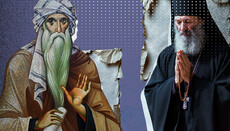
The “theology of an empty hell” was developed in the twentieth century by Hans Urs von Balthasar and Metropolitan Kallistos (Ware). They taught that we are obliged to believe: hell exists. This is necessary for our freedom to be real. If we have no possibility of finally saying “no” to God, then we are not free persons, but domestic animals on a leash in the Creator’s hand. Yes, there is a door into hell – but that does not mean that the one who enters it will remain there forever.
If Christ once descended into the abyss of hell and brought out those who had languished there for ages, why do we limit His power to only one historical moment? His victory over death is an atemporal act. If He “broke into” hell once, then hell is no longer a sealed prison.
Olivier Clément supposed that, when meeting face to face with Christ, who is incarnate Love, human resistance might simply melt away. Imagine a person who hated the light all his life. But when he sees not “a judge in a robe,” but the One who died for him, his “no” may turn into “yes.” This is not violence against freedom – it is the enlightenment of freedom.
The “theology of an empty hell” does not say, “live however you like.” Hell is a very dreadful place. And in any case, it is certainly better not to end up there.
But in my view, the experience of hell is something every person who wants to enter the Kingdom of Heaven must pass through. On earth this experience is called bearing one’s cross.
In paradise there are no uncrucified ones: each has his own cross and his own Golgotha. Without drinking the cup of sorrows, we will not be able to understand what blessedness truly is. Just as a healthy person cannot value his health until he understands how terrible it is to live after losing it. Adam did not value what he had until he lost it. Everything is known by contrast, and there is no other path except such knowledge.
To comprehend in its fullness what the Kingdom of Heaven is, a person can only by passing through hellish sufferings and torments. That is why God allowed the first people to fall – so that by their own experience they would understand what good and evil are; would learn to value the former and avoid the latter. The worst fate on earth will be that of a person who lived a full, comfortable, wealthy life, did not fall ill, did not suffer, and died easily and painlessly. That is an “idle” life. Yet it is precisely such a life that most people dream of today.