
Pasternak on Gethsemane: The God Whose suffering we slept through
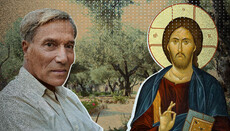
The final poem of the novel Doctor Zhivago is not poetry about Christ. It is poetry about us – who slept while He was making His decision.
Three men are asleep in the roadside feather grass. Not in beds – in the steppe grass, the kind that never grew and could never grow by the walls of Gethsemane in Jerusalem. These are Peter, James, and John – the very apostles He asked to keep watch. And they fell asleep.
Boris Pasternak could have written “among the olives,” “in the grass,” “beneath the trees” – every Gospel translation lay within his reach. But he chose “feather grass.” And that single choice says everything: these three are not sleeping in first-century Judea. They are sleeping anywhere, in every age, in every place. For the poet, these apostles are us.
The poem “Gethsemane Garden” is the twenty-fifth and final piece in the cycle “Poems of Yuri Zhivago,” which closes the novel. After it, there is no prose, no epilogue. Pasternak wrote it in 1949 – when his collection had already been destroyed, his novel banned in the USSR, and he himself reduced to a man erased from the register of literature, though not yet erased from life.
He knew what it meant to make a decision knowing its cost. He knew what it meant to keep vigil alone while those around him slept.
The One Who renounced omnipotence
The first thing Pasternak does is strip the Gospel scene of anything that might soften it. There is no solemn theological framing here. A road circling the Mount of Olives, the Kidron Valley below, olive trees that “seemed to step away into the air,” and at the end – “someone’s garden plot,” a stranger’s patch of ground where the fate of the created world is decided.
And here, in this nameless garden, something happens that Pasternak states with stark clarity:
“He yielded, without struggle, without defense,
As one returns what once was merely lent,
All power to rule, all wonders to dispense –
And stood as we do now: a mortal, spent.”
Omnipotence and miracle are laid aside by God as if they were borrowed things, calmly returned.
The Creator stands among mortals – not from necessity, but by His own will.
This is the poem’s central axis: there is no victim of circumstance here, no tragic inevitability. There is a choice – made in full awareness of its cost.
Then comes the prayer. Pasternak does not recount its words – he shows the state of the One who prays:
“In bloody sweat He pleaded through the night,
His breath a wound, His silence edged with fright.”
The “bloody sweat” is no metaphor. Medicine knows it as hematidrosis – a condition of extreme anguish. Luke the Evangelist alone records this detail in the Gospels. Pasternak places it here – and it speaks more precisely than any theological treatise.
Sleeping in the feather grass
Around this moment spreads a space of near-nothingness:
“The night stretched out – the edge of all that ends,
Of void and ash where being slowly bends.
The universe lay empty, stripped and bare –
And only in that garden lingered care.”
The world dissolves. It becomes uninhabited, a brink before the abyss. Only the garden remains real. And in that unbearable solitude, three figures appear – asleep in the feather grass.
Pasternak does not condemn them outright. But Christ’s reproach, as he renders it, is cutting:
“You were deemed worthy of My living days –
Yet here you lie, like earth in idle haze.”
They are not accused of betrayal or cowardice. They are accused of something quieter – and more terrible: of missing the moment given to them.
They were near God at the hour of His agony – and they slept.
Not because they were heartless. Simply because they were tired, cold, unable to grasp what was happening. Because this is how the human heart is made.
Seventy-five years after the poem was written, it is hard not to recognize ourselves in these three.
We, too, have been given much through faith. And we, too, know how to sleep through the most decisive nights of our lives – when God calls us to watch.
A chilling detail: Pasternak’s feather grass belongs to the steppe, to our land. The Gospel is transplanted into a landscape the reader recognizes as his own. Gethsemane is no longer a distant point on a map of Jerusalem. It is here – beside us. And we are in it.
“Centuries will drift out of the dark”
The poem ends by deliberately breaking Gospel chronology. Pasternak leaps over the Passion and moves straight to what follows – to Christ’s voice, no longer addressing the three disciples, but all generations:
“I shall descend into the grave, then rise,
And as down rivers timber slowly glides,
So centuries, like barges in a chain,
Will drift from night to stand before My eyes.”
The scale shifts. A moment ago, we stood in a garden with three sleeping men. Now all of history unfolds, moving toward a single point.
The centuries are not an abstraction. They are epochs – each with its own sleeping disciples, each with its own Gethsemane. And all of them, slowly, like heavy barges, drift toward that judgment.
That is why Pasternak places this poem at the end of the novel. Doctor Zhivago does not end with the death of its protagonist. It ends with a voice speaking out of the night in Gethsemane – a voice addressed to all who will come after.
A novel written in the Soviet era of state atheism, when death was treated as the final word, closes instead with the proclamation of Resurrection. This is no literary device. It is a confession of faith.
In 1958, Boris Pasternak was awarded the Nobel Prize – and forced, under Soviet pressure, to refuse it. He was persecuted, threatened with exile, publicly humiliated. He did not leave. He died in Peredelkino in 1960, two years later.
The man who wrote of Christ’s voluntary choice in the face of death stood before a similar choice himself – and knew it.
In Pasternak, Christ walks toward death not with the grand gesture of a martyr, but with a face wet with blood, in absolute solitude, while those He loves sleep nearby.
And still He goes.
That is what makes “Gethsemane Garden” not a poem about a distant historical event, but a living text that asks, again and again:
Are we awake – when God suffers?