
Ukraine between Christ and Belial: the occult trace in politics
Recently, alongside the UOC persecution, we have observed a surge of interest in paganism and occultism from the authorities. Is there a direct connection here?
In December 2025, Ukrainian society was stirred by information about discoveries during searches at the home of the former head of the President's Office, Andriy Yermak. According to former deputy Ihor Mosiychuk, investigators found items of occult symbolism: voodoo dolls, masks, satanic symbols, bracelets, and tattoos of a certain content. If all this is true, then a very reasonable question arises: how deeply have occult practices penetrated Ukrainian power? And the second question: are these practices occasional, or can we talk about a certain system in which many Ukrainian politicians are firmly embedded?
We do not want to accuse anyone of anything, but our task as journalists is to try to objectively analyze the available facts, evaluate them from the perspective of Christianity, and understand whether there is indeed a systemic problem that cannot be ignored.
The Yermak case and "bracelets of power"
Former deputy Ihor Mosiychuk believes that the "findings" at Yermak's are directly related to the religious policy of the Ukrainian authorities. According to him, "it has now become clear why Yermak was so consistently engaged in actions against Orthodoxy in Ukraine."
It is worth noting that among the "findings" at Yermak's were certain bracelets. It should be noted that several high-ranking Ukrainian officials (including Yermak himself, the head of the National Bank Andriy Pyshny, Deputy Prime Minister Iryna Vereshchuk, and others) quite often appear with such bracelets on their hands.
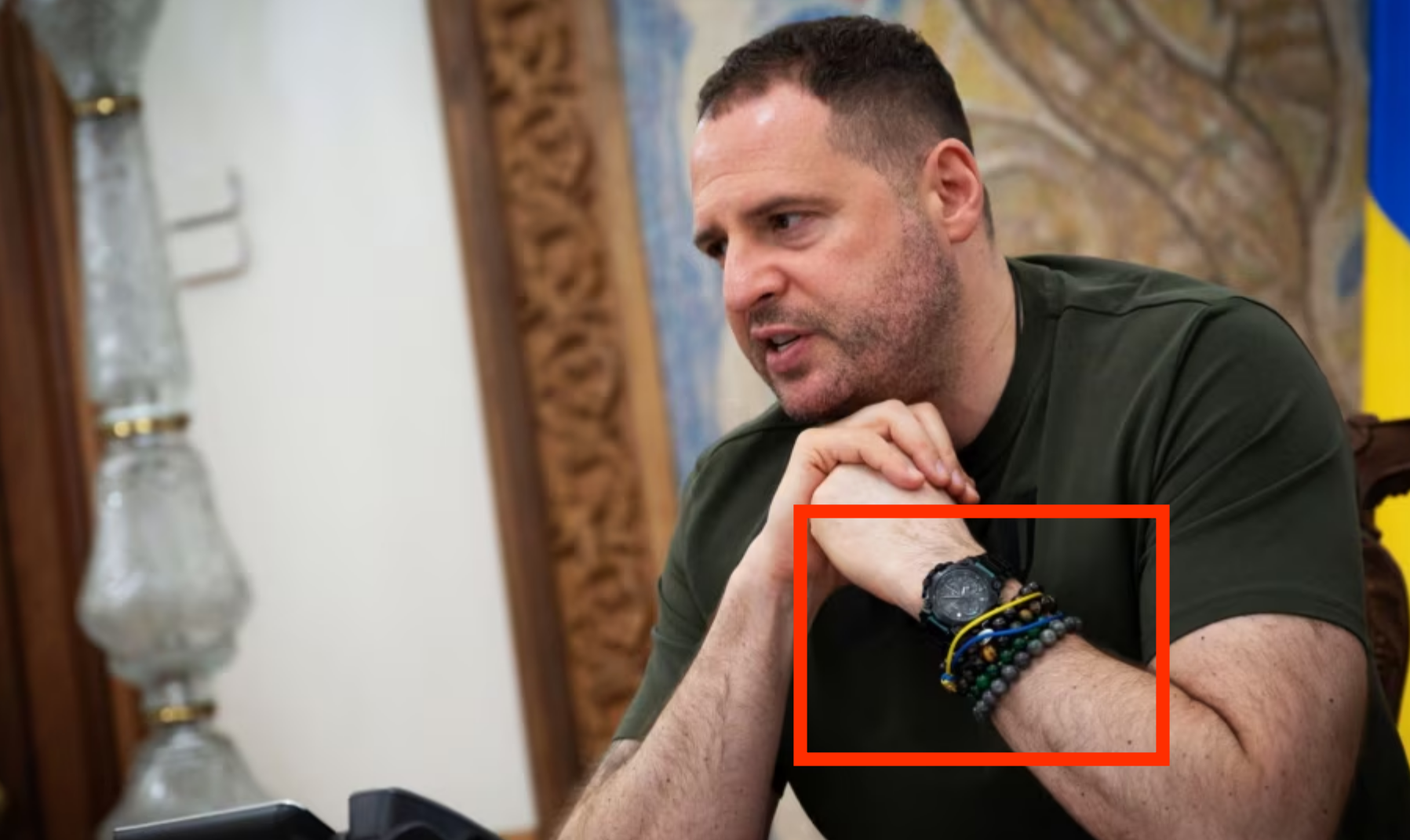
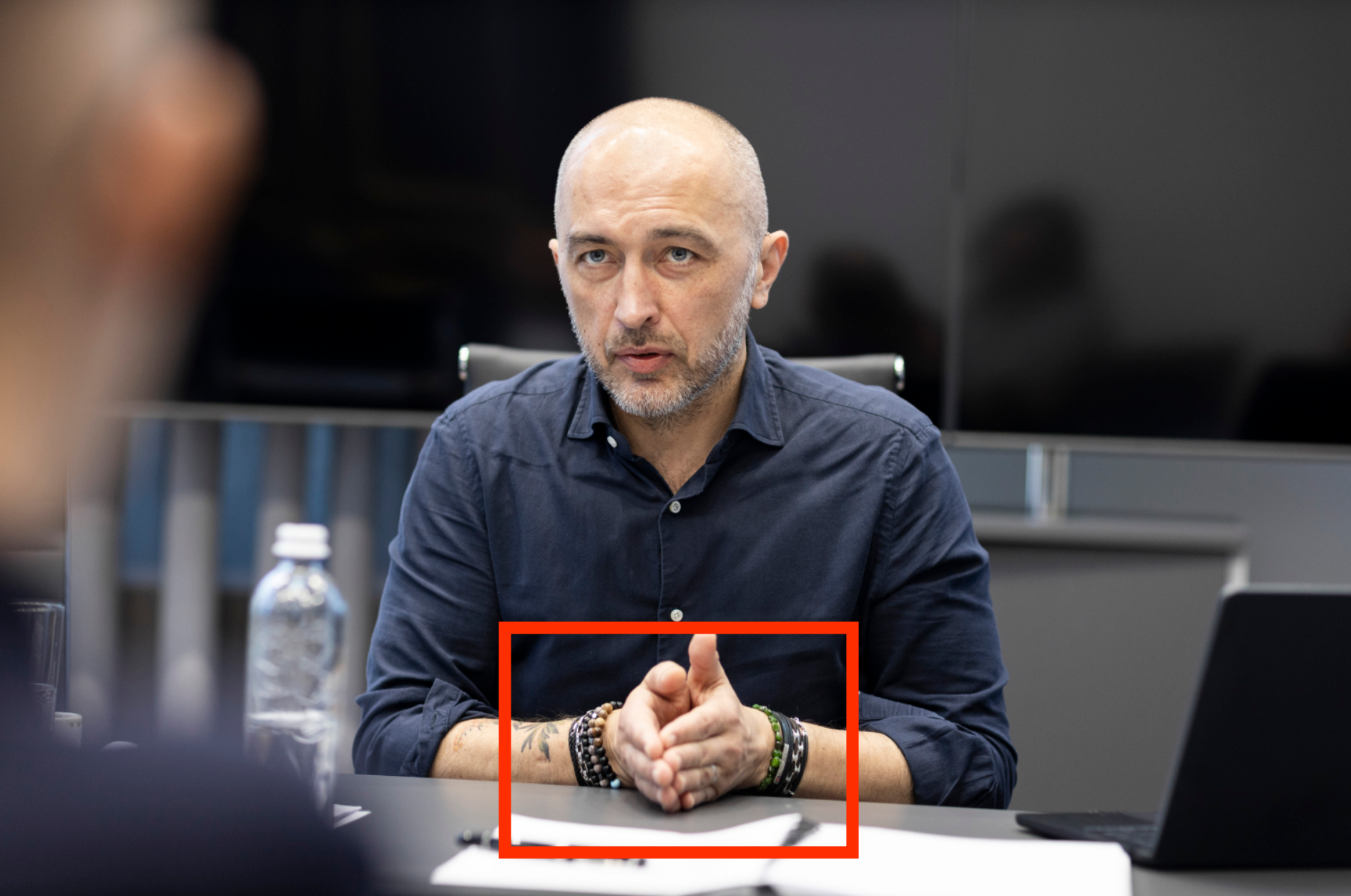
But are they simple decorations, symbols of some charitable organization, or indeed signs of belonging to a certain group? There is an opinion that these bracelets are presumably connected with the religious movement "AllatRa".
In 2023, MP Oleksandr Dubinsky spoke about this: "If you look closely, a number of Ukrainian officials and deputies – those inclined toward sect-like behavior – wear the same kind of bracelets. Beyond a certain social circle in which they all operate, in my subjective opinion, they may also be members of the same sect, called 'AllatRa'," Dubinsky said.
Recall that the religious movement "AllatRa" was founded in Ukraine in 2011. It is based on a syncretic teaching that combines elements of Gnosticism, Theosophy, and Agni Yoga. The movement is led by Ihor Danilov, who calls himself a "professor" and "academician," along with Anastasia Novykh (real name – H. A. Yablochkina).
The teachings of "AllatRa" are dualistic in nature: in this system, God has a female aspect, "Allat", and a male aspect, "Ra". The movement recognizes reincarnation and venerates various religious figures – from Buddha and Muhammad to Jesus Christ and the Orthodox saint Agapitus of the Caves. According to followers, Danilov is the "reincarnation" of Saint Agapitus.
From the perspective of Orthodox sect studies, "AllatRa" is classified as a destructive cult of a syncretic and pseudoscientific orientation. A characteristic feature of such organizations is the promise of material well-being, career growth, and "immeasurable wealth" to their followers. This may explain the attractiveness of such movements for people striving for power and success.
But if we are talking about Ukrainian politicians, the discussion should concern not only "AllatRa", but also paganism, whose symbols and attributes are being imposed on us more and more frequently.
Christmas message and pagan symbols
The Christmas greeting of President Zelensky in 2025 caught our attention not only with its content but also with its decorations. In particular, in the room where the address was filmed, "didukhs" – sheaves of wheat or other grains – were placed. Actually, the greeting itself begins with a frame not of an icon, not of the Christ Child, not even of a Nativity scene or the Star of Bethlehem. Instead, the caption with Zelensky’s greeting is displayed against the background of a didukh.
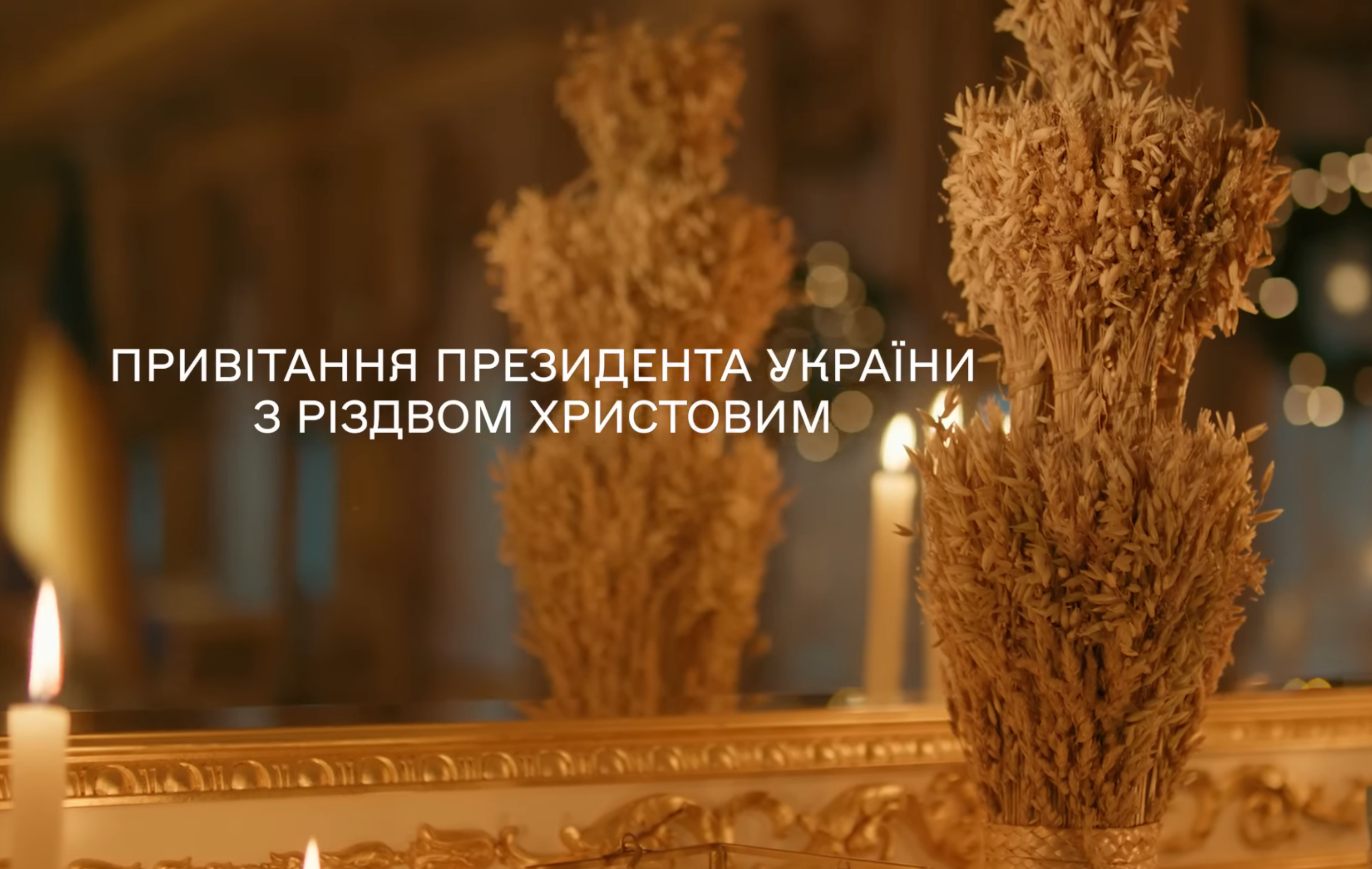
Today it is increasingly claimed that the didukh is a traditional Ukrainian Christmas symbol. However, in fact, it is an ancient pagan symbol associated with ancestor worship (literally 'grandfather’s spirit'). According to pre-Christian Slavic beliefs, the souls of deceased ancestors dwelled in the didukh; during the summer, they protected the fields, and at harvest time, they moved into the last unthreshed sheaf. Since the souls of ancestors were considered sacred, the didukh also received the name "Sheaf-Paradise". All of this is typical paganism.
Why does a pagan symbol occupy the central place in the official Christmas message of the head of state, while Christian symbols are missing (there are only candles, but it is hard to call them exclusively a Christian symbol)?
Moreover, in the same address, Zelensky wished death to an unnamed person, using the expression "let him parish", claiming that all Ukrainians wish this. Regardless of the political context, such rhetoric in a Christmas greeting raises questions about the spiritual orientations of the authorities.
It should also be noted that wishing death to another person is an occult ritual of cursing. This case could be considered a single mistake of the president's speechwriter if not for the broader context in which the words of the head of state sound very deliberate.
Nationwide paganism in Ukraine
The didukh in the opening frame of Zelensky’s Christmas greeting is certainly not a coincidence but a deliberate political choice. This is evidenced by numerous facts.
On the eve of the "new-style" Christmas, didukhs were placed in the main squares of the largest cities of Ukraine.
In Khmelnytskyi, the authorities stated that the didukh is "more than a Christmas sheaf. It is a symbol of memory of ancestors, the warmth of the family home, and a living connection of generations. It unites the past and the present, reminding us of our roots and common strength."
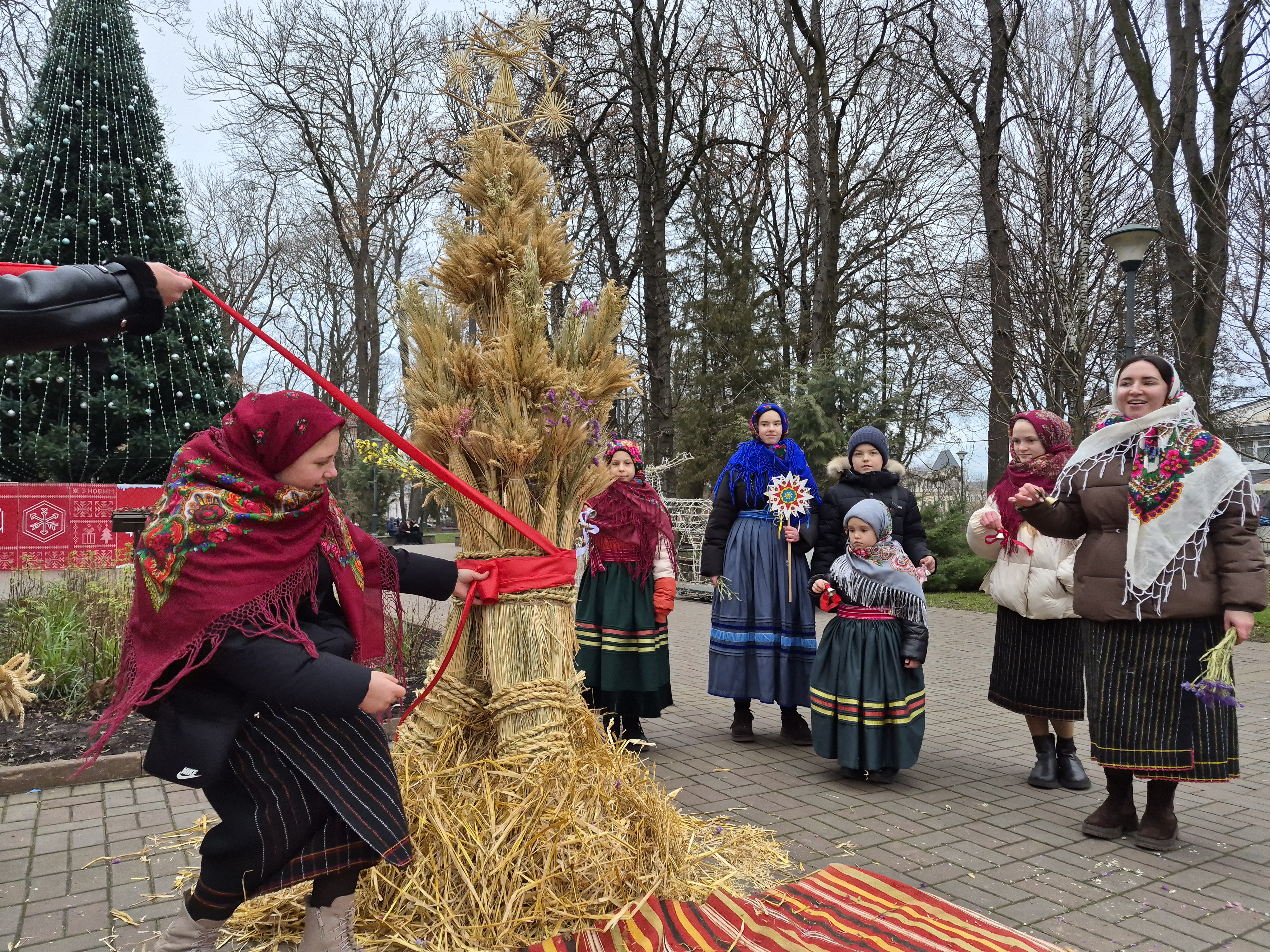
In Vinnytsia, it was stated that the 4-meter didukh is "a symbol of Ukrainian identity, memory, and unity." And the local didukh is very similar to an idol, as it has anthropological features. "It has 12 legs, these are 12 months. We also laid each leg with rye wheat, and then the whole body," the creators said.
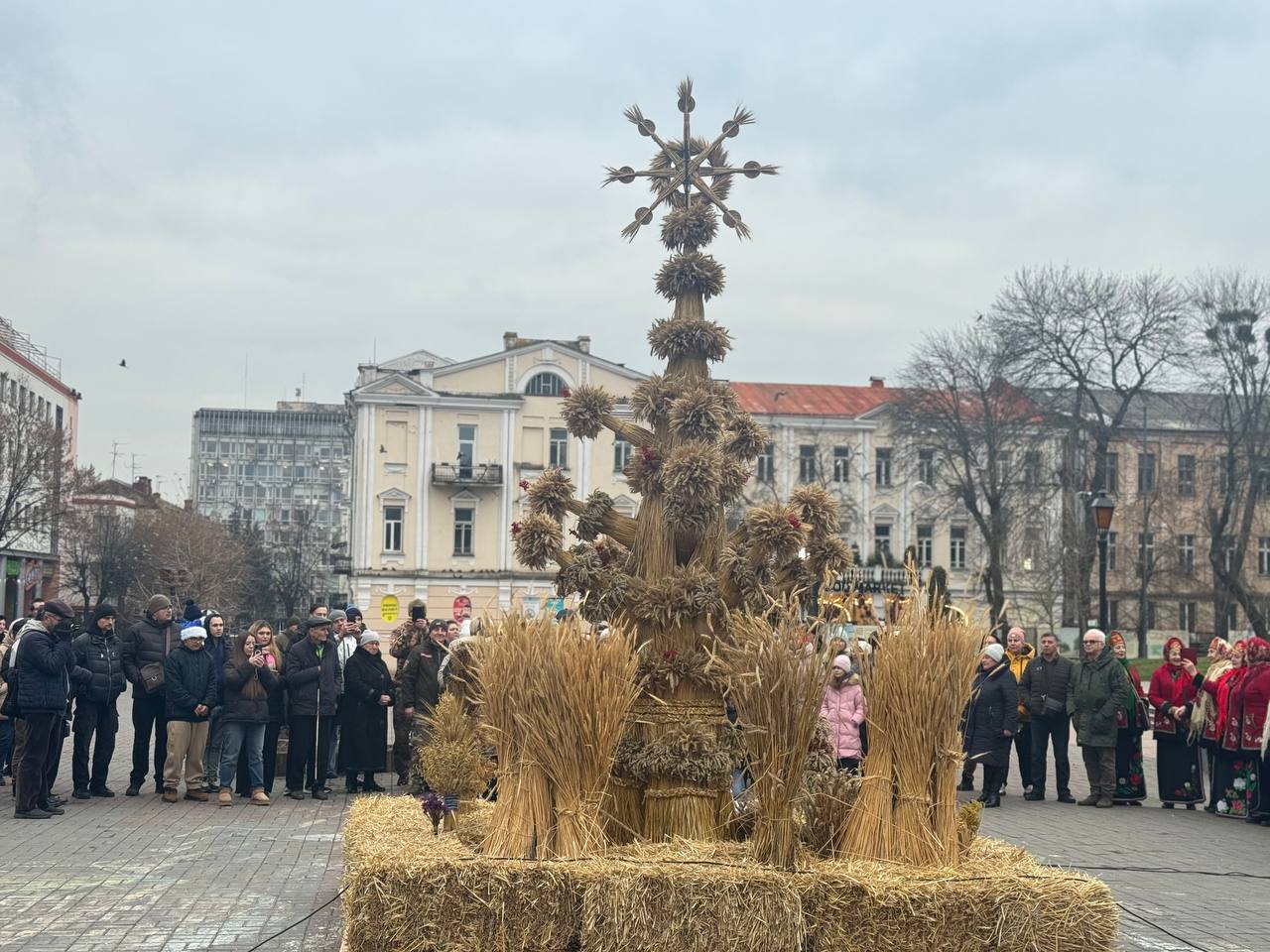
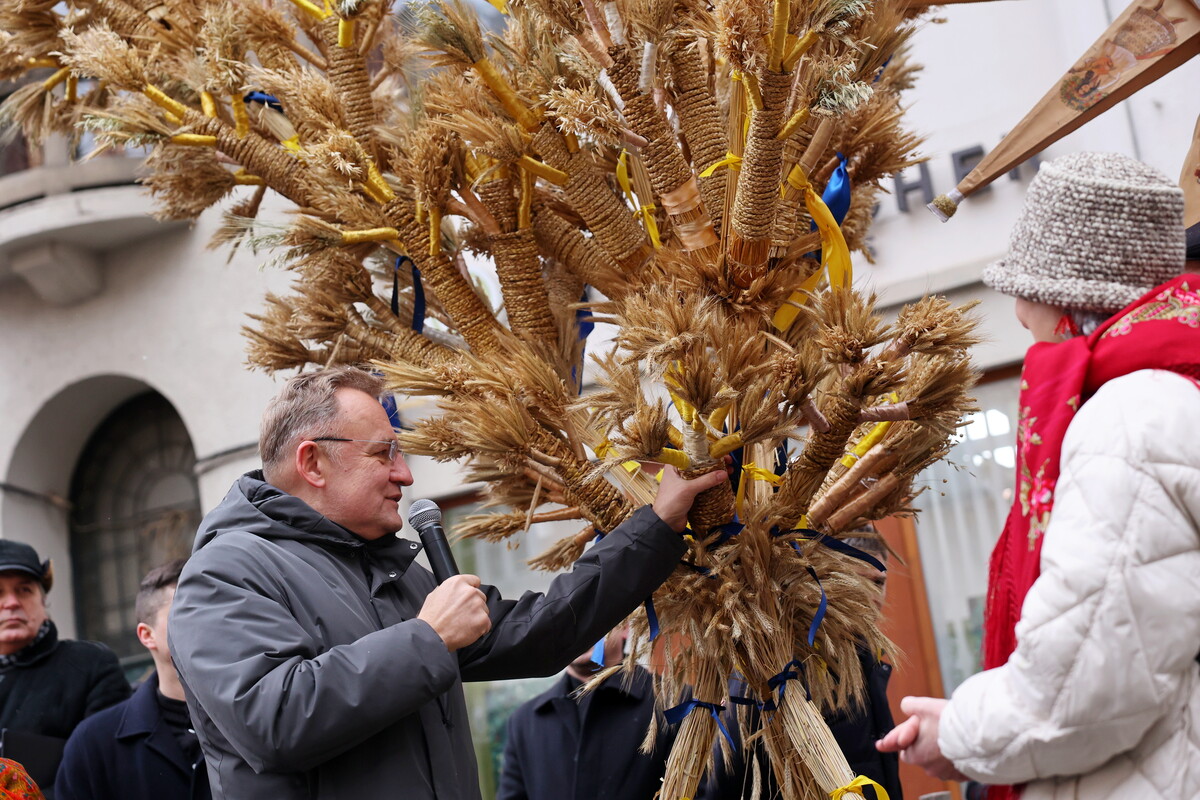
In Lviv, the authorities explicitly stated that the didukh is "the main symbol of Christmas". Not Christ, not the Nativity scene, not the Bethlehem star, but a national pagan symbol that has nothing to do with the feast of the Savior's coming into the world. And the final touches in the installation of the didukh were made by the city's mayor, Sadovyi.
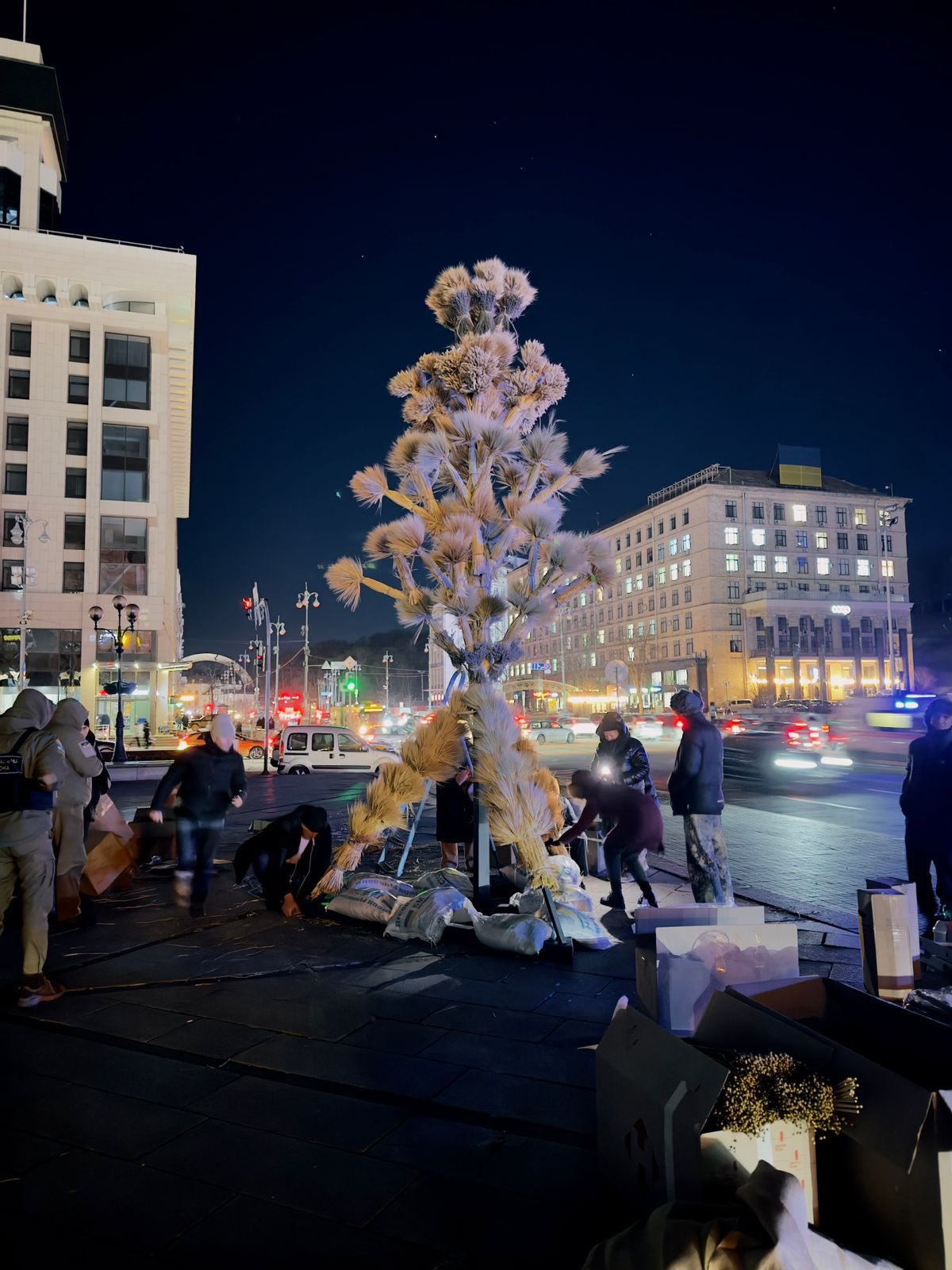
The most pompous didukh, as expected, was installed in the capital. In Maidan, next to the Jewish menorah, a 7-meter specimen was assembled.
"The didukh, unlike the borrowed Christmas tree, is a traditional pre-Christian symbol of the ancient Ukrainians, symbolizing the spirit of ancestors, prosperity, the connection of generations, and the future harvest," said the initiator of the installation, head of the Public Council at the Kyiv City State Administration, Hennadiy Kryvosheya. He immediately added that the didukh "is an integral part of celebrating the Nativity of Christ."
According to him, Ukrainians used to place the didukh in the red corner, next to the icons, "as a symbol of the family, and comfort".
And one more fact. Before the "new-style" Christmas, the National Bank presented a commemorative coin with the shocking title "Spirit of Christmas". As you probably guessed, it depicts the didukh.
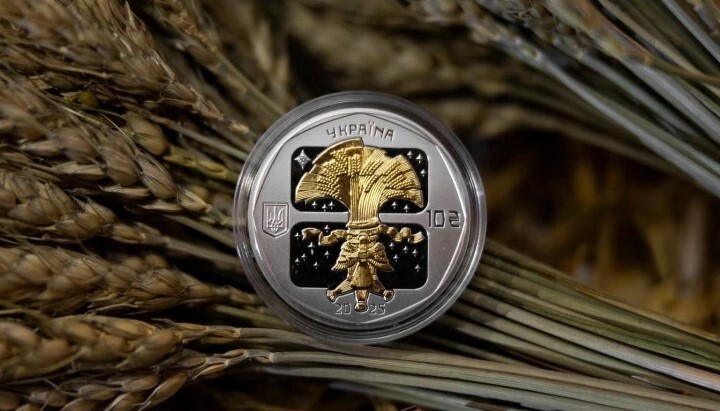
What exactly is the "Spirit of Christmas"? An atmosphere, or some kind of incorporeal entity? The National Bank doesn’t provide a clear answer but emphasizes that "the didukh is a guardian of the family and well-being, a symbol of harvest and the spirit of ancestors".
The word "guardian" very accurately characterizes the attitude toward the didukh from the Ukrainian authorities. It is an idol that is appeased to receive help from it.
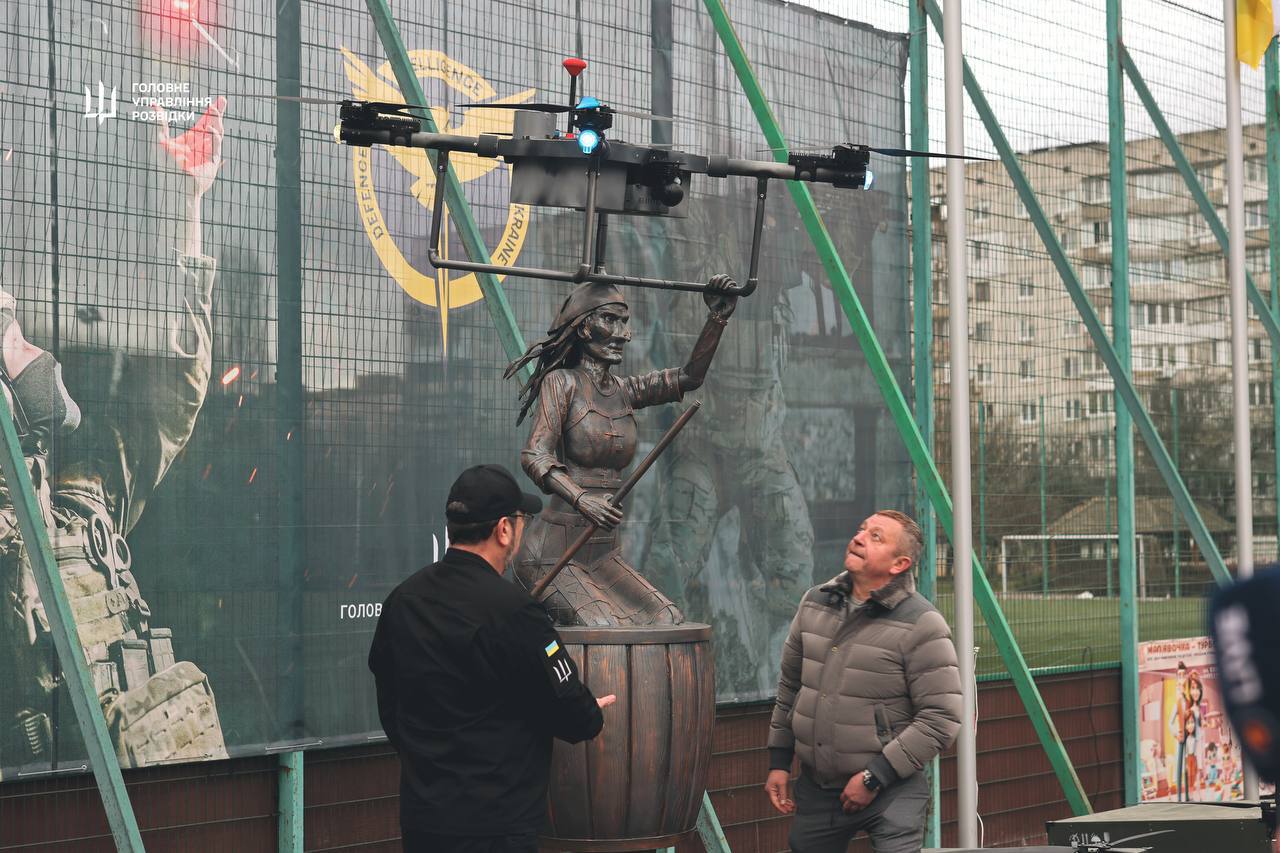
Against the backdrop of the didukhs, even the unveiling of the "Baba Yaga" UAV monument in Vyshneve seems natural. It was installed with the assistance of the HUR (Military Intelligence Directorate).
Of course, this can be seen as a kind of joke and troll targeting the Russians, who supposedly feared this drone so much. However, in the broader context of the unhealthy attention to occultism and paganism, the appearance of this monument is alarming.
"Mage Belial" and the policy towards the UOC
One of the most telling pieces of evidence came from the words of the Satanist Bohdan Orishchenko, who calls himself the "Mage Belial". In his video, which he published about a month ago, Orishchenko thanked Zelensky for the opportunity to perform a satanic ritual near the Kyiv-Pechersk Lavra.
"I really had the opportunity to deal with the Moscow Patriarchate only under President Zelensky. The only person who allowed me a lot was President Zelensky," said Orishchenko. He emphasized that he was grateful to the President for having "expelled those people from the Lavra who oppressed me, humiliated me, and insulted me".
Orishchenko claims that it was under the current government that he was able to pass unhindered by the holy sites with a "coffin and pentagrams", and conduct the "funeral of the Moscow Patriarchate" under the walls of the Kyiv-Pechersk Lavra.
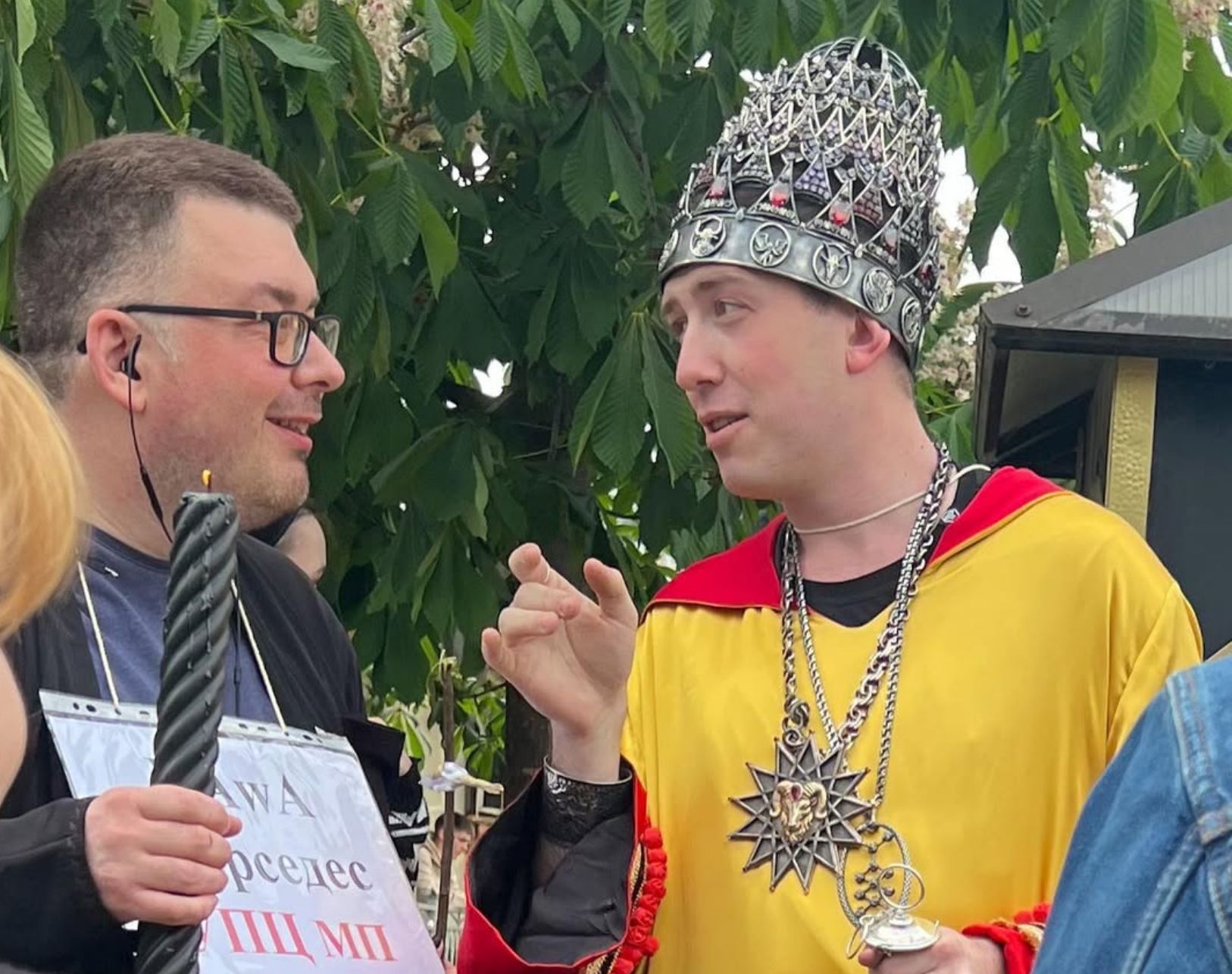
Here, two points must be clearly distinguished: first, the very fact that the authorities did not prevent sacrilegious actions near the country’s main Orthodox shrine; second, the Satanist interpreted this fact (the lack of reaction from the authorities) as support for his actions.
Could the state have stopped Orishchenko? Undoubtedly, because there are laws protecting the feelings of believers and maintaining public order. The fact of non-interference can be interpreted in different ways. For example, as a political calculation or as an ideological stance. But when a Satanist publicly thanks the authorities for the opportunity to desecrate a Christian holy site, and the state’s religious policy is indeed directed against the UOC, this speaks volumes.
The question arises: is this a coincidence or a pattern?
Occultism in the public space
To answer this question, let’s recall that the themes of occultism and paganism are increasingly present in Ukraine’s public space.
For example, on January 1, 2025, during the DAY.LIVE program of the national telethon, a tarot card reader attempted to predict whether the Ukrainian presidential elections would take place and who would become the head of state. The hosts introduced Anna Atamanova as an "extrasensory, tarot reader, medium, and expert in magic".
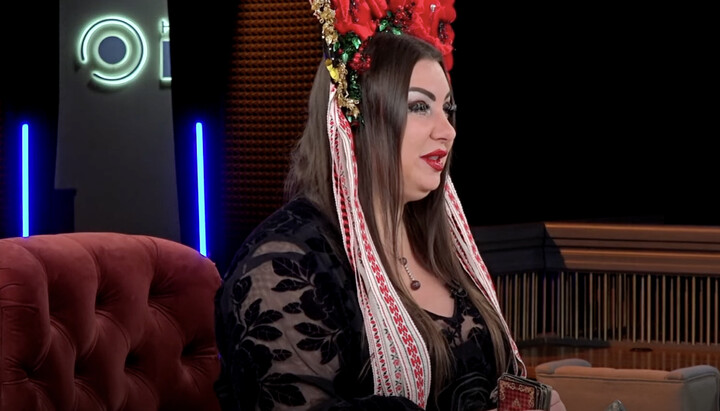
On January 6, a segment titled "Astrological Forecast for 2025" aired on the same telethon on the 1+1 channel, where a reporter interviewed extrasensory practitioners, astrologers, numerologists, and feng shui masters. Using tarot cards and numerology, they provided predictions about military actions, the deoccupation of territories, and negotiations. Once again – this was live on the national telethon.
Even more strange is that all of this is happening under martial law, when society needs accurate information and rational analysis. State television (the telethon is effectively a tool of state communication) provides airtime to fortune-tellers and extrasensory practitioners to predict the country’s political future.
This is not just entertainment content. Because when fortune-tellers predict the outcome of a war, it undeniably shapes a distorted perception of reality in society, replacing even attempts at analysis with belief in mystical forces.
But that’s not all. Back in March 2022, the Kyiv magic store "Witch’s Cauldron" posted an "event plan" on Instagram for the overthrow of Putin and support for the Ukrainian Armed Forces. The organizers announced a ritual with a sacrifice at the top of a mountain: "A circle of 13 witches has already been assembled, altar knives are being consecrated for offering sacrifices to the Higher Powers."
This fact in itself could be considered a marginal phenomenon that doesn’t deserve serious attention. But the reaction of then-advisor to the President's Office, Oleksiy Arestovych, changed the situation. He addressed the "Ukrainian witches" with words of support: "Girls, keep it up."
It should be emphasized that a representative of the highest echelons of power publicly supported an occult ritual with a sacrifice. Once again – this is not just a personal opinion of a private individual, but a position expressed publicly by the President’s advisor.
Another fact that highlights the rather strange attitude of Ukrainian politicians towards occultism is the story shared by the former Commander-in-Chief of the Ukrainian Armed Forces, and now Ukraine's ambassador to the UK, Valerii Zaluzhnyi. In his book "My War", the general shared his memories of a meeting with a fortune-teller 25 years ago. According to him, the woman predicted a war in which he would be "the chief".
Again, when a high-ranking military officer and diplomat publicly talks about a visit to a fortune-teller as an important event shaping his worldview, it speaks to the spiritual benchmarks of the elite.
Occultism and power
It shoudl be noted that occultism (from the Latin occultus – secret, hidden) is a general term for teachings and practices that recognize the existence of hidden forces of nature and humanity and the possibility of influencing them through special rituals, spells, and magical actions. Occult practices include: magic, fortune-telling, spiritualism, summoning spirits, curses, witchcraft, astrology (in its divinatory form), working with "energies", and much more.
The key difference between occultism and religion is the desire to gain control over the spiritual world and manipulate it to achieve one's own goals.
This is precisely why the connection between power and occultism is an ancient phenomenon. History offers many examples: from Roman emperors who consulted oracles, to modern politicians turning to astrologers (it is well known that Ronald Reagan and his wife consulted an astrologer when making decisions).
Several factors can be highlighted to explain this connection:
- Thirst for power and control. Occultism promises secret knowledge and the ability to manipulate reality in order to control events.
- Fear of losing power. Politicians live in a constant state of anxiety, and occult practices (amulets, rituals, fortune-telling) provide the illusion of protection and predictability.
- Spiritual emptiness. The absence of deep faith creates a spiritual vacuum, which is always filled by superstitions and occult practices.
- Corporate solidarity. Belonging to secret societies, sects, or occult groups creates a sense of "chosenness" and mutual obligations, which can be more important than conventional political institutions.
- Ideology of godlessness. In some cases, turning to occultism may be a conscious anti-Christian stance, especially when it comes to satanism.
It’s clear why people striving for power may feel drawn to this sect. The question is different: is there a connection between the possible occult beliefs of those in power and the state’s policy towards the Ukrainian Orthodox Church?
Yes, on one hand, the policy towards the UOC can be explained by geopolitical considerations and the need to break away from the Moscow Patriarchate in the context of war. On the other hand, the form and methods of this policy raise questions.
A Christian state, even when cutting ties with a church structure for political reasons, should not allow the desecration of holy sites, support paganism, satanists, or promote occultism through state media. All of this points to a deeper problem, namely, the departure of the authorities from Christian values as such, which inevitably leads to the moral degradation of the elite and, consequently, of society as a whole.
The fact is that throughout history, countries with a strong Christian tradition have proven more resilient to the infiltration of destructive cults and occult practices into positions of power.
It is telling that the rise of occultism in Europe occurred during periods of weakening Christianity: the Renaissance with its hermeticism, the Enlightenment with Freemasonry and Rosicrucianism, and the 20th century with Theosophy and Anthroposophy.
Let’s recall that Ukraine historically belonged to Christian civilization. Kievan Rus was baptized over a thousand years ago. Christianity shaped the culture, art, literature, and moral norms of the Ukrainian people. A departure from this tradition means not just a change in religious preferences but a break with one’s own identity.
And again, the question arises:
Is the observed dechristianization of Ukraine a spontaneous process or a planned political project? In other words, can we say that the Ukrainian authorities have set themselves the goal of building a "new Ukrainian identity" based on pre-Christian paganism?
If we consider the facts (for example, the constant emphasis on rejecting "everything Moscow", which includes the traditions of the Orthodox Church), it is impossible to shrug these questions off as trivial.
Because if our politicians are under the influence of occult ideologies, their policies will naturally be directed against Christianity. Therefore, ignoring this problem is dangerous.
What to do?
First and foremost, educate the faithful about the spiritual dangers of occultism, magic, paganism, and esotericism. Furthermore, the leadership of our Church must publicly condemn occult practices and calls for them, regardless of who make those calls. We must also defend Christian symbols and traditions from being replaced by pagan or occult ones. And, of course, we must pray for the spiritual awakening of both the people and the authorities, because the rejection of Orthodoxy and the replacement of Christianity with paganism and occultism signifies not only spiritual degradation but also the loss of national identity.
But most importantly, remember: no authority, no sect, no occult cult can make a person renounce God unless they themselves want to.
In the context of the spiritual war being waged for the souls of people, each person must make a conscious choice: whose side are they on – the side of light or darkness, truth or lies, Christ or Belial (as the apostle Paul said)?
Because the future of Ukraine depends not only on military victories, diplomatic efforts, and economic reforms, but also on the spiritual choice of its people.