
Orthodox “pillbox” as a means of defending the Church
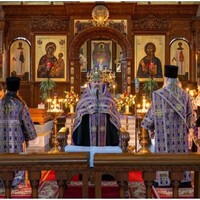

Metropolitan Hilarion (Alfeyev) said that every comment on the draft documents of the Pan-Orthodox Council of Crete would be taken into account.
Metropolitan Hilarion (Alfeyev), acting head of the Department for External Church Relations of the Russian Orthodox Church, assured all concerned believers that every comment on the draft documents of the future Pan-Orthodox Council – scheduled to take place on the island of Crete from June 17 to 26 – would be taken into account. He explained it simply: it is better to discuss potential problems before the Council than to object to its decisions afterward.
That opinion is more than fair – especially given the fact that the draft documents for the Council were published only recently. Moreover, they were published only because the Russian Orthodox Church insisted on it: “At the Meeting of the Primates of the Orthodox Churches held from January 21 to 28 of this year, a decision was taken to submit for consideration at the upcoming Council draft texts of six documents. At the insistence of the Russian Orthodox Church, all these drafts were published, including on the official websites of the Moscow Patriarchate and the Department for External Church Relations of the Moscow Patriarchate.”
It is clear that this should have been done much earlier, because the situation of silence – and, together with it, the lack of any desire to present these documents to the wider public – could hardly please the Church community. Various negative statements began to appear, directed not only at the documents but at the Council itself. And so, the discussion of what decisions the primates of the Local Orthodox Churches will make in Crete is extremely necessary. This was voiced both by representatives of our Church and those of other Orthodox Churches as well.
For that reason, His Beatitude Metropolitan Onufriy appealed to the episcopate of the Ukrainian Orthodox Church with a request to send in their comments (if they had any) on the draft documents that were to be adopted at the Pan-Orthodox Council. Fulfilling his blessing, a group of priests of our eparchy, chaired by Metropolitan Theodor of Kamianets-Podilskyi and Horodok, prepared a whole series of remarks on various conciliar texts – including the document “Relations of the Orthodox Church with the Rest of the Christian World.” Later, these “Remarks” were published on the official website of the UOC.
Of course, the publication of this document triggered a whole wave of negative reactions from people who have nothing to do with Orthodoxy. Thus, the religious-studies expert Oleksandr Sahan, known – to put it mildly – for his dislike of the UOC, remarked that the “Remarks” of the Kamianets-Podilskyi Eparchy were “anti-Catholic and anti-Protestant Orthodox sectarianism,” and that the statements themselves were “absurd.” He also stressed that, from the point of view of the Kamianets-Podilskyi Eparchy, there is no “Christian world” – there is only “Orthodoxy (which for some reason is rapidly disappearing from the map of the world) and heretics–schismatics…” (At this point I would like to note to Mr. Sahan that the “rapid disappearance of Orthodoxy from the map of the world” is not something surprising at all, because in the Gospel – which, I hope, Mr. Sahan has read – our Lord Jesus Christ says: “Nevertheless, when the Son of Man comes, will He really find faith on the earth?…” (Luke 18:8)). At the same time, Oleksandr Nazarovych did not provide a single example of what, precisely, was “absurd” in the eparchial remarks. That did not prevent various anti-Orthodox internet outlets from picking up Sahan’s quip and presenting it as an expert assessment.
There is no sense in responding to all those reproaches, because they essentially duplicate one another and offer us nothing except “medieval obscurantism” as an argument. Instead, I suggest paying attention to the following text, which at least remotely claims to be some sort of discussion. It is a short note on the site “Religion in Ukraine,” notorious for its provocative publications against the UOC.
The title of that note is not only provocative but meaningless: “The Kamianets-Podilskyi Eparchy has entered into a discussion with World Orthodoxy.” Why is it meaningless? At the very least because there is no “discussion with world Orthodoxy” taking place here at all.
With such a title, the authors mislead the uninitiated reader into believing that there is a clearly defined unanimity in “World Orthodoxy” on the very issues about which remarks were made in Podillia. In other words, the authors want to convince their audience that the drafts of the Pan-Orthodox Council documents are no longer subject to any discussion and have long since been approved as permanent texts – and that the Kamianets-Podilskyi Eparchy has “dared,” therefore, to cast doubt on certain points. That is why, in the view of “Religion in Ukraine,” it has supposedly “entered into a discussion with World Orthodoxy.”
However, I would like to inform the editorial staff of “Religion in Ukraine” that although the drafts were signed at the pre-conciliar meeting of the primates of the Local Churches, they did not receive final approval. I emphasize: all these texts bear the title “draft,” not the definitive conciliar decision. And if that is so, then discussing them (these drafts) is not only permitted – it is necessary.
Second. There is no consensus in world Orthodoxy regarding the drafts of the future Council’s documents (and it seems to me that the editors of “Religion in Ukraine” should know this). This concerns, first and foremost, the document titled “Relations of the Orthodox Church with the Rest of the Christian World.”
For example, representatives of the Bulgarian Orthodox Church opposed it (Metropolitan Gavriil of Lovech, as well as spiritual fathers and abbots of many monasteries). In particular, they subjected to harsh criticism the very same points criticized by the Kamianets-Podilskyi Eparchy. I quote:
“Regarding point 4:
In the Orthodox Church, ‘the unity of all’ has always meant that those who have fallen into heresy or schism must first return to the Orthodox faith and render obedience to the Holy Church, and then, through repentance, they can be received into the Church.
Regarding point 5:
We quote: ‘Modern bilateral theological dialogues… have as their aim the search for the “lost unity of Christians”…’
Here it is necessary to clarify that within the Holy Church, communion among Christians has never been lost; and since she will remain until the end of the age, as the Lord said – that the gates of hell will not prevail against her (cf. Matthew 16:18) – this communion will also remain forever.
Regarding point 6, point 16, and others:
Apart from the Holy Orthodox Church, there are no other churches, only heresies and schisms; and to call the latter ‘churches’ is theologically, dogmatically, and canonically completely erroneous.
Regarding point 12:
What is said in point 12 – that ‘in conducting theological dialogues, the common goal for all dialogues is the final restoration of unity in true faith and love’ – is entirely incorrect and unacceptable, because it is necessary to clarify and emphasize that a return to the true faith is necessary for heretics and schismatics, and in no way pertains to the Orthodox Church.”
It is interesting that Metropolitan Gavriil’s position was considered at a session of the Holy Synod of the Bulgarian Church, which adopted the following decision: “The adopted Position (that is, Metropolitan Gavriil’s remarks – author’s note) will be presented and defended as the unchanging position of the Bulgarian Orthodox Church regarding the text ‘Relations of the Orthodox Church with the Rest of the Christian World’ at the Holy and Great Council of the Orthodox Church on the island of Crete in 2016,” the Synod’s website reported. That is, as we can see, the Bulgarian Church expresses disagreement with the same points as the Kamianets-Podilskyi Eparchy. Why, then, did Mr. Sahan and those unknown to us “Orthodox and non-Orthodox theologians” not subject such a “medieval” decision of the Bulgarian Church to “ostracism”? The question is rhetorical.
These points also found no agreement among representatives of the Synod of the Russian Orthodox Church Outside Russia. Thus, Archbishop Mark (Arndt) of Berlin and Germany stated that “the adopted document ‘Relations of the Orthodox Church with the Rest of the Christian World’ causes concern from the point of view of ecclesiology. It is unclear and confusing; it constantly speaks of the existence of other churches – for us this is unacceptable… The deficiency of the published conciliar document lies in the absence of a clearly expressed assessment of the causes of the church divisions that took place in the past. Those causes were heresies and schisms. Awareness of this fact should not be the determining factor in relations with non-Orthodox Christian confessions; however, in the conciliar documents proposed for consideration by representatives of all the Local Orthodox Churches, this must be stated. Because it is impossible to speak of any equality of confessions.”
Moreover, Metropolitan Mark noted that “we may not tell a Protestant every day that he is a heretic (for heretical reasons, presumably – author’s note), but we must remember this.”
And once again, no one accused him of the “absurdity” of such statements, or of making them from an Orthodox “pillbox.”
Likewise, the Georgian Orthodox Church spoke out against that same document: “The Holy Synod (of the Georgian Church – author’s note) resolved that the said document contains ecclesiological and terminological errors and requires serious revision. If these changes are not taken into account and introduced into the text, the Georgian Church does not find it possible to sign it.”
At the same time, the draft document “Relations of the Orthodox Church…” was sharply criticized by some of the most prominent theologians of our time. Thus, Metropolitan Athanasios of Limassol (Cyprus Orthodox Church) stated that “the text DOES NOT mention at all that the only path leading to unity with the Church is the path of the return of heretics and schismatics through repentance into the bosom of the One, Holy, Catholic, and Apostolic Church.” Further, the hierarch notes that “ascribing the name ‘Church’ to heretical or schismatic communities is absolutely incorrect – theologically, dogmatically, and canonically – because there is one Church of Christ.” He believes that “we must be sincere with brothers who are in heresies and schisms, and with love and pain pray for them, that they may return to the Church of Christ…”
Then Metropolitan Athanasios sums up his attitude toward the aforementioned document: “I humbly believe that such important and such authoritative texts of the Holy and Great Council of the Orthodox Church must be formulated with great care and with the full precision of theology and canon law, so that they contain no unclear or unrecognized theological terms and no erroneous formulations that can lead to misunderstanding and distortion of the true confession of the Orthodox Church. Moreover, for the Council to be authoritative, it is necessary that it not deviate at all from the spirit and teaching of the previous holy Councils, the teaching of the holy fathers and Holy Scripture, and also that it have no shadows in the precise formulation of the true faith.”
According to him, “there are no churches and confessions – there are only those who have departed from the Church, and they must be called heretics and schismatics.”
Why then, I ask again, did neither Mr. Sahan nor various “theologians” respond with the necessary degree of “ostracism” to these words of a high-ranking and authoritative Orthodox hierarch? Where are their furious philippics about “pillboxes” and “Orthodox sectarianism,” which the editors of “Religion in Ukraine” so gladly reprinted? Once again – the question remains unanswered.
Metropolitan Hierotheos (Vlachos) also disagrees with certain points of the aforementioned document: the phrases “in which the Orthodox Church acknowledges the existence in history of other Christian churches and confessions not in communion with her” (point 6) should, he says, be adapted to the title in order to avoid double-speak and ambiguity.
A more accurate phrasing in essence, in Metropolitan Hierotheos’s view, would be: “The Orthodox Church is aware of the existence of other Christian confessions which have separated from her and are not in communion with her” (I ask you to note that we are speaking of “other Christian confessions which have separated from the Church,” not simply of “the rest of the Christian world” or “other churches” – author’s note).
Metropolitan Hierotheos further points out that “the document contains other expressions which imply that the unity of the Church has been lost and that attempts are being made to restore it. Such assertions should be corrected.
The assertion that the Orthodox Church participates in theological dialogues ‘in order to seek the lost unity of Christians on the basis of the faith and tradition of the ancient Church of the seven Ecumenical Councils’ (point 5) implies that the statement found elsewhere – that the unity of the Church ‘cannot be broken’ (point 6) – does not correspond to reality.”
One could cite other statements of various authoritative Orthodox theologians about the same document, but in my opinion these are more than enough to bring to the attention of the editorial staff of “Religion in Ukraine” that the Kamianets-Podilskyi Eparchy has by no means entered into a “discussion with World Orthodoxy.”
Such a sharp rejection of the pre-conciliar document “Relations of the Orthodox Church…” is entirely understandable, because, as Metropolitan Hilarion (Alfeyev) said: “In its current form, the text of this document was compiled on the basis of two other draft conciliar documents developed back in 1986. But because of the extremely liberal tendencies that have taken root in recent decades in a number of Protestant denominations, entire pages of those documents have lost their relevance.”
Therefore, the delegation of the Russian Orthodox Church made great efforts “to eliminate, as far as possible, certain formulations that could be misinterpreted.”
However, as we can see, even in that case it was not possible to correct all the disputed formulations. And it is clear why – the Council’s materials were presented to the wider public rather late.
At the same time, it should be noted that from the very beginning, representatives of the Russian Orthodox Church emphasized that they cannot be members of organizations in which “the charter, rules, or procedure require the renunciation of the doctrine or traditions of the Orthodox Church,” and where “the Orthodox Church is deprived of the possibility of testifying to herself as the One, Holy, Catholic, and Apostolic Church” (point 5.2).
And that means the process of correcting all the drafts of the Pan-Orthodox Council’s documents will continue until they fully correspond to the teaching of the Orthodox Church.
Therefore, let us once again ask the editors of “Religion in Ukraine,” and Mr. Sahan along with them: in which specific points did the “Remarks of the Kamianets-Podilskyi Eparchy” come into contradiction with World Orthodoxy? Why are these “remarks” said to be “medieval” and written from a “pillbox,” while, for example, the remarks of the Georgian Church are “modern” and “civilized”? For if some are wrong, then the others are wrong as well.
In addition, the editors claim that a whole range of “Orthodox and non-Orthodox theologians” “subjected the ‘Remarks of the Kamianets-Podilskyi Eparchy’ to ostracism and harsh criticism.” On the internet, I did not find any critical observations from theologians as such regarding this document. Accusations of “medieval darkness” were indeed encountered. But such a phrase cannot be considered an argument in a theological dialogue. One would like, rather, to see actual counter-theses, not labels that have been hung on the Church since Soviet times.
I would also like to ask: which “theologians,” exactly, “ostracized” the text of the “Remarks”? Or did they, like the editors’ “interlocutor,” speak anonymously? At any rate, in the online space I did not find “theologians” other than Oleksandr Sahan (who cannot be called a theologian for a number of reasons) and Mr. Yurii Chernomorets, who reposted a hysterical Facebook post by the aforementioned religious-studies expert. And Yurii, as a theologian, could have added at least a sentence or two of his own – so to speak, from the height of a professor’s and theologian’s chair – but he did not. Most likely because, unlike Sahan, he understands that from a theological point of view everything in the “Remarks” is stated correctly.
I am convinced that the editors of “Religion in Ukraine” were hardly unaware of the protests against the draft document “Relations of the Orthodox Church with the Rest of the Christian World” which I cited above. I assume such matters – what the entire Orthodox world lives by – are of little interest to them, and they simply did not wish to draw attention to critical statements regarding the Council’s texts. Most likely, their task – and their narrow circle of interests – is the discrediting of the one canonical Church in Ukraine, recognized throughout the Orthodox world. That is what this “portal” has been doing to this day.
And finally. The term “the Christian world” is a secular expression that cannot be used in conciliar ecclesiastical documents – unless it is accompanied by a mandatory clarification that it means exclusively the Orthodox Church community. This term – “the Christian world” – if it is used by representatives of the Orthodox Church at all, is used for reasons of etiquette, not for ecclesiological or dogmatic reasons. To introduce it into church usage is inappropriate.
P.S. On June 1, the Synod of the Bulgarian Church expressed a wish to postpone the Pan-Orthodox Council because of the enormous number of errors in the Council drafts, which require detailed review and editing. If this request is not taken into account, the Bulgarian Church will refuse to participate in the Council at all. And I am sure this is not the end…
Indeed, to fail to see all these problems connected with the Council, which exist today, one would have to be looking from a “pillbox.” A non-Orthodox one.