
Lawyers in the crosshairs: How UOC is being stripped of its right to defense
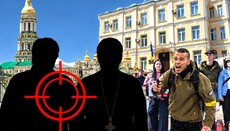
Activists harass UOC lawyers outside courthouses, call them “traitors” on air, and promise them a “warm welcome” at hearings. The Church’s right to a legal defense is at stake.
The campaign against the UOC is entering a new, more aggressive phase. Activists are harassing lawyers, accusing them of defending “traitors,” and blocking them from leaving after court hearings. In effect, they are seeking to deprive the UOC of its right to a defense.
The legal battle over the Kyiv-Pechersk Lavra has been going on for several years. It was never a straightforward case: hearings were repeatedly postponed, lawyers filed motions to recuse judges, and the composition of the judicial panel changed. But by late summer 2026, a new trend had emerged – psychological and, in some cases, physical pressure on lawyers. This raises a serious question: is the UOC still recognized as having the right to legal representation?
“Street” pressure
On August 26, 2026, the Northern Commercial Court of Appeal held another hearing in the Upper Lavra case. Before it began, activist Davyd Pshenychnyi approached Archpriest Nikita Chekman, an attorney representing the monastery. He publicly called Fr. Nikita “a lawyer for the Russian Church” and displayed a mock Russian passport bearing the priest’s photograph and personal information. Another person deliberately filmed the encounter.
Fr. Nikita appealed to the Committee for the Protection of Lawyers’ Rights of the Ukrainian National Bar Association. After reviewing the footage, the Committee found signs of “demonstrative psychological and reputational pressure” directly related to the lawyer’s performance of his professional duties. Following its review, the Committee submitted complaints to the National Police.
Fr. Nikita himself called an investigative team to the scene and filed a criminal complaint under Part 1 of Article 397 of the Criminal Code of Ukraine (“Interference with the Activities of a Defense Attorney or Legal Representative”). However, the police failed to enter the information into the Unified Register of Pre-Trial Investigations within the statutory deadline – a fact that is telling in itself.
Fr. Nikita challenged the police inaction before Kyiv’s Shevchenkivskyi District Court, which ordered the police to enter the information into the Unified Register of Pre-Trial Investigations.
But the prospect of a criminal case did not deter the activists, and the situation soon repeated itself in a more aggressive form.
On September 29, 2026, during another hearing in the Upper Lavra case, an air raid alert was declared and the lawyers took shelter in a café. A group of activists followed them inside. According to Fr. Nikita, they blocked the lawyers inside the café, insulted them, and attempted to use force. The lawyers had to call the police. The group was again led by Davyd Pshenychnyi.
Pshenychnyi is known from church news reports for more than these incidents. In October 2024, he took part in the forcible seizure of the UOC cathedral in Cherkasy. As UOJ reported, he fired a handgun at parishioners inside the cathedral. He was later nominated to the Public Council under Ukraine’s Ministry of Defense.

On October 5, UOJ published photographs of Pshenychnyi wearing clothing made by the Svastone brand. His sweatshirt bears a stylized swastika, the words “Sonne mit uns” – a variation on the slogan “Gott mit uns” – and a “Black Sun” symbol. Clothing in itself proves nothing, but it can speak volumes about the views of the person wearing it.
“Information” pressure
Pressure on UOC lawyers is also being exerted in the media.
In September 2026, Maryna Koval, an activist and founder of the Spadok Voli public organization, appeared on Kyiv FM’s Kyiv Speaks program to discuss the campaign against the UOC. By her own account, she brought around 50 activists to one of the court hearings. Speaking about UOC lawyers, Koval said: “They hide behind their attorney IDs and say, ‘This is pressure on a lawyer. You have no right to say such things because we are lawyers, we are protected by law, and you could face criminal liability.’ <…> The lawyers are effectively defending traitors.”
According to Koval, the lawyers handle cases involving “high treason, justification of aggression, and so on.” When the host asked whom exactly she meant, Koval named Fr. Nikita Chekman. It should be recalled that Article 23 of Ukraine’s Law “On the Bar and Practice of Law” prohibits identifying a lawyer with his or her client.
During the same broadcast, host Bohdan Butkevych claimed that UOC clerics are “at the very least FSB colonels.” According to him, such a system has existed in Ukraine for the past 250–300 years. Given that the FSB itself has existed only since 1995, no further comment is necessary.
Following the broadcast, Fr. Nikita filed complaints with the National Police and the relevant authorities. In his view, the statements made on air amounted to publicly accusing people of crimes before any court ruling. He also pointed to what he described as discriminatory rhetoric against UOC believers and lawyers.
It is unlikely, however, that a complaint to the police will frighten the participants in Kyiv Speaks, any more than it frightened Davyd Pshenychnyi.
Whose orders?
There are grounds to believe that these incidents are systematic and organized. On September 11, 2026, Fr. Nikita Chekman said that, according to information available to the lawyers, a group of individuals had stepped up efforts commissioned to discredit UOC attorneys. He said certain individuals had threatened the lawyers and promised them a “warm welcome” at the next court hearing.
Fr. Nikita regarded these words as a threat of violence and an attempt at intimidation. He said: “Lawyers perform their professional duties in accordance with the law. Regardless of whether someone likes a lawyer’s legal position or the identity of his client, the professional rights and guarantees governing the practice of law must be unconditionally respected.”
Pressure on the legal team potentially affects not only the Lavra proceedings but also numerous other cases involving the defense of UOC parishes, monasteries, and clergy. Among them is the case involving the Kyiv Metropolia, in whose defense more than 10,000 believers have submitted statements.
The information currently available does not make it possible to say definitively who is behind the pressure on UOC lawyers. But there are clear signs of a coordinated pattern: “street” pressure and “information” pressure are being applied in parallel and are working toward the same end.
Pshenychnyi and his associates operate directly outside courthouses. Maryna Koval operates in the public sphere – and not only on air: by her own account, she brought around 50 activists to a court hearing. The two forms of pressure overlap.
What they also have in common is that both “street” and “information” pressure target the very legitimacy of the UOC’s legal defense.
The logic is simple: a lawyer supposedly has no moral right to defend this particular client, and if he does, then he himself is a “traitor.”
Going to court under police protection
On October 7, the Sixth Administrative Court of Appeal was scheduled to hear the lawsuit filed by the State Service of Ukraine for Ethnopolitics and Freedom of Conscience (DESS) seeking to terminate the activities of the Kyiv Metropolia of the UOC.
This is a separate proceeding – not the Upper Lavra case, but the case seeking to terminate the activities of the Kyiv Metropolia. Ahead of the hearing, its representatives appealed to law enforcement authorities.
Fr. Nikita Chekman said: “In connection with provocations and interference with the work of attorneys, representatives of the Kyiv Metropolia of the UOC filed the appropriate statements with law enforcement agencies, requesting that they ensure public safety and public order and prevent pressure on lawyers during the court proceedings.”
The hearing was postponed because of a judge’s illness, but a group of protesters led by Koval and Pshenychnyi once again gathered outside the courthouse, prepared to stage further protests.
Conclusion
At first glance, pressure on UOC lawyers may not seem like the most important issue, especially in wartime. But look deeper, and this is no longer about Pshenychnyi, Koval, or even their alleged handlers in high offices. It is about the constitutional right to a legal defense and professional legal assistance.
Article 59 of the Constitution of Ukraine guarantees everyone the right to professional legal assistance, while the law expressly prohibits identifying a lawyer with his or her client. Yet today, representing the UOC has become a job fraught with threats, false accusations, harassment, and the risk of physical violence. This is an attack not only on lawyers but also on the constitutional guarantees on which the administration of justice in Ukraine rests.
And one final point. Those who are confident in their case do not need a crowd outside the courthouse, “traitor” labels for opposing lawyers, or promises of a “warm welcome.” A case is proved in the courtroom, not through intimidation. If the UOC’s opponents choose pressure over arguments, does that not suggest that they are simply afraid of losing?